5 Winning Points: Student Loans Are a Trap, Not a Help
Good day, students! Looking for the winning points for your next debate? You’ve come to the right place.
Today, we are diving into a very serious financial topic that affects millions of students. The motion is: “Student Loans Are a Trap, Not a Help.”
Governments and banks often present student loans as a “lifeline” or a “golden ticket” to education. But is it really a help if it chains you down for decades? Or is it a trap that mortgages your future before you even graduate?
In this post, I’m giving you a complete “copy-and-paste” script to support the motion that student loans are a trap, not a help. I have crafted these points to be punchy, logical, and highly persuasive for your judges.
This article provides debate points supporting one side of the motion for educational purposes. It does not dismiss the potential benefits of loans for some individuals but highlights the risks involved.

Winning Debate Points on Why Student Loans Are a Trap, Not a Help
1. The Unemployment Reality Check
My first point is the harsh reality of the labor market. It’s simple logic: a loan is only helpful if you have the means to pay it back. But in Nigeria, where youth unemployment is sky-high, taking a loan is like walking into a trap with your eyes closed.
Imagine graduating with millions in debt, only to spend the next five years job hunting. It happens every day. You aren’t just unemployed; you are unemployed and owing. That is not help; that is a burden.
If the system cannot guarantee a job after school, then asking students to take loans is setting them up for failure. We are essentially digging a hole for students before they even learn how to climb.
2. Starting Life with a Negative Balance
Think about it. When you graduate, you should be starting on a clean slate. You should be saving for a house, a car, or perhaps starting a business. But student loans steal this freedom from you.
Instead of building wealth, you spend your first ten productive years looking backward, paying for a degree you already got. According to a report on student debt by Britannica, this debt often delays major life milestones like marriage and homeownership.
It’s like running a 100-meter race, but while your opponents start at the starting line, you are forced to start 50 meters behind. That is the definition of a financial trap.
3. It Gives Schools an Excuse to Raise Fees
This is a secret many people don’t talk about. When governments introduce student loans, schools often see it as a green light to increase tuition fees.
Why? Because they know the students can just “borrow” to pay. It creates a vicious cycle. The fees go up, so students borrow more. The students borrow more, so fees go up again.
In the end, the education isn’t getting better; it’s just getting more expensive. We are not solving the funding problem; we are just shifting the cost to the poor student who can least afford it.
4. The Mental Health Toll is Real
Let’s talk about peace of mind. Debt is stressful. It hangs over your head like a dark cloud.
Students who know they have a mountain of debt waiting for them often suffer from anxiety and pressure. Instead of focusing on their studies or their creative potential, they are worried about interest rates and repayment deadlines.
Is it worth sacrificing your mental health for a loan? A true “help” should empower you, not give you high blood pressure before you turn 25. The psychological weight of this debt makes it a trap for your mental well-being.
5. Better Alternatives Are Being Ignored
My final point is that we are focusing on the wrong solution. The government has the resources to fund education through scholarships, grants, and proper funding of public universities.
By pushing loans, they are dodging their responsibility. Much like the argument we made on why education is better than money, the focus should be on making education accessible, not profitable for lenders.
Why should a brilliant student from a poor home have to borrow? They should be supported with grants that don’t need to be repaid. Student loans are a lazy solution that punishes the poor for wanting to learn.
Frequently Asked Questions (FAQs)
What if my opponent says loans are the only way poor students can afford school? You can counter this by mentioning “Grants” and “Scholarships.” Remind them that “Help” shouldn’t hurt you later. A grant is help because you don’t pay it back. A loan is a business transaction. If the government really wants to help the poor, they should offer scholarships, not debt.
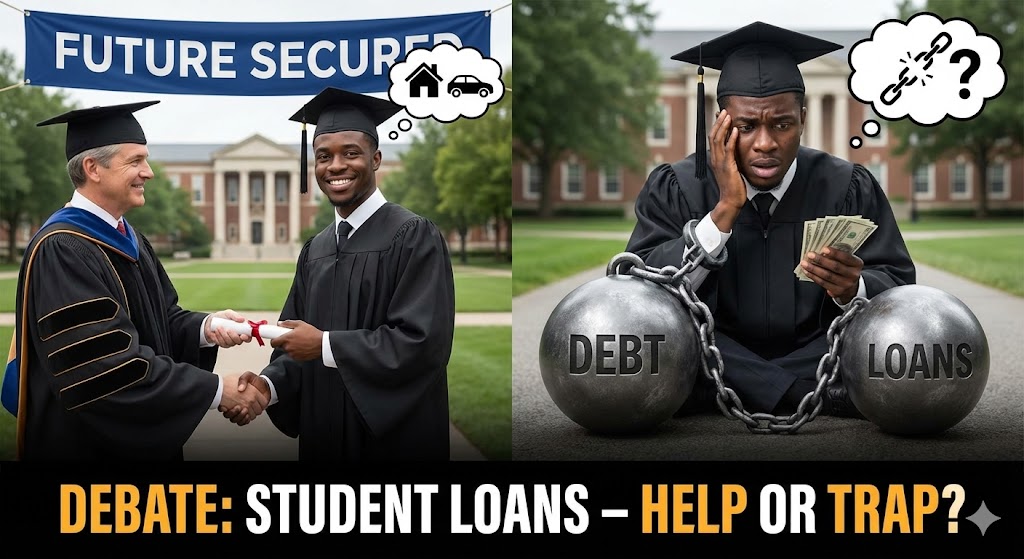
How do I conclude this speech powerfully? End with a strong image. Tell the judges to picture a graduate in their gown, holding a diploma in one hand and a heavy chain in the other. Ask them: “Is this freedom? Or is this a trap?”
Are there other debate topics related to this? Yes! This topic links well with other financial debates. You can check out our guide on education is better than money debate points for more ideas on how to argue for the value of learning over cash.
Conclusion
To sum it all up, student loans are a trap, not a help because they ignore the reality of unemployment, delay financial freedom, and encourage tuition inflation.
We must stop romanticizing debt. A loan is not free money; it is a future burden. As you step up to that podium, tell the judges the truth: we want an education that sets us free, not one that binds us in chains.
This article supports one side of the motion for educational debate purposes. Financial aid systems vary, and loans can be useful tools when managed correctly.
What do you think? Is a student loan a lifesaver or a trap? Drop your opinions in the comments section below! Also, feel free to share this post with your debate team members.