7 Winning Points: Why It Is Better to Be the Youngest Child Than the Oldest
Good day, students! Looking for the winning points for your next debate? You’ve come to the right place.
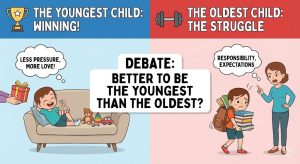
Today, we are tackling a fun and relatable motion. We are supporting the motion that it is better to be the youngest child than the oldest.
Let’s be real—everyone knows the baby of the house holds a special position. This debate isn’t about saying the oldest child is bad; it’s about proving that the youngest enjoys unique privileges, less pressure, and a smoother ride through life. If you are the last born, or you just want to win this debate, get ready to take notes.
This article is a debate guide designed to help students win their school debates. The points listed here are for educational arguments only and are not meant to diminish the value of any sibling. Every child is special.
Winning Debate Points on Why It Is Better to Be the Youngest Child Than the Oldest
Here are my top 7 points to silence your opponents and wow the judges.
1. We Enjoy Parental Leniency (The “Chill” Factor)
My first point is the most obvious one: strictness. Let’s be honest, by the time parents get to the youngest child, they are tired of shouting.
The oldest child is often the “experiment.” Parents are strict with them because they are scared of making mistakes. But by the time I came along? My parents had seen it all. They know that coming home five minutes late won’t end the world. While my older brother was grounded for sneezing wrong, I get away with almost anything. This relaxed environment allows the youngest child to grow up with less fear and more confidence.
2. We Have Ready-Made Mentors
Imagine going through a thick jungle. The first person has to use a machete to cut the grass and face the snakes. The person coming behind just walks on a clear path. That is the life of the youngest child.
It is better to be the youngest child than the oldest because we have free mentors. My older siblings have already faced the difficult teachers, the bullies, and the confusing exams. I don’t have to guess; I just ask them. They fight my battles and correct my homework. It’s like having a cheat code for life that the oldest child never had.
3. We Learn From Their Mistakes
This is a major advantage. I have watched my older siblings make mistakes, get scolded, and face consequences. And guess what? I took notes.
If my brother got in trouble for talking back to Daddy, I learned to keep quiet. If my sister failed a subject because she didn’t read, I started reading early. According to Time Magazine, youngest children are often more observant and take calculated risks because they have watched the “trial and error” of their older siblings. We don’t have to touch the fire to know it burns; we saw our big brother do it first.
4. Less Pressure to Be “Perfect”
Have you ever seen the pressure on a firstborn? They are expected to be the deputy parent, the role model, and the straight-A student all at once. It’s exhausting.
As the youngest, the pressure is off. I have the freedom to be myself. If I want to be an artist instead of a doctor, my parents are usually more accepting because they have already poured their high expectations into the first child. This freedom allows the youngest child to be more creative and adventurous without the heavy burden of carrying the family legacy on their small shoulders.
5. Financial Stability
Now, let’s talk about money. It might sound funny, but it’s often true. When the oldest child was born, our parents were likely young and just starting their careers. Money might have been tight.
By the time the youngest arrives, parents are usually more established in their jobs. We often enjoy a more comfortable lifestyle. Maybe the oldest had to manage a small bicycle, but the youngest gets a brand new one. It’s not about being spoiled; it’s just timing. The family is usually more stable, and that benefits the last born.
6. We Are More Social and Charming
Have you noticed that the last born is often the funniest person in the room? There is a reason for that.
Because we are the smallest, we can’t use physical strength to get what we want. So, we develop social skills. We learn how to make people laugh, how to negotiate, and how to be charming. These “last born traits” make us very popular in school and successful later in life. We don’t force respect; we win it with our personality.
7. We Stay the “Baby” Forever
Finally, let’s talk about affection. No matter how old I get, to my mother, I am still her baby.
This brings a lifetime of emotional support. Even when I am 40 years old, my family will likely treat me with a soft spot. The oldest is told to “grow up” very fast, but the youngest is allowed to stay young at heart. This unconditional love and support system is a huge mental health booster.
Frequently Asked Questions (FAQs)
Q: Won’t the judges say the youngest is spoiled? A: They might try, but you can counter this. Being “spoiled” is about bad behavior. Receiving love and care is not being spoiled; it’s being supported. You can argue that having more support makes you a more confident person, not a lazy one.
Q: What is the strongest point for the oldest child? A: Their strongest point is usually “Leadership.” They will say they are leaders. You can crush this by saying that the youngest learns better leadership by watching the oldest, and that we lead with charisma rather than force.
Q: How do I start this debate if I am actually the oldest child? A: Just be an actor! You don’t have to believe it to win. Check out our guide on best debate greetings for students to start with high energy, no matter who you are.
Conclusion / Summary
To wrap it up, the evidence is clear. From avoiding the strict “trial and error” phase of parenting to enjoying free mentorship and less pressure, the last born simply has a better setup for success and happiness.
We have seen that it is better to be the youngest child than the oldest not because we are lazy, but because we stand on the shoulders of those who came before us. We learn faster, stress less, and enjoy the journey more.
Once again, this article supports one side of a motion for debate purposes. Both oldest and youngest children are unique gifts with their own special roles to play in the family.
What do you think? Drop your opinions in the comments section below… Are you the baby of the house or the suffering firstborn? Feel free to share this post with your coursemates or those in your team!