Are Teachers Better Than Doctors? A Deep Dive Into Their Roles in Societ
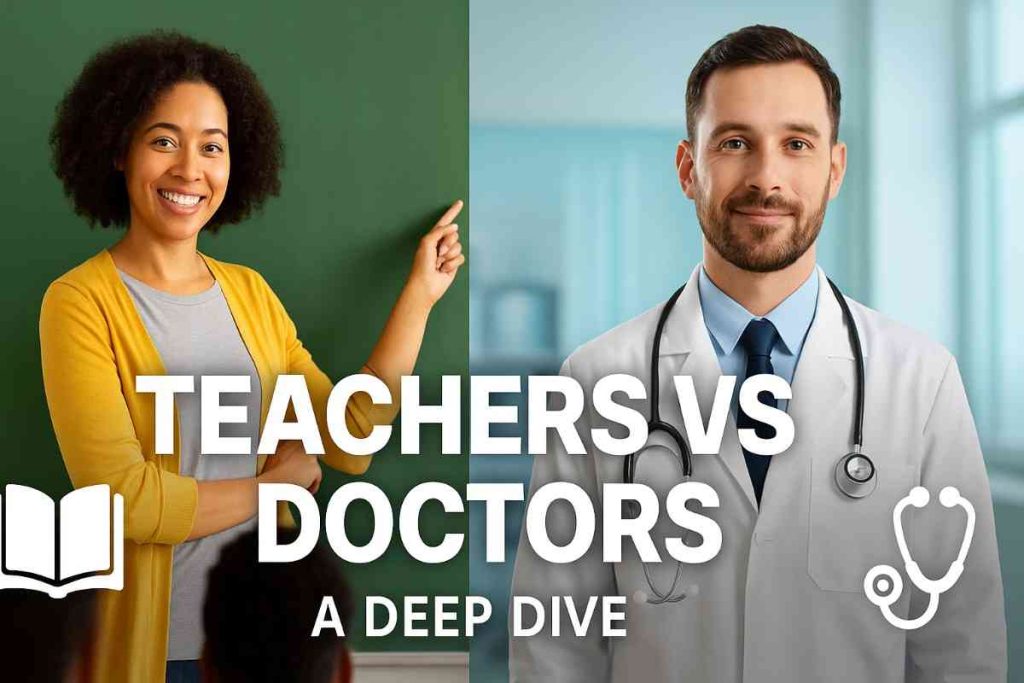
Few comparisons spark as much passionate debate as teachers vs doctors. Teachers shape the minds that build civilizations, while doctors safeguard the bodies that keep those civilizations alive.
Asking “Are teachers better than doctors?” isn’t just a philosophical exercise, it’s a chance to understand how education and healthcare power everything from personal wellbeing to national prosperity.
In this article, we unpack the roles of teachers and doctors in society, compare their short- and long-term impact, examine evidence behind education and health outcomes, and arrive at a fair conclusion: not which profession is “better,” but how they complement one another and how society can better support both.
The Role of Teachers in Society: Architects of Human Potential
If civilization is a relay race, teachers are the early runners who hand off the baton of knowledge, skills, and values to each new generation. Their influence shows up in three powerful ways:
1) Knowledge Builders and Skill Shapers
Teachers don’t just deliver facts; they teach students how to think to analyze, question, synthesize, and create. From phonics to physics, from coding to critical thinking, they help young people build cognitive tools that last a lifetime.
2) Mentors, Models, and Meaning-Makers
Great teachers are mentors who shape character instilling perseverance, curiosity, empathy, and civic responsibility.
They model how to engage with differences, resolve conflict, learn from failure, and collaborate.
3) Multipliers of Prosperity
Education’s payoff is personal and societal. On average, each additional year of schooling is associated with roughly a 9–10% increase in earnings.
Education is one of the most reliable paths out of poverty for individuals and a driver of productivity for economies.
Global organizations also highlight that to reach universal schooling targets, the world needs to recruit tens of millions of new teachers this decade evidence of the profession’s centrality to development.
Key takeaway: Teachers are nation builders. They create the conditions for health literacy, economic participation, and democratic life shaping the very people who will one day become doctors, engineers, entrepreneurs, artists, and leaders.
The Role of Doctors in Society: Guardians of Life and Public Health
While teachers expand what we can do, doctors ensure we live long and well enough to do it. Their impact can be felt at the bedside, in the clinic, and across entire populations.
1) Clinicians and Lifesavers
Doctors diagnose, treat, and manage illness often in moments where minutes and decisions separate life from death.
In emergencies, chronic care, and maternal and child health, their expertise converts suffering into survival.
2) Public Health Protectors
At the population level, health systems and preventive care (vaccination, screening, primary care) add years to life and life to years.
Global life expectancy rose markedly from 2000 to 2019, reflecting advances in care and public health before the COVID-19 shock.
3) Quality and Safety as Life-or-Death Issues
The quality of health systems matters as much as access. Analyses estimate that millions of deaths annually are attributable to poor-quality care, highlighting the life-and-death consequences of investment in clinical training, safety, and system design.
Key takeaway: Doctors and strong health systems save lives today and extend healthy years tomorrow benefits that compound across families, communities, and economies.
Teachers vs Doctors: Comparing Scope, Timing, and Type of Impact
The question “Are teachers better than doctors?” often stems from comparing incomparable goods.
Both professions deliver extraordinary value but in different ways, on different timelines, and through different mechanisms.
1) Scope of Influence
- Teachers: One teacher can influence hundreds or thousands of students over a career. Their reach multiplies as former students now adults teach others informally in families, workplaces, and communities.
- Doctors: A doctor’s influence is deep and immediate, often focused on individuals and families. A single correct decision can avert tragedy; a community health intervention can protect thousands.
2) Timing of Benefits
- Education effects are long-term and cumulative. Years of schooling lift lifetime earnings, reduce the risk of unemployment, and contribute to better health behaviors often manifesting gradually.
- Healthcare effects are immediate and ongoing. Timely care saves lives now, and primary care systems prevent disease and disability across decades.
3) The Nature of Impact
- Teachers build human capital skills, values, and creativity that power economies and strengthen civil society. High-quality teaching practices (e.g., formative assessment, effective classroom interaction) are linked to improved academic and non-cognitive outcomes.
- Doctors improve health capital reducing mortality and morbidity, enabling people to work, learn, and care for families. At the same time, social and behavioral determinants also drive large shares of premature mortality reminding us why education and health are interlinked.
Bottom line: Teachers and doctors operate on different fronts of human flourishing. Education expands what people can become; healthcare protects their ability to get there.
Cultural and Historical Perspectives: Reverence in Different Contexts
Across civilizations, both teachers and healers have been revered:
- Teachers from philosophers and scholars to community tutors were seen as the transmitters of wisdom, shaping moral codes, crafts, and culture. In many traditions, teaching is a sacred calling, often linked with civic duty and nation-building.
- Doctors and healers from herbalists and midwives to surgeons were entrusted with life’s most vulnerable moments, from birth to illness to end-of-life care.
Modern societies continue to honor both sometimes differently depending on local history, religion, economic structure, and policy priorities.
In countries investing heavily in mass education, teachers become symbols of social mobility and national progress; in societies grappling with epidemics or aging populations, doctors may be elevated as frontline protectors. Neither reverence is misplaced.
Evidence Snapshot: What the Data Say About Education and Health
- Earnings & Growth: Each year of schooling returns about 9–10% in private earnings; at scale, education is associated with long-run GDP growth and productivity gains.
- Teacher Quality: High-quality teacher practices show links with improved student outcomes, indicating that what teachers do in classrooms materially changes life trajectories.
- Life Expectancy: Global life expectancy increased significantly from 2000–2019, with public health and clinical care playing key roles.
- Primary Care: Strong primary care systems are associated with lower child mortality and better resilience during economic shocks.
- Quality of Care: Poor healthcare quality contributes to millions of avoidable deaths a reminder that training, staffing, and system design matter.
These datapoints reinforce a simple truth: education and health are co-dependent engines of human development.
Educated populations adopt healthier behaviors and navigate systems more effectively; healthy populations can learn, work, and innovate.
Challenges Both Professions Face and Why They Matter
For Teachers
- Resource constraints and large classes: Pupil-to-teacher ratios and overcrowded classrooms can hinder individualized attention.
- Recruitment and retention: Many systems need to recruit large numbers of new teachers this decade demand that requires better pay, training, and professional status.
- Professional development: Continuous training in evidence-based teaching practices (e.g., formative assessment) is crucial for impact.
For Doctors
- Burnout and workforce shortages: Long hours, complex caseloads, and moral injury can erode wellbeing and drive attrition.
- Access and quality gaps: From rural shortages to under-resourced facilities, healthcare inequities persist. Improving primary care coverage and care quality saves lives.
- System pressures: Aging populations, chronic disease, and rising costs demand team-based care, prevention, and data-enabled decision-making.
Shared challenge: Both professions carry immense moral responsibility and face public scrutiny. Supporting them isn’t charity it’s infrastructure for a thriving society.
Why the “Who’s Better?” Question Misses the Point
- From Competition to Complements: Every doctor was once taught by teachers. Every student learns better when healthy. Every patient recovers better when informed. Education amplifies healthcare, and healthcare protects education’s returns.
- From Professions to Systems: Instead of isolating professionals, focus on systems: Are schools and clinics resourced, staffed, and quality-assured? Do communities have clean water, safety, and nutrition? Do policies support prevention and continuous learning?
- From Status to Outcomes: The goal is human flourishing, not professional prestige. The right question is: What mix of education and health investments produces the best outcomes for people and places? Evidence suggests balanced investments teacher quality and primary care quality yield outsized returns.
Practical Ways Society Can Support Both
- Invest in teacher pipelines: Scholarships, mentoring, and competitive pay to attract and retain talented educators especially in underserved areas.
- Prioritize evidence-based teaching: Scale formative assessment and other high-impact classroom practices shown to improve outcomes.
- Strengthen primary care: Expand coverage, reduce barriers to access, and invest in community health workers, vaccination, and routine screening.
- Elevate quality and safety: Adopt rigorous quality standards in clinics and hospitals; support coaching and continuous learning for both teachers and clinicians.
- Promote health and education literacy: Integrate health topics in school curricula and offer patient education in clinics, creating a virtuous cycle between learning and health.
FAQs: Teachers vs Doctors – Quick Answers
Are teachers better than doctors?
No. They serve different, complementary roles. Teachers build the human capital that powers societies; doctors safeguard the health that allows people to learn and work. Both are indispensable.
Which profession has a bigger long-term impact?
Education compounds across a lifetime and generations (higher earnings, better civic participation), while healthcare delivers immediate, sometimes life-saving benefits and extends healthy years. The best outcomes come from investing in both.
Is there data showing teachers’ impact on outcomes?
Yes. Research links specific teacher practices to better academic and non-cognitive outcomes. Quality teaching changes trajectories.
What about healthcare’s measurable impact?
Primary care coverage reduces child mortality; high-quality systems prevent avoidable deaths. Global life-expectancy gains illustrate healthcare’s broad benefits.
Conclusion: Two Pillars, One Purpose
So, are teachers better than doctors? Asking that question is like asking whether oxygen is better than water.
Teachers enable minds to flourish; doctors safeguard the bodies that carry those minds. Education boosts earnings, productivity, and civic life; healthcare adds years and quality to those lives.
Societies thrive when they invest in both teacher quality and healthcare qualityespecially primary care and classroom practices that are proven to move the needle.