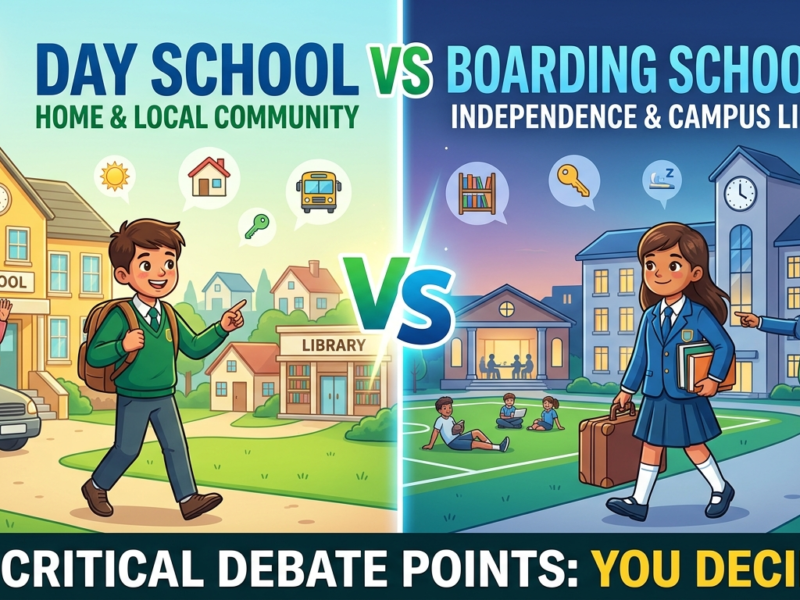
For decades, parents, educators, and even students themselves have debated one big question: Are day schools better than boarding schools?
Choosing the right type of school is one of the most important decisions in a child’s life, and it can shape not only their education but also their personal growth, relationships, and future opportunities.
While both schooling options come with their own advantages, many argue that day schools are better than boarding schools because of the balance they provide between academics, family life, and personal freedom.
In this post, we’ll break down the differences between day schools and boarding schools, highlight the arguments on both sides, and help you understand why many parents and students lean towards day schools in this ongoing debate.
Understanding the Difference Between Day Schools and Boarding Schools
Before diving into the debate, it’s important to clarify the distinction:
Day Schools: Students attend classes during the day and return home afterward. They are rooted in the idea of combining formal education with the support of family life.
Read also: Best Debate Points: Why Mothers Are Better Than Fathers
Boarding Schools: Students live on campus full-time, often away from home, under strict schedules that combine academics, extracurriculars, and residential life.
While both aim to deliver quality education, the lifestyle and environment are vastly different, which makes this debate both personal and cultural.
Why Day Schools Are Better Than Boarding Schools – Key Arguments
Stronger Family Bond and Support System
One of the most significant advantages of day schools is the ability for children to return home daily.
Being surrounded by family builds emotional security, encourages open communication, and nurtures stronger family ties.
This kind of support system is harder to replicate in boarding schools, where students spend most of their time away from loved ones.
Lower Cost and Financial Accessibility
Day schools are generally more affordable than boarding schools. Since boarding schools charge for accommodation, meals, and round-the-clock supervision, their fees are often far higher.
Day schools make quality education accessible to a wider range of families without the heavy financial burden.
Better Social Balance
Students in day schools experience both academic life at school and personal life at home.
This balance allows them to enjoy family traditions, community activities, and friendships outside of school.
Boarding schools, while socially enriching in their own way, can sometimes create a bubble that isolates students from the “real world.”
Reduced Pressure and Stress
Life in a boarding school can be highly structured and sometimes stressful, with students expected to follow strict routines and rules.
See now: Primary Six Common Entrance Past Questions: The Complete Guide for Students and Parents
Day schools, on the other hand, provide students with the chance to relax at home, recharge, and maintain a healthier emotional balance.
Flexibility and Personal Freedom
Day school students often have more opportunities to explore personal hobbies, join community clubs, or attend family events.
This flexibility nurtures individuality and allows children to grow beyond the rigid framework of school.
Arguments in Favor of Boarding Schools
Of course, boarding schools also come with their advantages, and it’s important to acknowledge them in this debate.
Discipline and Structured Environment
Boarding schools emphasize routine, discipline, and independence. Many parents appreciate the structured schedule that can instill a sense of responsibility in children.
Access to Specialized Facilities
Many boarding schools boast world-class sports facilities, art programs, and extracurricular opportunities that are not always available in day schools.
Independence and Responsibility
Living away from home forces students to develop self-reliance, organizational skills, and independence earlier than their peers in day schools.
Comparing Academic Performance in Day vs. Boarding Schools
When it comes to academics, the debate isn’t straightforward. Some studies suggest boarding school students may have access to more resources, smaller class sizes, and specialized teachers.
However, academic success is not exclusive to one type of school.
Day school students benefit from consistent parental involvement and support, which plays a key role in academic performance.
The difference often comes down to the child’s individual learning style and the school’s overall quality.
Social and Emotional Development
In Day Schools
Students grow up with the constant presence of family, which can boost emotional security and self-esteem.
They also learn to balance relationships at school with those at home and in the community.
In Boarding Schools
Students develop resilience, adaptability, and strong peer bonds. They may mature faster socially, but some may also struggle with homesickness and feelings of isolation.
Read on: Fully Funded Leiden University Scholarship in the Netherlands
Ultimately, the “better” environment depends on the student’s personality and emotional needs.
Parental Perspectives in the Debate
Parents often weigh several factors before deciding:
- Safety: Many parents feel more at ease knowing their child returns home daily in a day school setting.
- Cost: Day schools are significantly more affordable, making them the more practical choice for most families.
- Cultural Values: In many cultures, family closeness is prioritized, making day schools the natural preference.
Conclusion; Are Day Schools Truly Better?
The day schools vs. boarding schools debate has no one-size-fits-all answer. Both have strengths and limitations, and the best choice depends on the child’s personality, family circumstances, and long-term goals.
However, many parents and educators argue that day schools are better than boarding schools because they strike a balance between academics, family life, and personal growth.
Day schools encourage stronger family bonds, reduce costs, provide flexibility, and promote emotional well-being.
Boarding schools may foster independence and offer specialized resources, but for most families, the nurturing combination of education and home life in day schools makes them the preferred option.
In the end, the right school is one that supports not only academic excellence but also the holistic development of the child.