Choosing a trade subject in Senior Secondary School can be confusing, especially for Humanities (Arts) students who may feel unsure about technical or vocational options.
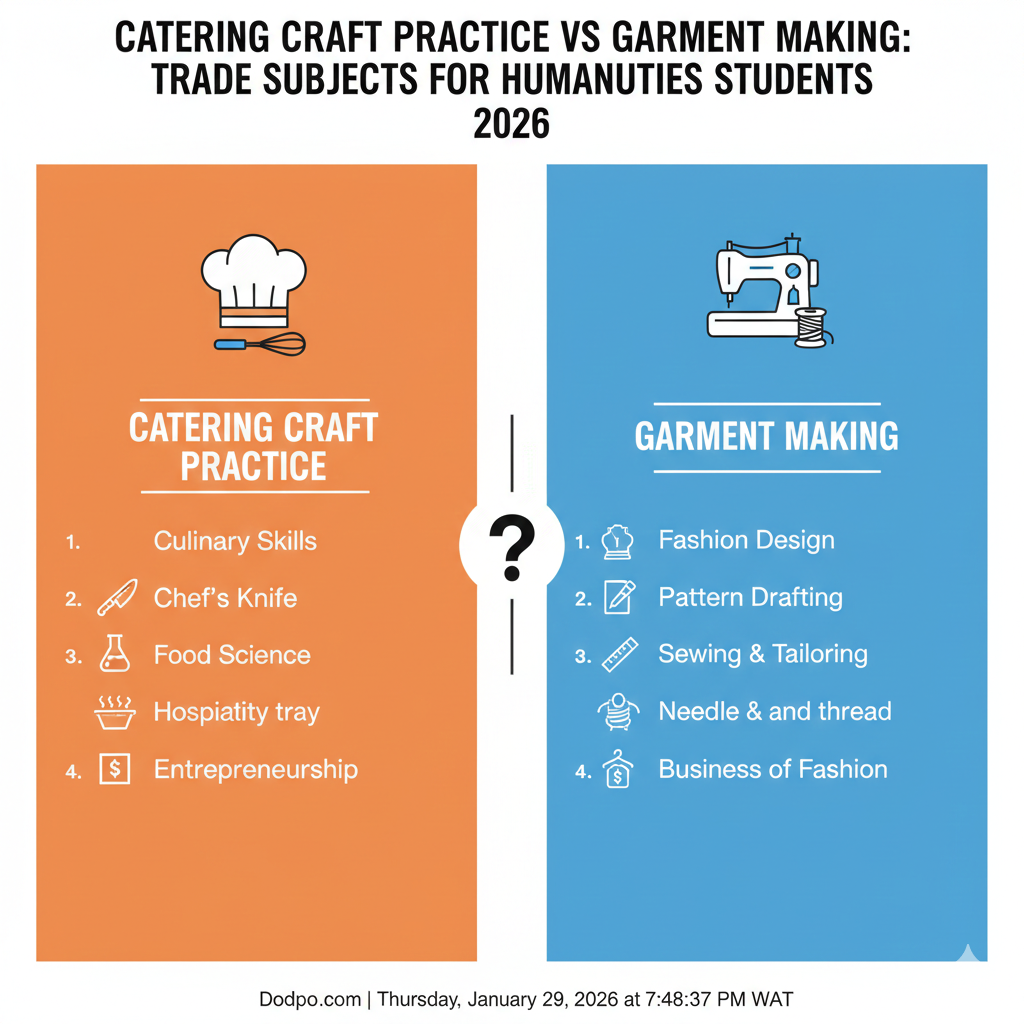
Two of the most popular and accessible trade subjects for humanities students in Nigeria are Catering Craft Practice and Garment Making (Fashion Designing).
Both subjects are WAEC-approved, skill-based, and highly practical. They also offer strong opportunities for self-employment and entrepreneurship. However, they suit different interests, abilities, and career goals.
This in-depth guide compares Catering Craft Practice vs Garment Making for Humanities students, helping students, parents, teachers, and guidance counselors make an informed choice.
Understanding Trade Subjects for Humanities Students
Trade subjects are not limited to science or technical students. Many trade subjects align perfectly with Arts and Humanities strengths, such as creativity, communication, organization, and aesthetics.
Humanities students often excel in:
-
Creative thinking
-
Presentation and aesthetics
-
Communication and customer interaction
-
Planning and organization
Both Catering Craft Practice and Garment Making tap into these strengths in different ways.
What Is Catering Craft Practice?
Overview of Catering Craft Practice
Catering Craft Practice is a vocational subject that focuses on food preparation, service, and hospitality skills.
It trains students to prepare meals, snacks, baked goods, and beverages while observing hygiene, safety, and customer service standards.
It is examined by WAEC, NECO, and NABTEB and combines theory with extensive practical work.
Core Topics in Catering Craft Practice
Students offering Catering Craft Practice study topics such as:
-
Kitchen safety and hygiene
-
Food commodities and nutrition
-
Food preparation methods
-
Menu planning
-
Baking and pastry
-
Table setting and food service
-
Catering equipment and tools
-
Entrepreneurship in catering
Skills Developed in Catering Craft Practice
Catering Craft Practice helps students develop:
-
Cooking and baking skills
-
Time management
-
Teamwork and coordination
-
Creativity in food presentation
-
Customer service skills
-
Business and pricing skills
Career Opportunities in Catering Craft Practice
After secondary school, students can pursue careers such as:
-
Caterer
-
Baker or pastry chef
-
Restaurant assistant
-
Event food service provider
-
Hotel or hospitality staff
-
Food entrepreneur (small chops, cakes, snacks)
Many students start small food businesses immediately after school.
What Is Garment Making?
Overview of Garment Making
Garment Making, also known as Fashion Designing, is a trade subject that focuses on clothing construction, sewing, and fashion design. It trains students to design, cut, sew, and finish garments.
See also: How to Use the Feynman Technique to Understand Difficult Topics (Stop Cramming, Start Passing)
Like Catering Craft Practice, it is a WAEC-approved vocational subject suitable for Arts and Humanities students.
Core Topics in Garment Making
Garment Making covers:
-
Introduction to clothing and textiles
-
Sewing tools and equipment
-
Fabric types and uses
-
Body measurements
-
Pattern drafting and cutting
-
Sewing techniques
-
Garment finishing
-
Clothing care and maintenance
-
Fashion entrepreneurship
Skills Developed in Garment Making
Garment Making helps students build:
-
Creativity and design skills
-
Precision and attention to detail
-
Hand-eye coordination
-
Fashion sense and aesthetics
-
Customer measurement and fitting skills
-
Entrepreneurial skills
Career Opportunities in Garment Making
Graduates of Garment Making can work as:
-
Fashion designer
-
Tailor or dressmaker
-
Fashion stylist
-
Clothing entrepreneur
-
Costume designer
-
Fashion instructor or trainer
Garment making is especially popular among students interested in fashion and personal branding.
Check out: How to Teach Soil Enrichment to Primary 4 Students: A Complete Guide for Teachers and Parents
Catering Craft Practice vs Garment Making: Detailed Comparison
1. Suitability for Humanities Students
Catering Craft Practice
-
Suitable for students who enjoy cooking and food-related activities
-
Ideal for students with interest in hospitality and service
-
Requires teamwork and communication skills
Garment Making
-
Ideal for creative students who enjoy design and aesthetics
-
Suitable for students interested in fashion and clothing
-
Requires patience and attention to detail
Both subjects are suitable for humanities students, but interest is the key deciding factor.
2. Practical vs Creative Balance
Catering Craft Practice
-
More physically active
-
Involves standing for long periods
-
Practical work is time-sensitive
Garment Making
-
More design-oriented
-
Requires sitting and focused work
-
Practical tasks may take longer but are less physically demanding
Students should consider their physical comfort and working style.
3. WAEC Examination Structure
Both subjects have theory and practical examinations.
Catering Craft Practice WAEC Exam
-
Theory questions on hygiene, nutrition, tools, and procedures
-
Practical cooking and food presentation
Garment Making WAEC Exam
-
Theory questions on textiles, tools, and processes
-
Practical garment construction and finishing
Neither subject is “easier”; success depends on practice and preparation.
4. Cost of Learning and Practice
Catering Craft Practice
-
Requires regular purchase of food ingredients
-
Practical lessons may be costly over time
-
Equipment like ovens and mixers may be school-provided
Read now: The Complete List of 26 Tradepreneur Subjects for WAEC: How to Choose a Profitable Skill
Garment Making
-
Requires fabrics, threads, and sewing tools
-
Sewing machines may be shared in school workshops
-
Fabric costs vary depending on design
Parents should consider long-term practice costs.
5. Speed of Income Generation After School
Catering Craft Practice
-
Faster to start small businesses
-
Students can sell snacks, cakes, or cooked food immediately
-
High demand for food services
Garment Making
-
Takes more time to build a client base
-
Income grows as skills and reputation improve
-
High competition but strong branding opportunities
Catering often provides quicker income, while garment making offers long-term brand growth.
6. Entrepreneurship Opportunities
Both subjects support self-employment.
Catering Businesses
-
Small chops business
-
Cake and pastry sales
-
Event catering
-
Food delivery services
Garment Making Businesses
-
Custom tailoring
-
Ready-to-wear fashion
-
School uniform production
-
Online fashion brands
Students interested in business ownership can succeed in either field.
Which Is Better for Humanities Students?
There is no universal answer. The better choice depends on the student.
Choose Catering Craft Practice If You:
-
Love cooking and food
-
Enjoy teamwork and service
-
Want faster income opportunities
-
Are interested in hospitality or food business
Choose Garment Making If You:
-
Love fashion and design
-
Enjoy creative and detailed work
-
Are patient and precise
-
Want to build a fashion brand
Common Myths About These Trade Subjects
See now: Solar Photovoltaic Installation and Maintenance Syllabus for JSS3 (Complete Guide)
-
“Trade subjects are for weak students” – False. They require skill, discipline, and intelligence.
-
“Humanities students cannot do vocational subjects” – False. Many excel in them.
-
“They don’t lead to serious careers” – False. Many successful entrepreneurs started with these subjects.
How Parents and Teachers Can Help Students Decide
Parents and teachers should:
-
Encourage honest discussions about interests
-
Avoid forcing personal preferences
-
Arrange exposure visits or demonstrations
-
Support practical learning
-
Respect skill-based career choices
Guidance counselors play a key role in career alignment.
National and Global Relevance of Both Subjects
Both catering and fashion contribute significantly to:
-
Employment generation
-
Youth empowerment
-
Creative industries
-
Economic growth
Nigeria’s food and fashion industries continue to expand locally and internationally.
Conclusion
For Humanities students, both Catering Craft Practice and Garment Making are excellent trade subject options. Catering offers quicker income and hospitality-focused careers, while garment making provides creative expression and long-term fashion opportunities.
The best choice depends on interest, creativity, physical comfort, career goals, and entrepreneurial vision. When chosen thoughtfully, either subject can lead to skill mastery, self-reliance, and a successful future.