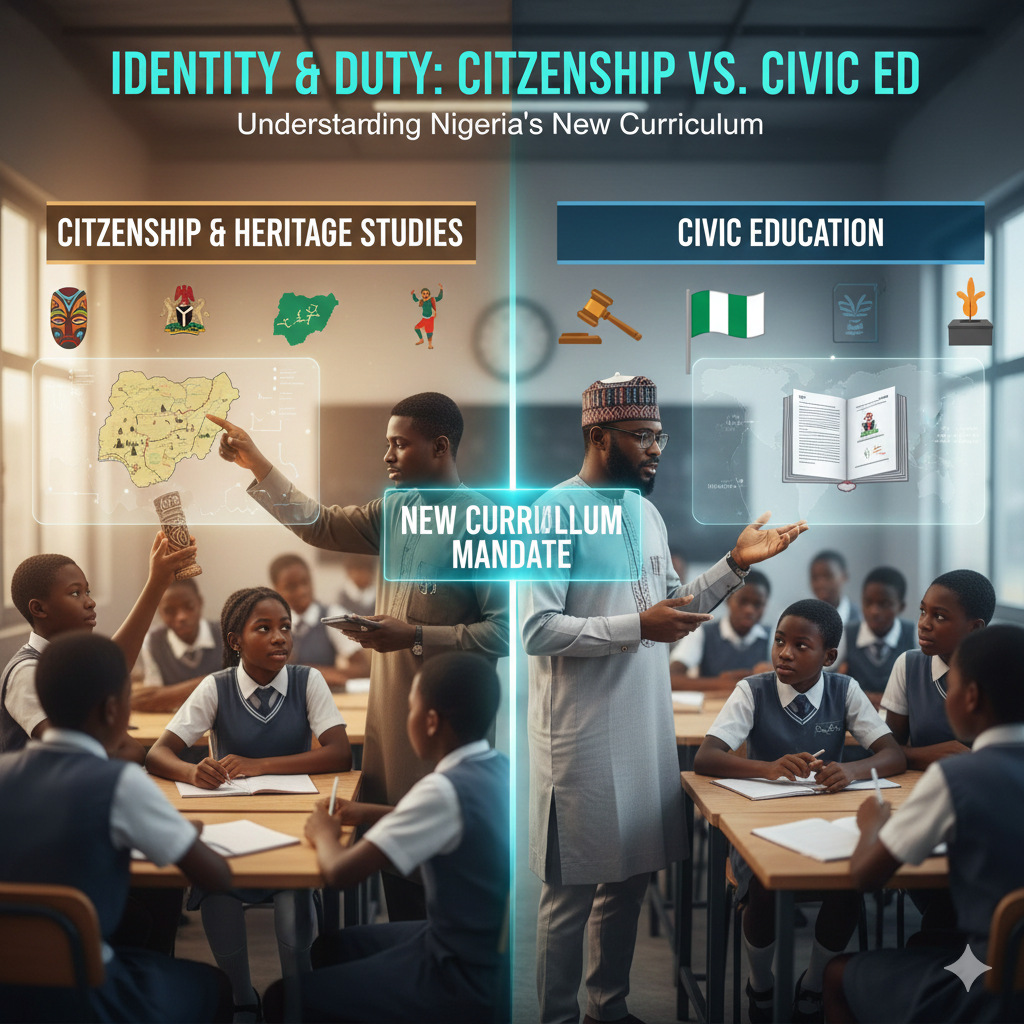
In Nigeria’s basic and secondary school curriculum, subjects like Citizenship, Heritage Studies, and Civic Education often confuse students, parents, and even teachers.
Many people assume they are the same subject or interchangeable, but in reality, they have different goals, content focus, and learning outcomes.
Understanding the difference between Citizenship and Heritage Studies & Civic Education is important for students, especially those preparing for examinations, parents supporting their children’s learning, and educators planning lessons.
These subjects play a major role in shaping responsible, culturally aware, and active Nigerian citizens.
This article explains the meaning of each subject, their objectives, key differences, similarities, and why they are important in Nigeria’s education system.
What Is Citizenship Education?
Citizenship Education is a subject that focuses on preparing individuals to become responsible members of a nation. In Nigeria, it teaches students about their rights, duties, responsibilities, and loyalty to the country.
Check out: How to Use the Pomodoro Technique to Crush WAEC and JAMB (Without Burning Out)
Citizenship Education helps learners understand what it means to belong to Nigeria as a country, not just as individuals from different ethnic or religious backgrounds.
Key Focus of Citizenship Education
Citizenship and national identity
Rights and responsibilities of citizens
National symbols and values
Loyalty, patriotism, and national unity
Democracy and governance
The subject emphasizes obedience to laws, respect for authority, and commitment to national development.
Objectives of Citizenship Education
The main objectives of Citizenship Education in Nigeria include:
Teaching students their roles and responsibilities as Nigerian citizens
Promoting national unity and peaceful coexistence
Encouraging respect for the Nigerian constitution and laws
Instilling values such as honesty, discipline, and patriotism
Preparing students for active participation in governance and community life
Citizenship Education focuses strongly on the relationship between the individual and the state.
What Is Heritage Studies & Civic Education?
Heritage Studies & Civic Education is a combined subject introduced in Nigeria’s basic education curriculum. It blends cultural education (Heritage Studies) with social responsibility and governance education (Civic Education).
This subject helps students understand Nigeria’s cultural heritage while also learning how society works and how citizens can contribute positively.
Heritage Studies focuses on culture, traditions, values, and history, while Civic Education focuses on governance, democracy, and civic responsibilities.
Key Focus of Heritage Studies & Civic Education
Nigerian cultural heritage and traditions
Values, norms, and moral upbringing
Community life and cooperation
Democracy, rule of law, and civic duties
Human rights and social responsibilities
The subject balances cultural awareness with civic engagement.
Objectives of Heritage Studies & Civic Education
The objectives of this subject include:
Check out: The 1 3 5 7 Rule in Studying: How to Remember Everything for JAMB & WAEC
Preserving Nigerian cultural heritage and traditions
Teaching moral values and social ethics
Promoting peaceful coexistence among diverse ethnic groups
Educating students about democracy and good governance
Encouraging active participation in community and national development
It aims to shape students into culturally grounded and socially responsible citizens.
Understanding Heritage Studies
Heritage Studies is the cultural component of the combined subject. It focuses on Nigeria’s rich history, traditions, customs, and shared values.
Check out: How to Use the Cornell Method to Take Better Lecture Notes (A Guide for Nigerian Students)
Topics Covered in Heritage Studies
Traditional festivals and ceremonies
Cultural beliefs and practices
Marriage, family, and community life
Respect for elders and authority
Traditional occupations and crafts
Heritage Studies helps students appreciate Nigeria’s diversity and understand the importance of preserving culture in a modern society.
Understanding Civic Education
Civic Education is the governance and social responsibility component of the subject. It teaches students how society is organized and how citizens should behave.
Topics Covered in Civic Education
Democracy and democratic institutions
Human rights and responsibilities
Rule of law and constitution
Good citizenship and leadership
National values and social justice
Civic Education prepares students to participate actively in civic life and national decision-making.
Key Differences Between Citizenship and Heritage Studies & Civic Education
Although these subjects are related, they are not the same. Below are the major differences.
Difference in Meaning
Citizenship Education focuses mainly on the relationship between individuals and the state, emphasizing national identity and legal responsibilities.
Heritage Studies & Civic Education combines cultural education with civic responsibility, focusing on both tradition and modern governance.
Difference in Scope
Citizenship Education has a narrower scope, concentrating on citizenship status, rights, duties, and loyalty to the nation.
Heritage Studies & Civic Education has a broader scope, covering culture, traditions, moral values, democracy, and social participation.
Difference in Content
Citizenship Education focuses on topics such as:
Rights and duties of citizens
National symbols
Patriotism and loyalty
Constitution and governance
Heritage Studies & Civic Education focuses on:
Read more: How to Use the Feynman Technique to Understand Difficult Topics (Stop Cramming, Start Passing)
Cultural heritage and traditions
Moral and social values
Democracy and civic duties
Community development
Difference in Educational Level
Citizenship Education is often emphasized more clearly at higher basic and secondary levels as a standalone civic-focused subject.
Heritage Studies & Civic Education is mostly taught at the basic education level as a combined subject to build early cultural and civic awareness.
Difference in Learning Outcome
Citizenship Education aims to produce law-abiding, patriotic citizens who understand their responsibilities to the state.
Heritage Studies & Civic Education aims to produce culturally aware, morally responsible, and socially active individuals.
Difference in Approach
Citizenship Education is more formal and legal in approach, focusing on laws, rights, and national obligations.
Heritage Studies & Civic Education is more social and cultural, focusing on values, traditions, and community life alongside civic responsibilities.
Similarities Between Citizenship and Heritage Studies & Civic Education
Despite their differences, the subjects share several similarities.
Both promote good citizenship and responsible behavior
Both emphasize national unity and peaceful coexistence
Both teach respect for laws, authority, and human rights
Both encourage participation in community and national development
Both aim to produce responsible Nigerian citizens
They work together to support nation-building and social stability.
Importance of Citizenship Education in Nigeria
Citizenship Education plays a crucial role in Nigeria due to its diverse population and political system.
It promotes national unity in a multi-ethnic society
It helps reduce lawlessness and social disorder
It encourages political awareness and participation
It builds respect for democracy and governance
It prepares young people for leadership roles
In a country like Nigeria, understanding citizenship responsibilities is essential for national development.
Importance of Heritage Studies & Civic Education in Nigeria
This subject is equally important because it addresses cultural identity and social values.
It preserves Nigerian cultural heritage
It promotes moral upbringing and discipline
It encourages tolerance and respect for diversity
It teaches democratic values from an early age
It builds socially responsible citizens
Heritage Studies & Civic Education helps students balance tradition with modern civic life.
Which Subject Is More Important?
Neither subject is more important than the other. They serve different but complementary purposes.
See now: How to Cram for an Exam in 24 Hours: The “Emergency” Guide to Passing (Without Fainting)
Citizenship Education focuses on national responsibility and governance.
Heritage Studies & Civic Education focuses on cultural identity and social values alongside civic duties.
Together, they help produce well-rounded citizens who understand their culture, respect the law, and contribute positively to society.
Common Misconceptions About the Subjects
Many people believe Citizenship and Civic Education are exactly the same. While they overlap, they differ in focus and depth.
Another misconception is that Heritage Studies is outdated. In reality, it plays a key role in preserving identity and values in a globalized world.
Understanding these subjects properly helps students appreciate their relevance.
Frequently Asked Questions
Is Citizenship the same as Civic Education?
No. Citizenship focuses more on legal and national responsibilities, while Civic Education focuses on governance and civic participation.
Why are Heritage Studies and Civic Education combined?
They are combined to help students learn cultural values alongside civic responsibilities.
Are these subjects compulsory in Nigeria?
Yes, they are part of Nigeria’s basic education curriculum.
Do these subjects appear in WAEC or NECO?
Civic-related topics appear under Civic Education at higher levels, while Heritage Studies is mainly taught at basic levels.
Conclusion
The difference between Citizenship and Heritage Studies & Civic Education lies in their focus, scope, and objectives. Citizenship Education emphasizes the legal and national responsibilities of individuals as members of the state.
Heritage Studies & Civic Education combines cultural awareness with civic responsibility, helping students understand both their roots and their role in society.
Both subjects are essential in Nigeria’s education system. Together, they promote national unity, cultural preservation, moral values, and active citizenship.
Understanding their differences helps students, parents, and educators appreciate their importance and relevance in shaping Nigeria’s future.