Here is a complete guide on How to make compost manure project for primary school.
Compost manure projects are one of the best hands-on activities for primary school pupils. They help children understand how waste can be reused, how plants get nutrients, and why caring for the environment matters.
A compost manure project is simple, low-cost, and ideal for classroom learning, school gardens, and home practice.
This complete guide is written for primary school teachers, parents, and pupils. It explains how to make compost manure using easy steps, safe materials, and age-appropriate methods that align with the primary school curriculum.
What Is Compost Manure?
Simple Explanation for Primary School Pupils
Compost manure is made from dead plants and food waste that have decayed and turned into rich soil. This soil helps plants grow healthy and strong.
See also: How to Use the Cornell Method to Take Better Lecture Notes (A Guide for Nigerian Students)
You can explain it to pupils like this:
“Compost manure is food for the soil.”
Why Compost Manure Is Important
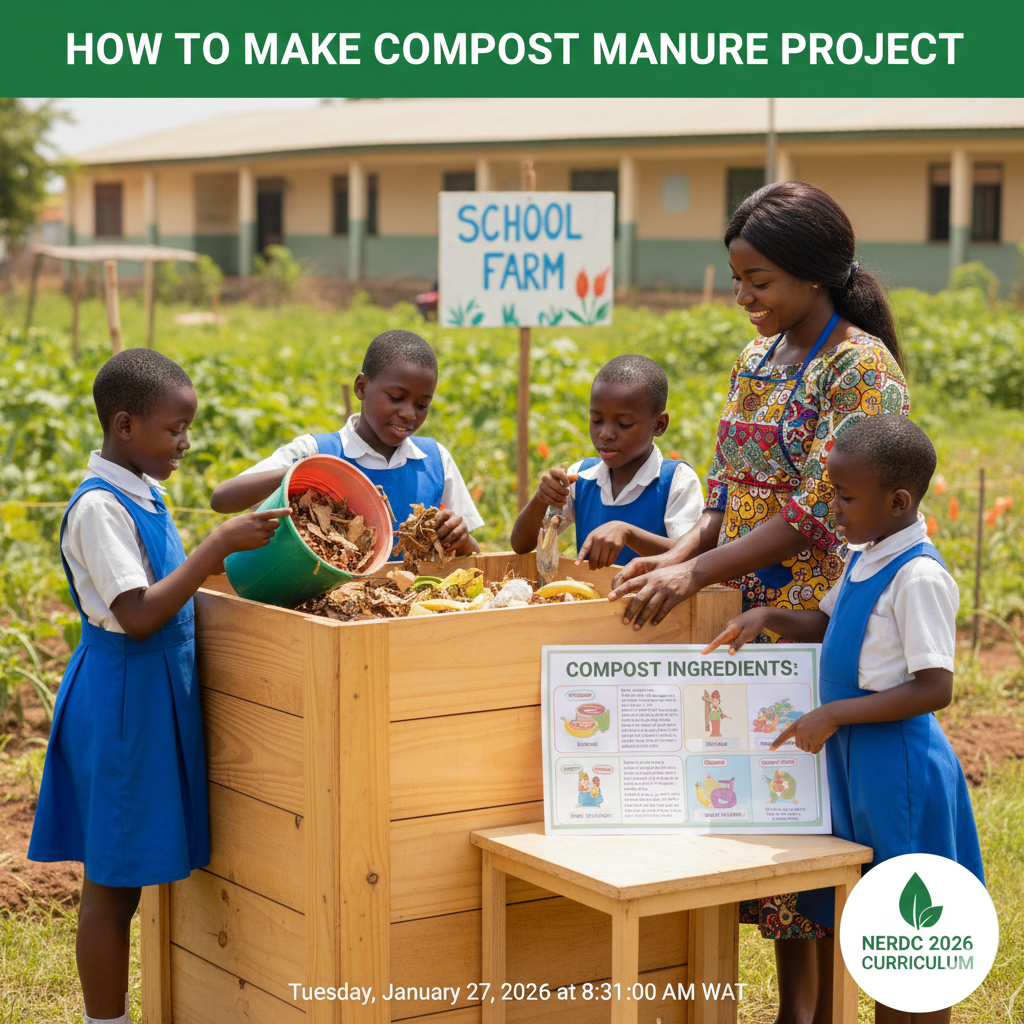
Teaching compost manure at the primary school level helps pupils understand environmental responsibility and basic agriculture.
Benefits of Compost Manure
-
Improves soil fertility
-
Helps plants grow faster and healthier
-
Reduces waste at home and in school
-
Encourages recycling and cleanliness
-
Saves money by using natural materials
Learning Objectives of the Compost Manure Project
By the end of the project, pupils should be able to:
-
Explain what compost manure is
-
Mention materials used to make compost
-
Describe the steps involved in compost making
-
Participate in simple environmental activities
-
Understand the importance of waste recycling
Materials Needed for Compost Manure Project
Organic Materials (Green and Brown Waste)
-
Dry leaves
-
Grass clippings
-
Vegetable peels
-
Fruit waste
-
Leftover food (not oily)
Other Materials
-
Soil
-
Water
-
Bucket, container, or pit
-
Stick or small shovel
Note: Avoid plastic, glass, metal, and cooked oily food.
Check out: How to Apply for Student Loans in Nigeria (NELFUND Guide): The Complete Step-by-Step
Types of Compost Manure Suitable for Primary School
Compost Pit Method
This involves digging a small pit in the school garden or backyard.
Compost Container Method
This uses buckets, plastic containers, or old bins. It is best for schools without garden space.
Step-by-Step Guide: How to Make Compost Manure
Step 1: Choose a Compost Site
-
Select a safe and shaded area
-
Ensure it is not too close to classrooms
-
Make sure pupils can access it easily under supervision
Step 2: Prepare the Container or Pit
-
Dig a shallow pit or use a container with small holes
-
The holes allow air to enter
-
Place a thin layer of soil at the bottom
Step 3: Add Organic Waste
Add waste in layers:
-
Dry leaves or grass
-
Food waste like fruit peels
-
A thin layer of soil
Repeat the layers until the pit or container is full.
Step 4: Water the Compost
-
Sprinkle a small amount of water
-
Do not flood the compost
-
The compost should be moist, not wet
Step 5: Cover the Compost
-
Cover with dry leaves or soil
-
This helps reduce smell
-
It keeps insects away
Step 6: Turn the Compost Regularly
-
Turn the compost once a week
-
Use a stick or small shovel
-
This helps air enter and speeds up decomposition
See also: How to Survive the 3 Weeks NYSC Orientation Camp: The Ultimate Survival Guide for New Corpers
Step 7: Wait and Observe
-
Compost takes 4–8 weeks to form
-
Pupils should observe changes
-
The compost will turn dark and smell like soil
Safety Rules for Pupils During the Project
Important Safety Guidelines
-
Wash hands after handling compost
-
Do not touch compost with bare hands if possible
-
Use tools instead of hands
-
Do not eat near the compost area
-
Always work under adult supervision
How Teachers Can Present the Compost Project in Class
Teaching Tips
-
Use simple language
-
Demonstrate each step clearly
-
Allow pupils to participate
-
Ask questions during the process
Suggested Classroom Questions
-
What materials did we add to the compost?
-
Why do we add soil?
-
What changes do we see after one week?
Sample Lesson Plan Outline
Introduction
Ask pupils where waste goes after it is thrown away.
Explanation
Explain compost manure and its importance.
Demonstration
Show how to add materials to the compost.
Activity
Allow pupils to help add waste and water.
Conclusion
Revise key points and benefits of compost manure.
Assessment and Evaluation
Ways to Assess Pupils
-
Oral questions
-
Drawing compost stages
-
Short written answers
-
Group presentations
Sample Evaluation Questions
-
What is compost manure?
-
Mention two materials used to make compost.
-
Why is compost manure important?
How Parents Can Support Compost Projects at Home
Parents can encourage learning by:
-
Allowing children to collect fruit peels
-
Creating a small compost container at home
-
Discussing plant growth
-
Encouraging cleanliness and recycling
Common Mistakes to Avoid
-
Adding plastic or nylon waste
-
Using too much water
-
Ignoring the compost for long periods
-
Adding oily or salty food waste
Uses of Compost Manure
Read more: How to Use the Cornell Method to Take Better Lecture Notes (A Guide for Nigerian Students)
Compost manure can be used for:
-
School gardens
-
Flower beds
-
Vegetable planting
-
Potted plants
This shows pupils the reward of their effort.
Importance of Compost Manure to the Environment
Teaching compost manure helps pupils learn that:
-
Waste can be reused
-
Soil needs nutrients
-
Clean environments support healthy living
It builds environmental awareness from a young age.
Conclusion
A compost manure project is a simple and effective way to teach primary school pupils about agriculture, recycling, and environmental care. Through hands-on activities, pupils learn how waste turns into something useful for plants and soil.
By following these steps and teaching methods, teachers and parents can make compost manure lessons fun, practical, and educational. This project not only supports the school curriculum but also helps raise responsible and environmentally conscious children.