How to Teach Soil Enrichment to Primary 4 Students: A Complete Guide for Teachers and Parents
Teaching soil enrichment to Primary 4 students is an important part of basic agricultural and environmental education. At this level, pupils are curious, energetic, and eager to understand how things work in nature.
Soil enrichment helps them learn how plants grow, why soil is important, and how humans can care for the environment to produce healthy crops.
This comprehensive guide is designed for teachers, parents, and tutors. It explains soil enrichment in simple terms, outlines clear teaching objectives, and provides practical classroom and outdoor activities suitable for Primary 4 students.
What Is Soil Enrichment?
Soil enrichment is the process of improving the quality of soil so that plants can grow well. It involves adding materials that provide nutrients, improve soil structure, and help the soil retain water.
For Primary 4 students, soil enrichment should be explained simply as “making the soil better for plants to grow.” Teachers should avoid technical language and use real-life examples that children can easily understand.
Why Teaching Soil Enrichment Is Important at Primary Level
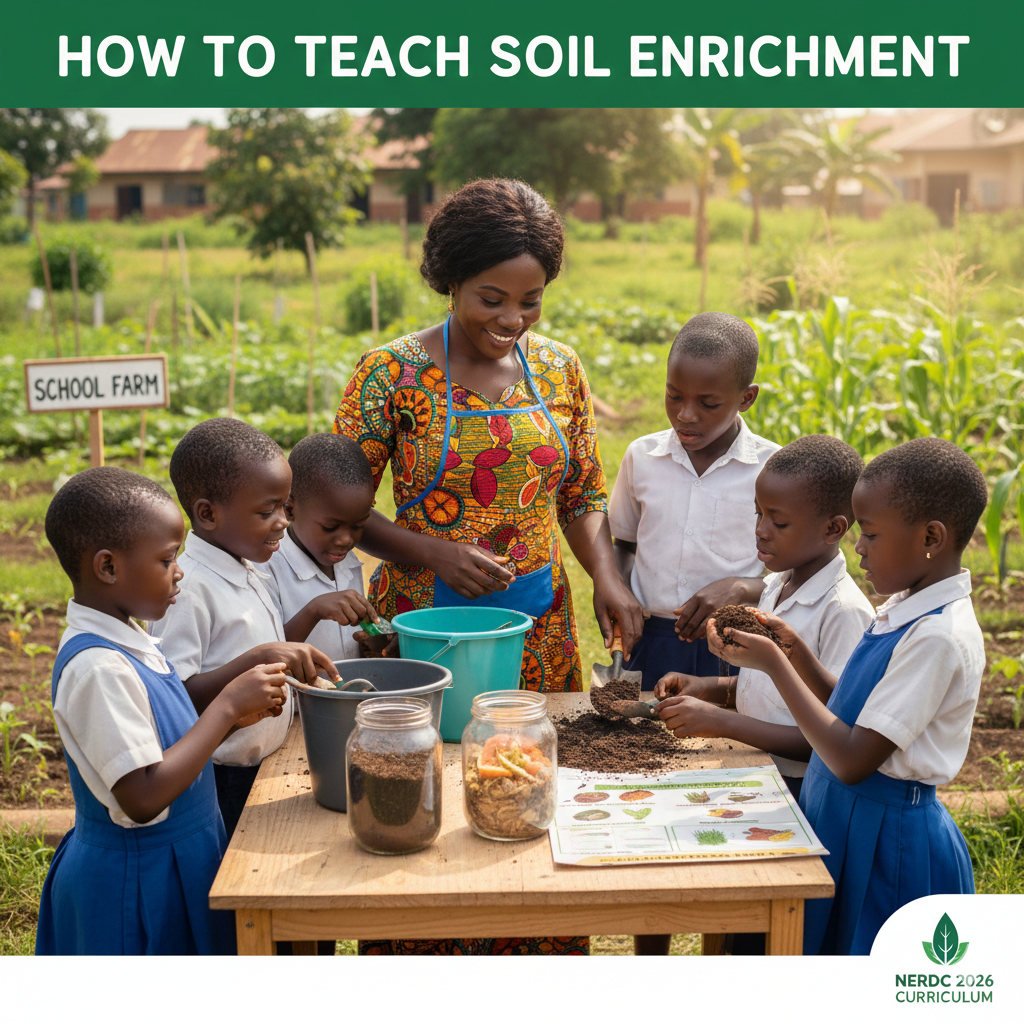
Teaching soil enrichment at the primary school level helps students:
Understand where food comes from
Learn the importance of soil in plant growth
Develop environmental awareness
Build basic agricultural knowledge
Practice responsibility and care for nature
Early exposure to these concepts helps pupils appreciate farming, gardening, and environmental conservation.
Check out: How to Use the Pomodoro Technique to Crush WAEC and JAMB (Without Burning Out)
Learning Objectives for Teaching Soil Enrichment to Primary 4 Students
Before teaching soil enrichment, teachers should define clear objectives. By the end of the lesson, pupils should be able to:
Explain what soil enrichment means
Mention reasons why soil enrichment is important
Identify materials used for soil enrichment
Describe simple methods of enriching soil
Participate in simple soil enrichment activities
These objectives guide lesson planning and assessment.
Introducing the Topic in a Simple Way
To introduce soil enrichment, teachers can start with familiar questions such as:
What do plants need to grow?
Why do some plants grow better than others?
Have you seen a farm or garden before?
Using pictures of healthy plants and weak plants can help pupils notice differences and think critically. Teachers can then explain that good soil helps plants grow strong and healthy.
Types of Soil Suitable for Teaching
Primary 4 students should be introduced to common soil types in a simple way:
Sandy soil – light and drains water quickly
Clay soil – heavy and holds water
Loamy soil – best for growing plants
Teachers should emphasize that loamy soil is ideal for farming and gardening.
Materials Used for Soil Enrichment
Pupils should learn about materials that help improve soil quality. These materials should be common and easy to identify.
Organic materials include:
Animal dung
Compost
Dry leaves
Kitchen waste
Plant remains
Inorganic materials can be introduced briefly, such as:
Fertilizers
However, for Primary 4, more focus should be placed on organic materials because they are safer and easier to demonstrate.
Simple Methods of Teaching Soil Enrichment
Teachers should use practical and interactive methods to teach soil enrichment effectively.
Use of Demonstration
Demonstration is one of the best ways to teach soil enrichment. Teachers can bring soil samples and enrichment materials to class.
See now: How to Read for 10 Hours a Day Without Getting Tired: The Ultimate Guide for Nigerian Students
Steps include:
Show pupils plain soil
Add organic materials such as compost
Mix the materials together
Explain how this makes the soil richer
This hands-on approach helps pupils remember the lesson.
Storytelling and Examples
Teachers can use short stories about farmers who improve their farms by enriching the soil. Stories make learning fun and relatable for children.
Group Discussion
Encourage pupils to talk about gardens they have seen at home or in their community. This builds confidence and participation.
Outdoor Practical Activities
Practical activities are essential for teaching soil enrichment to Primary 4 students.
School Garden Activity
If the school has a garden, teachers can:
Divide pupils into small groups
Allow them to prepare soil
Add organic materials
Plant seeds and water them
This activity helps pupils see the results of soil enrichment over time.
Container Gardening
In schools without gardens, teachers can use containers such as buckets or bowls.
Pupils can:
Fill containers with soil
Add compost or manure
Plant seeds
Observe plant growth
This method is simple and effective.
Teaching Safety During Soil Enrichment Lessons
Safety should always be emphasized during practical activities.
Teachers should remind pupils to:
Wash hands after handling soil
Avoid touching the mouth or eyes during activities
Use tools carefully
Follow instructions
Teaching safety helps pupils develop good habits.
Teaching Aids for Soil Enrichment Lessons
Visual and practical teaching aids make lessons more effective. These include:
Charts showing plant growth
Pictures of farms and gardens
Real soil samples
Compost materials
Short videos or animations
Teaching aids help pupils understand concepts faster.
Assessment and Evaluation
Assessment helps teachers know if pupils understand the topic.
See more: How to Survive the 3 Weeks NYSC Orientation Camp: The Ultimate Survival Guide for New Corpers
Simple assessment methods include:
Oral questions
Drawing and labeling soil and plants
Short written exercises
Practical demonstrations
Sample questions may include:
What is soil enrichment?
Why is soil enrichment important?
Mention two materials used to enrich soil.
These questions reinforce learning.
Common Challenges and How to Solve Them
Some challenges teachers may face include lack of materials or space.
Solutions include:
Using locally available materials
Collaborating with parents
Using containers instead of gardens
Teaching with pictures and videos
Creativity helps overcome these challenges.
Role of Parents in Teaching Soil Enrichment
Parents can support learning at home by:
Encouraging children to help in home gardens
Explaining simple farming practices
Providing materials like dry leaves or compost
Talking about food production
This reinforces what pupils learn in school.
Linking Soil Enrichment to Other Subjects
Soil enrichment can be linked to other subjects such as:
Basic Science
Agricultural Science
Environmental Studies
Health Education
This integration helps pupils see learning as connected.
Conclusion
Teaching soil enrichment to Primary 4 students is an opportunity to build environmental awareness, practical skills, and love for nature.
By using simple language, hands-on activities, and real-life examples, teachers and parents can make the topic engaging and meaningful.
When pupils understand how soil enrichment helps plants grow, they develop respect for farming and the environment. These lessons lay a strong foundation for future learning in agriculture, science, and sustainability.
With patience, creativity, and practical teaching methods, soil enrichment can become one of the most enjoyable and impactful topics for Primary 4 students.