Starting a debate can be intimidating, especially for students in secondary school who are new to public speaking.
Yet, with the right greeting and confidence, you can capture your audience’s attention and set the tone for a winning argument.
Think of your debate greeting as the first impression, just like meeting someone for the first time, it determines how your audience perceives you.
In this article, we’ll break down how to deliver an engaging debate greeting step by step. You’ll learn structure, examples, and useful tips to make your opening unforgettable.
How to Start a Debate Greeting in Secondary School
1. Introduction to Debate Greetings
A debate greeting is the opening statement that marks the beginning of your presentation.
It sets the tone for your entire performance. The way you start can make your audience sit up with interest or tune out completely.
In secondary school debates, a greeting is usually formal, polite, and brief, followed by an introduction of your team and topic.
2. Why the Greeting Matters in a Debate
Your greeting acts as a bridge between you and your audience. It helps you:
Read more: Simple Debate Greetings and Introductions That Work
- Show respect to your judges and opponents.
- Establish your confidence and professionalism.
- Create a positive first impression.
When done well, it makes the audience eager to listen to your points.
3. Understanding the Structure of a Debate Opening
Every good debate greeting follows a logical structure. Typically, it includes:
- A respectful greeting to the audience, judges, and opponents.
- An introduction of yourself and your team.
- A statement of your position (affirmative or opposing).
- A brief introduction of the debate topic.
This structure keeps your greeting clear, concise, and effective.
4. Components of a Perfect Debate Greeting
To sound professional and organized, include these elements:
Salutation: “Good morning, ladies and gentlemen, honorable judges, accurate timekeeper, my co-debaters, and the audience.”
Introduction: “I am [Your Name], the first speaker of the affirmative/opposing side.”
Topic Statement: “We are here to debate the motion which states that [insert motion].”
Transition: “Before I proceed, I would like to define key terms and outline our points.”
Each part should flow naturally into the next to maintain confidence and clarity.
See now: Easy Debate Topics for Primary Pupils: Fun Ideas for Young Learners
5. Step-by-Step Guide on How to Start a Debate Greeting in Secondary School
Here’s how to create a winning opening:
- Start with a warm greeting: Begin by addressing everyone respectfully.
- Acknowledge your audience: Mention the judges, teachers, and fellow debaters.
- Introduce yourself clearly: State your name, position, and side of the debate.
- Present the topic: Briefly state the motion in full.
- Capture attention: Add a strong opening line, quote, or rhetorical question.
Transition smoothly into your argument.
6. Crafting a Polite and Confident Opening Line
Your first sentence should reflect confidence and courtesy. For example:
“Good morning, honorable judges, esteemed audience, and my worthy opponents. It’s a pleasure to stand before you today to present our arguments on the motion that states, ‘Education is better than wealth.’”
This line is respectful, clear, and engaging, a perfect way to begin.
7. Addressing the Audience and Judges Properly
Always acknowledge your audience. The standard format is:
“Good morning, honorable judges, accurate timekeeper, my worthy opponents, and fellow students.”
This formal greeting shows respect and sets a professional tone from the start.
8. How to Introduce Yourself and Your Team
After your greeting, introduce yourself:
“I am [Your Full Name], the first speaker for the motion. With me are [Team Member 1] and [Team Member 2], and together we stand to support/oppose the motion that states…”
Mentioning your teammates creates unity and professionalism.
9. Example of a Strong Debate Greeting
Here’s a sample of a complete debate greeting:
“Good morning, honorable judges, accurate timekeeper, my co-debaters, and the audience. I am Sarah Williams, the first speaker for the motion that states, ‘Technology has done more harm than good.’
On our side, we have John, the second speaker, and Lucy, the third speaker. Together, we firmly believe that technology, while beneficial, has created more challenges for humanity. We will be proving this through logic, facts, and examples. Thank you.”
This greeting is polite, professional, and clearly introduces the topic and team.
10. Common Mistakes to Avoid During a Debate Opening
Avoid these common pitfalls:
- Speaking too fast or softly.
- Using slang or informal language.
- Forgetting to acknowledge judges or opponents.
- Starting without confidence or structure.
Remember: your greeting should sound practiced, not memorized.
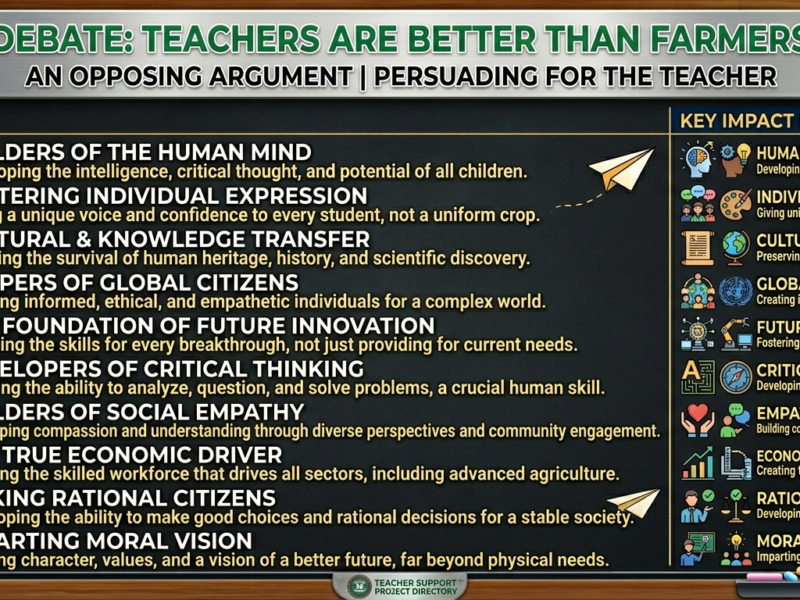
Check out: Debate on Teachers Are Better Than Farmers: Full Debate with Examples
11. Tips for Building Confidence Before Your Debate
- Practice repeatedly: Familiarity breeds confidence.
- Use positive visualization: Imagine yourself succeeding.
- Record yourself speaking: Identify areas for improvement.
- Get feedback: Ask teachers or friends for advice.
Confidence is the secret ingredient to a powerful start.
12. Practicing and Perfecting Your Delivery
Your delivery matters as much as your content. Maintain:
- Eye contact with the audience.
- A clear, calm voice with controlled speed.
- Good posture and natural gestures.
Practice in front of a mirror or peers until your introduction flows smoothly.
13. How to Use Humor or Quotes Effectively in Your Greeting
Adding humor or quotes can make your introduction stand out, but use them wisely.
Example using a quote:
“As Nelson Mandela once said, ‘Education is the most powerful weapon you can use to change the world.’ With that, we strongly support the motion that states…”
Keep humor light and appropriate for the setting.
14. Final Tips to Leave a Lasting Impression
Be authentic and calm.
End your greeting with a confident transition like:
Read on: Debate on Education Is Better Than Money – Strong Points for Both Sides
“With that said, I’ll proceed to our first point.”
Smile slightly, it helps you connect with your audience.
Conclusion
Starting a debate greeting in secondary school isn’t as difficult as it seems. All it takes is preparation, politeness, and a touch of confidence.
A well-crafted greeting lays the foundation for a compelling argument and shows your audience that you’re both respectful and knowledgeable.
With these tips, you’ll not only impress your teachers and judges but also inspire your peers with your clarity and composure.
FAQs on how to start a debate greeting in secondary school
1. What should I say first in a debate greeting?
Start with a polite salutation to judges, audience, and opponents. For example, “Good morning, honorable judges…”
2. How can I make my debate greeting interesting?
Use quotes, rhetorical questions, or a short story to capture attention while staying relevant to the topic.
3. How long should a debate greeting last?
Ideally, keep it between 30–60 seconds; just enough to introduce yourself and your motion confidently.
4. Should I memorize my debate greeting word for word?
It’s better to practice and internalize it rather than memorizing. This makes your delivery natural and engaging.
5. What are common greetings used in school debates?
Common examples include:
- “Good morning, honorable judges…”
- “Distinguished ladies and gentlemen…”
- “Esteemed panel of judges, timekeeper, and audience…”