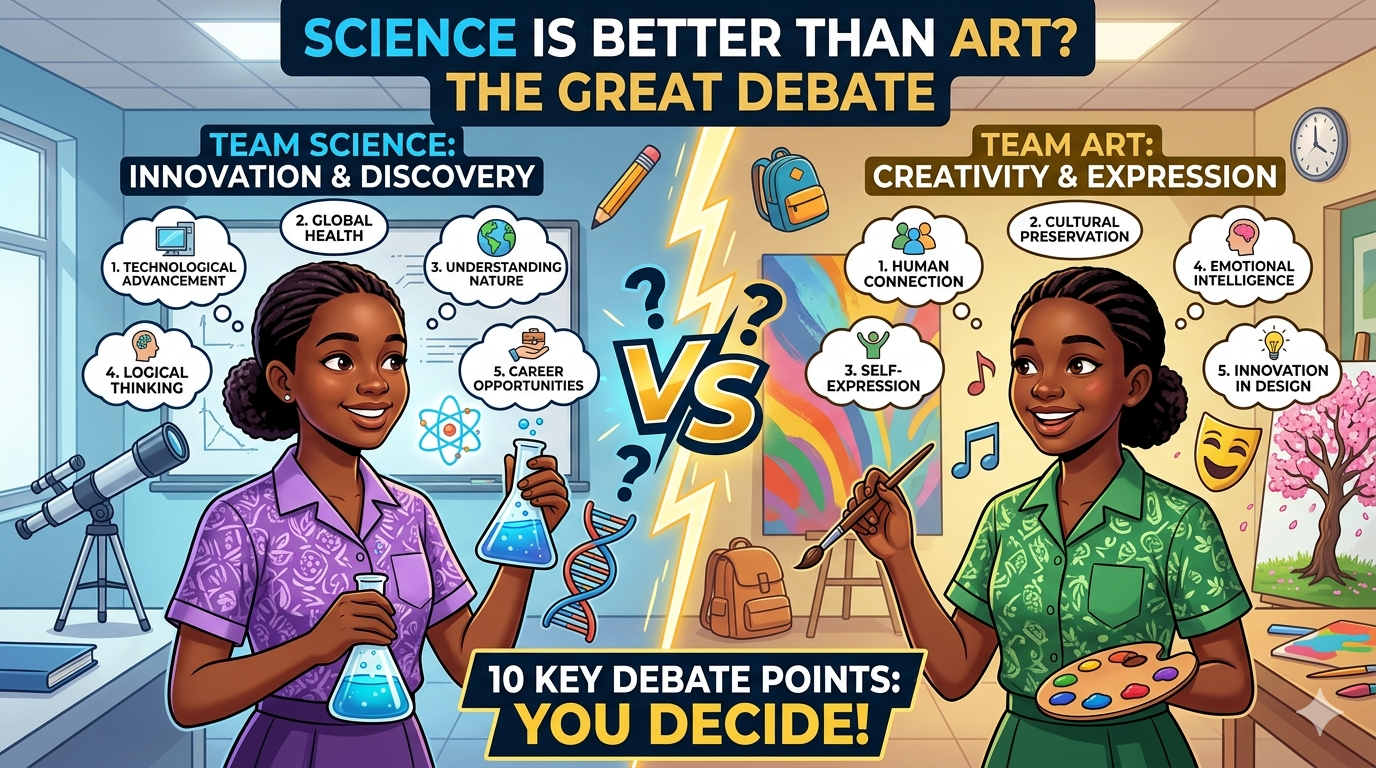
Is science truly better than art—or is that a false debate we’ve been having for years?
This question shows up everywhere: in classrooms, debates, career choices, and even online arguments. Some people swear that science drives progress and survival, while others argue that art gives life meaning and emotion.
But if we’re being honest, the answer isn’t as simple as picking a winner.
Still, if we had to explore the argument “science is better than art,” there are some powerful reasons people believe this—and they’re worth understanding.
What Does It Mean to Say “Science Is Better Than Art”?
Before we jump in, let’s define both sides clearly.
Science is the study of the natural world through observation, experimentation, and logic. It focuses on facts, evidence, and solving real-world problems.
Art, on the other hand, is the expression of human creativity and imagination. It includes music, painting, writing, dance, film, and more.
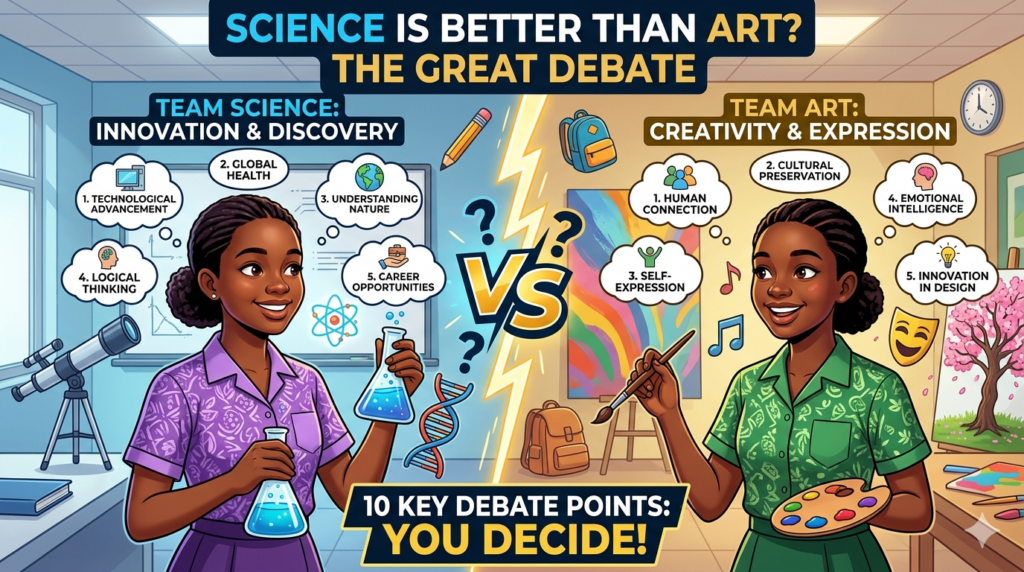
So when people say science is better, they usually mean:
- It’s more useful
- It produces measurable results
- It directly improves human life
Let’s break that down.
Read now: How to Create Flashcards for Quick Revision: The Ultimate Guide for Nigerian Students
1. Science Saves Lives Every Day
If there’s one undeniable argument for science, it’s this: science keeps people alive.
Modern medicine, vaccines, and surgical techniques all come from scientific research. Without science:
- Diseases would spread unchecked
- Life expectancy would be much lower
- Basic healthcare wouldn’t exist
Think about antibiotics, medical imaging, or even simple pain relief. These aren’t luxuries—they’re necessities.
Art, as powerful as it is emotionally, doesn’t directly cure illness or prevent disease.
2. Science Drives Technological Advancement
Look around you—your phone, laptop, internet connection, electricity—all products of science.
Every major advancement in modern life is rooted in scientific discovery:
- Transportation systems
- Communication technologies
- Space exploration
- Renewable energy
Even the platform you’re reading this on exists because of science.
Without science, society would struggle to function at the level it does today.
3. Science Solves Real-World Problems
Science is built for problem-solving.
From climate change to food shortages, scientific research helps us:
- Predict natural disasters
- Improve agriculture
- Develop sustainable energy
- Understand environmental changes
These are not abstract benefits—they directly affect survival and quality of life.
Art can raise awareness about these issues, but science provides the solutions.
4. Science Is Based on Evidence and Truth
One of the strongest arguments for science is its reliance on evidence.
See now: How to Use the Cornell Method to Take Better Lecture Notes (And Stop Cramming)
Scientific conclusions are:
- Tested
- Verified
- Repeatable
This makes science reliable and consistent.
Art, while meaningful, is subjective. What one person finds beautiful or powerful, another might not connect with at all.
Science, on the other hand, aims for universal truth.
5. Science Creates Career Stability and Opportunities
In today’s world, science-related fields often offer:
- Higher earning potential
- Job security
- Global demand
Careers in engineering, medicine, data science, and technology are not only respected but also essential.
This practical advantage is one reason many people argue that science is “better”—it provides a clearer path to financial stability.
But Is Science Really “Better” Than Art?
Here’s where things get interesting.
While science excels in logic, innovation, and survival, it doesn’t fully address the human experience.
Let’s flip the perspective.
The Role of Art in Human Life
Art may not cure diseases, but it does something equally important—it makes life worth living.
See also: How to Use the Pomodoro Technique to Crush WAEC and JAMB (Without Burning Out)
Art helps us:
- Express emotions
- Tell stories
- Preserve culture
- Connect with others
Music can change your mood. A film can shift your perspective. A painting can inspire you.
Science explains how the world works.
Art explores what it feels like to live in it.
Science and Art Actually Depend on Each Other
The biggest misconception is that science and art are opposites.
In reality, they often work together.
- Architecture blends engineering (science) and design (art)
- Filmmaking uses technology powered by science
- Medical illustrations combine biology and artistic skill
- Even scientific breakthroughs require creativity
Innovation doesn’t come from logic alone—it also needs imagination.
Why People Still Say Science Is Better
Despite the balance, many still argue that science holds more value because:
- It addresses basic human needs (health, safety, survival)
- It produces measurable outcomes
- It drives economic growth
- It shapes the future of humanity
In critical situations—like pandemics or climate crises—science becomes the foundation of survival.
Read more: Should School Uniforms be Abolished? A complete debate guide for Nigerian students
Final Verdict: Is Science Better Than Art?
If we define “better” as more essential for survival and progress, then yes—science has the edge.
But if we define “better” as more meaningful for human experience, then art is just as important.
The truth?
👉 Science helps us live.
👉 Art gives us a reason to live.
Instead of choosing one over the other, the real power comes from combining both.
Conclusion
The debate between science and art isn’t about superiority—it’s about perspective.
Science builds the world we live in.
Art shapes how we experience that world.
And in the end, a society that values only one will always feel incomplete.