6 Winning Points: Social Media Has Done More Harm Than Good to Nigerian Teenagers
Good day, students!
Looking for the winning points for your next debate? You’ve come to the right place.
We all know the feeling. You wake up, and the first thing you grab is your phone. You check WhatsApp, scroll through TikTok, and double-tap on Instagram. It feels fun, right? But have you ever stopped to ask yourself if all this screen time is actually helping you?
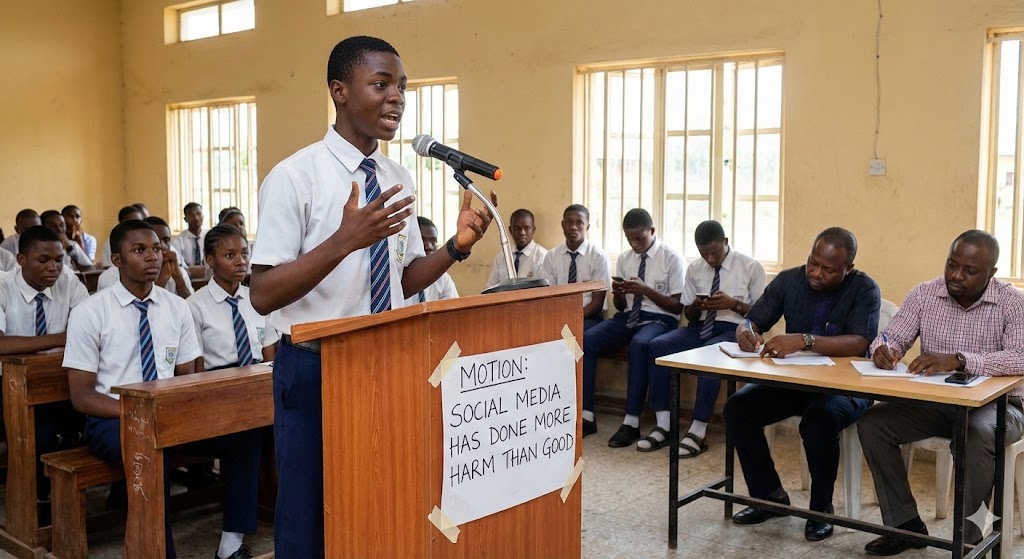
Today, I am here to provide you with a strong debate script supporting the motion that Social Media Has Done More Harm Than Good to Nigerian Teenagers.
Before we dive into the arguments, let’s define our terms. Social Media refers to platforms like Facebook, X (Twitter), Instagram, and TikTok where users create and share content. Harm means physical, mental, or moral injury. My stance today is simple: while these apps have benefits, the damage they are causing to the average Nigerian student far outweighs the good.
This article provides debate points supporting one side of the motion for educational purposes. It is not meant to condemn technology entirely but to help students build a persuasive argument.

Winning Debate Points on Why Social Media Has Done More Harm Than Good to Nigerian Teenagers
Here are the arguments you need to win over your panel of judges. Remember, when you get to the podium, speak with confidence.
1. It Is the Number One Distraction From Academics
My first and most important point is the massive distraction these platforms cause. Let’s be honest with ourselves. How many times have you picked up your phone to “check time” and ended up scrolling for two hours?
The academic performance of Nigerian teenagers is dropping, and social media is a major culprit. instead of reading their books or doing assignments, students are busy chasing likes and views. It breaks your focus. You cannot solve complex mathematics or write a good essay when your phone is buzzing every three seconds.
This lack of focus destroys the effective study habits every student should develop to succeed. When the exam results come out and the grades are poor, we often blame the teachers. But the truth is, the time meant for studying was stolen by the timeline.
2. It Fuels Cyberbullying and Mental Health Issues
The internet can be a very cruel place. My second point focuses on the mental damage caused by cyberbullying. Behind the safety of a screen, people say things they would never dare say to your face.
Teenagers are being insulted, mocked, and dragged online for the slightest mistake. This leads to severe anxiety, depression, and low self-esteem. According to a report by UNICEF on online safety, cyberbullying is a leading cause of mental distress among young people globally.
When a student is bullied in school, they can go home to find peace. But with social media, the bullying follows them into their bedroom. There is no escape. This constant harassment has led many Nigerian teens to sadness and, in extreme cases, suicide. It is a silent killer.
3. Exposure to Internet Fraud and Moral Decay
We cannot discuss this topic without talking about the “get rich quick” syndrome. Social media exposes innocent teenagers to internet fraud, popularly known as “Yahoo Yahoo.”
Teenagers see young boys flashing cars, expensive iPhones, and lavish lifestyles on Instagram, often funded by illegal means. They begin to think education is a scam. They lose interest in hard work. They start looking for shortcuts.
This erosion of moral values is dangerous for our future. Instead of learning how to prepare for an exam in a short time, students are learning how to defraud people online. The pressure to “belong” and show off is corrupting the minds of our youth at an alarming rate.
4. Severe Sleep Deprivation
Sleep is critical for a growing teenager. Yet, social media is the thief of sleep. Many of us stay awake until 2:00 AM or 3:00 AM chatting or watching skits.
When you don’t sleep, your brain doesn’t function properly the next day. You go to school tired, you doze off in class, and you miss important lessons. It’s a cycle of fatigue.
The blue light from our phone screens tricks our brains into thinking it’s still daytime, making it hard to rest. By the time you realize it, Social Media Has Done More Harm Than Good to Nigerian Teenagers simply by denying them the rest they need to grow and learn.
5. The Pressure of “Fake Life” and Low Self-Esteem
Have you ever looked at someone’s post and felt like your own life is boring? That is the trap of the “Fake Life.”
On social media, people only post their wins. They post the new clothes, the parties, and the edited photos. No one posts their struggles or their failures. Nigerian teenagers look at these curated lives and feel inadequate. They feel poor. They feel ugly.
This comparison steals their joy. It makes them ungrateful for what their parents provide. It creates unnecessary pressure to look a certain way or own certain things just to impress strangers on the internet.
6. It Kills Real-Life Social Skills
Finally, social media is actually making us less social. We are losing the art of conversation. We can type “LOL” and “LMAO” all day, but we struggle to look people in the eye and have a meaningful discussion.
Walk into a room of teenagers today, and it is silent. Everyone is looking down at their phones. We are forgetting our culture of greeting and community. If you need help structuring your opening speech to address this, you should check out my guide on how to start a debate step-by-step, but the point remains: we are connecting with screens and disconnecting from humans.
Frequently Asked Questions (FAQs)
What is the strongest argument for the opposing side? The strongest argument for the other side is that social media allows for information sharing, networking, and learning new skills. However, you can counter this by saying that while the potential for learning exists, most teenagers use it for entertainment and gossip, not education.
How do I end this debate speech powerfully? End with a call to action. Tell the audience to look up from their screens and see the real world. Remind them that a life lived for likes is not a life lived at all.
Can I use these points for a secondary school debate? Absolutely. These points are tailored for Nigerian secondary school students. They are relatable, simple, and punchy. Just make sure you practice your delivery!
Conclusion / Summary
To wrap up, while technology is here to stay, we must face the hard truth. From killing our study habits to spreading cyberbullying, encouraging fraud, and ruining our sleep, Social Media Has Done More Harm Than Good to Nigerian Teenagers.
It is time we control these devices before they control us. We need to prioritize our mental health, our education, and our real-world relationships over temporary online validation.
All sides of a debate are valid. This article supports the proposition for educational purposes and does not deny the potential benefits of technology when used responsible.
What do you think? Do you agree that social media is doing more damage than good? Drop your opinions in the comments section below! Also, feel free to share this post with your coursemates or those in your team!