Here is a comprehensive guide on soil enrichment for primary 4.
Soil is one of the most important natural resources on Earth. It supports plant growth, provides food for humans and animals, and helps maintain the balance of nature. However, not all soil is rich enough to grow healthy crops. This is why soil enrichment is very important.
In Primary 4, pupils are introduced to soil enrichment as part of Agricultural Science or Basic Science. This topic helps learners understand how to improve soil so that plants can grow well and produce good yields.
This guide explains soil enrichment for Primary 4 in a simple, clear, and exam-friendly way.
What Is Soil Enrichment?
Soil enrichment is the process of adding useful materials to the soil to improve its quality and fertility.
When soil is enriched, it becomes:
-
More fertile
-
Better at holding water
-
Richer in nutrients needed by plants
Soil enrichment helps crops grow faster, healthier, and stronger.
Read now: How to Use the Pomodoro Technique to Smash Your WAEC and JAMB Exams
Why Soil Enrichment Is Important
Soil enrichment is important because it helps farmers and gardeners get better results from their soil.
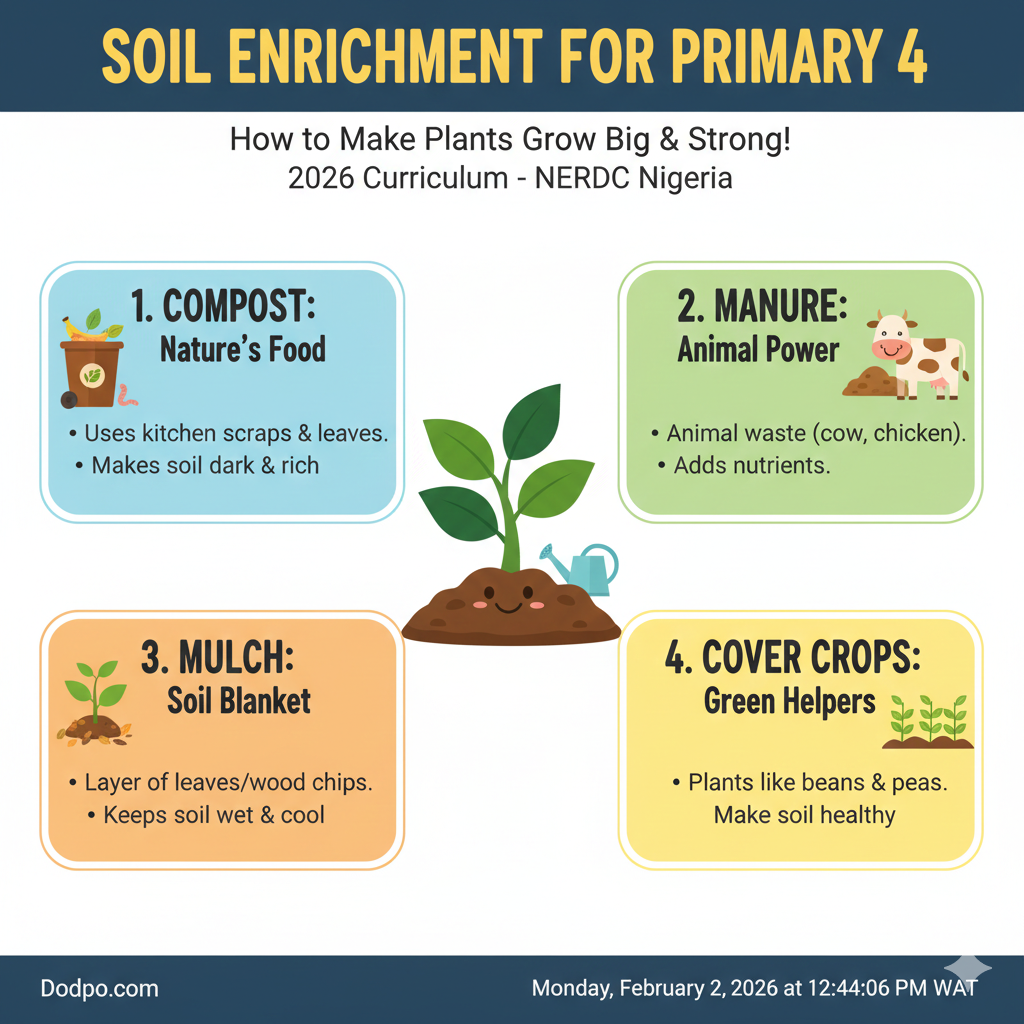
Importance of Soil Enrichment
-
It increases crop yield
-
It replaces nutrients lost from the soil
-
It improves soil structure
-
It helps plants grow strong roots
-
It prevents soil from becoming poor or exhausted
Without soil enrichment, plants may grow weak or not grow at all.
Causes of Poor Soil Fertility
Before learning how to enrich soil, it is important to understand why soil becomes poor.
Common Causes of Poor Soil
-
Continuous farming without rest
-
Erosion caused by wind or water
-
Bush burning
-
Over-cropping
-
Leaching of nutrients by heavy rainfall
These activities remove important nutrients from the soil.
Check out: How to Apply for Student Loans in Nigeria (NELFUND Guide): The Complete Step-by-Step
Types of Soil Enrichment
There are different ways soil can be enriched. These methods are grouped into two main types.
Organic Methods of Soil Enrichment
Organic soil enrichment involves the use of natural materials.
Examples of Organic Materials
-
Animal dung (cow dung, poultry droppings)
-
Compost
-
Green manure
-
Crop residues
-
Household organic waste
Organic methods are safe for the environment and improve soil structure.
Compost Manure
Compost is made from decayed plant and animal materials.
Benefits of compost:
-
Improves soil fertility
-
Increases water-holding capacity
-
Adds organic matter to the soil
Green Manure
Green manure involves growing plants like legumes and then ploughing them into the soil.
Examples:
-
Cowpea
-
Groundnut
-
Mucuna
These plants add nutrients, especially nitrogen, to the soil.
Inorganic Methods of Soil Enrichment
Inorganic soil enrichment uses chemical fertilizers.
Examples of Inorganic Fertilizers
-
NPK fertilizer
-
Urea
-
Superphosphate
-
Ammonium sulphate
These fertilizers act fast and supply nutrients directly to plants.
Advantages of Inorganic Fertilizers
-
Quick action
-
Easy to apply
-
Suitable for large farms
Disadvantages of Inorganic Fertilizers
-
Can damage soil if overused
-
Do not improve soil structure
-
May pollute water sources
Simple Methods of Soil Enrichment for Primary 4 Pupils
Primary 4 pupils can understand soil enrichment better through simple methods.
See also: How to Apply for Student Loans in Nigeria (NELFUND Guide): The Complete Step-by-Step
Common Soil Enrichment Methods
-
Application of manure
-
Application of fertilizer
-
Crop rotation
-
Mulching
-
Bush fallowing
Application of Manure
Manure is added to the soil to increase nutrients.
Examples:
-
Poultry manure
-
Cow dung
-
Goat droppings
Manure is mixed with the soil before planting.
Application of Fertilizer
Fertilizers are applied to crops in small quantities.
Rules for applying fertilizer:
-
Apply at the right time
-
Use the correct amount
-
Do not apply too close to plant roots
Crop Rotation
Crop rotation means growing different crops on the same land in different seasons.
Example:
-
Year 1: Maize
-
Year 2: Beans
This method helps restore soil nutrients.
Mulching
Mulching involves covering the soil with dry leaves, grass, or straw.
Benefits of mulching:
-
Reduces water loss
-
Prevents erosion
-
Adds organic matter to the soil
Bush Fallowing
Bush fallowing means allowing land to rest for some time.
During this period:
-
Plants grow naturally
-
Soil nutrients are restored
Nutrients Needed by Plants
Plants need certain nutrients to grow well.
Main Soil Nutrients
-
Nitrogen: Helps leaf growth
-
Phosphorus: Helps root development
-
Potassium: Improves plant strength
Soil enrichment supplies these nutrients.
See more: How to Create a Personal Reading Timetable That Works (Stop Failing Exams!)
Differences Between Organic and Inorganic Soil Enrichment
| Organic Method | Inorganic Method |
|---|---|
| Uses natural materials | Uses chemical fertilizers |
| Improves soil structure | Does not improve soil structure |
| Slow in action | Fast in action |
| Environment-friendly | May harm the environment |
Classroom Activities for Teaching Soil Enrichment
Teachers can use simple activities to explain soil enrichment.
Suggested Activities
-
Mixing soil with compost and observing plant growth
-
Comparing plants grown with and without fertilizer
-
Drawing and labeling soil enrichment materials
-
Group discussion on ways to enrich soil
Examination Questions on Soil Enrichment (Primary 4)
Possible Objective Questions
-
What is soil enrichment?
-
Mention two materials used for soil enrichment.
-
State one importance of soil enrichment.
Possible Theory Questions
-
Explain two methods of soil enrichment.
-
List three organic materials used to enrich soil.
These questions are common in Primary 4 exams.
Summary of Soil Enrichment for Primary 4
Soil enrichment is the process of improving soil quality to support plant growth. It can be done using organic materials like manure and compost or inorganic materials like fertilizers. Soil enrichment is important because it helps crops grow healthy and strong.
Understanding soil enrichment helps pupils appreciate agriculture and environmental care.
Final Thoughts
Learning about soil enrichment in Primary 4 builds a strong foundation for agricultural knowledge. It teaches pupils how humans can care for the soil to produce enough food and protect the environment.
With simple explanations, practical examples, and classroom activities, soil enrichment becomes an interesting and easy topic for young learners.