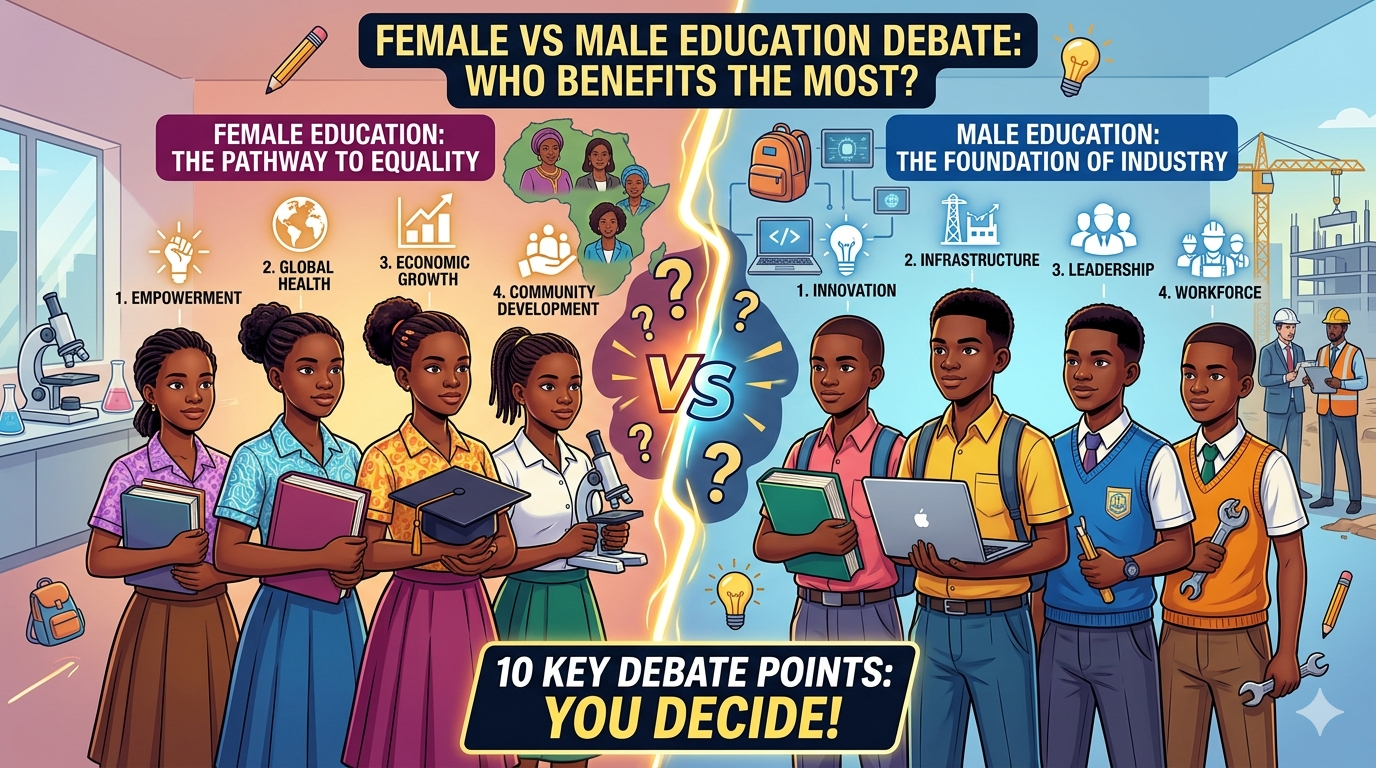
Girl child education remains one of the most debated and crucial topics in Nigeria today. In a country rich with culture, diversity, and potential, ensuring that every girl has access to quality education is not just a moral responsibility—it is a national necessity.
This article explores the importance of girl child education in Nigeria, key arguments in the debate, challenges, and practical solutions for lasting change.
What Is Girl Child Education?
Girl child education refers to the process of providing girls with equal access to quality learning opportunities—from primary school through higher education—without discrimination or limitation.
It goes beyond literacy. It empowers girls with:
- Knowledge and critical thinking skills
- Confidence and independence
- Economic and leadership opportunities
- Awareness of their rights and health
Why Girl Child Education Is Important in Nigeria
See more: How to Study for Multiple Choice Questions: The Secret to Acing JAMB and WAEC
1. Economic Growth and National Development
Educating girls directly contributes to Nigeria’s economic growth. When girls are educated, they:
- Join the workforce
- Start businesses
- Contribute to household income
Studies consistently show that educated women reinvest a significant portion of their income into their families and communities, creating a ripple effect of development.
2. Reduction in Poverty Levels
One educated girl can transform an entire household. Education:
- Breaks the cycle of poverty
- Improves job opportunities
- Reduces financial dependency
Families with educated women are more likely to experience long-term financial stability.
3. Improved Health and Well-being
Educated girls make better health decisions for themselves and their families. This leads to:
Read now: How to Use the Cornell Method to Take Better Lecture Notes (And Stop Cramming)
- Lower maternal mortality rates
- Reduced child mortality
- Better nutrition and hygiene practices
They are also more likely to seek medical help and understand reproductive health.
4. Delayed Early Marriage
In many parts of Nigeria, early marriage remains a challenge. Education helps:
- Delay marriage age
- Reduce teenage pregnancies
- Promote personal development before family responsibilities
An educated girl is more likely to make informed life choices.
5. Promotion of Gender Equality
Girl child education is a powerful tool for achieving gender equality. It helps:
- Challenge cultural stereotypes
- Promote equal opportunities
- Empower women to take leadership roles
An educated society is a more balanced and fair society.
The Debate: Arguments For and Against
Arguments in Support of Girl Child Education
Supporters believe that:
- Education is a fundamental human right
- It promotes national development
- It reduces social inequality
- It empowers future generations
Arguments Against (Challenges Often Raised)
Check out: How to Apply for NYSC Relocation: The Complete No Stress Guide for PCMs
While few openly oppose girl child education, some barriers fuel the debate:
- Cultural beliefs favoring male education
- Financial constraints in families
- Religious misconceptions
- Fear of moral or social “exposure”
These are not true arguments against education, but rather reflections of systemic challenges.
Major Challenges Facing Girl Child Education in Nigeria
1. Poverty
Many families prioritize boys’ education when resources are limited.
2. Cultural and Traditional Practices
Some communities still believe a girl’s primary role is marriage and homemaking.
3. Early Marriage and Teenage Pregnancy
These factors often cut short a girl’s educational journey.
4. Lack of Access to Schools
In rural areas, schools may be far, unsafe, or poorly equipped.
5. Gender-Based Violence
Harassment and insecurity discourage many girls from attending school.
Solutions: How Nigeria Can Improve Girl Child Education
Read more: Farmer vs Doctor: 10 Compelling Reasons Why the Doctor Is More Important
1. Government Policies and Enforcement
- Free and compulsory basic education
- Strict laws against child marriage
- Investment in school infrastructure
2. Community Awareness and Advocacy
- Educating parents on the value of girl child education
- Engaging traditional and religious leaders
3. Financial Support and Scholarships
- Providing bursaries for girls
- Reducing the cost of education
4. Safe Learning Environments
- Improved school security
- Gender-sensitive facilities (e.g., sanitation)
5. Role Models and Mentorship
- Encouraging successful women to inspire young girls
- School mentorship programs
The Role of Parents and Society
Parents play a crucial role in shaping a girl’s future. Supporting girl child education means:
Check out: How to Balance Coding/Tech Skills With Your Academic Studies (Without Failing)
- Encouraging academic ambition
- Avoiding early marriage decisions
- Providing emotional and financial support
Society must also shift its mindset to value girls equally.
Conclusion: Educate a Girl, Empower a Nation
The importance of girl child education in Nigeria cannot be overstated. It is not just about fairness—it is about building a stronger, healthier, and more prosperous nation.
When you educate a girl, you educate a family, a community, and ultimately, a nation.
FAQs on Girl Child Education in Nigeria
Why is girl child education important?
It promotes economic growth, reduces poverty, improves health, and empowers women.
What are the main challenges?
Poverty, cultural beliefs, early marriage, and lack of access to schools.
How can we improve it?
Through government policies, awareness campaigns, financial support, and safe schools.