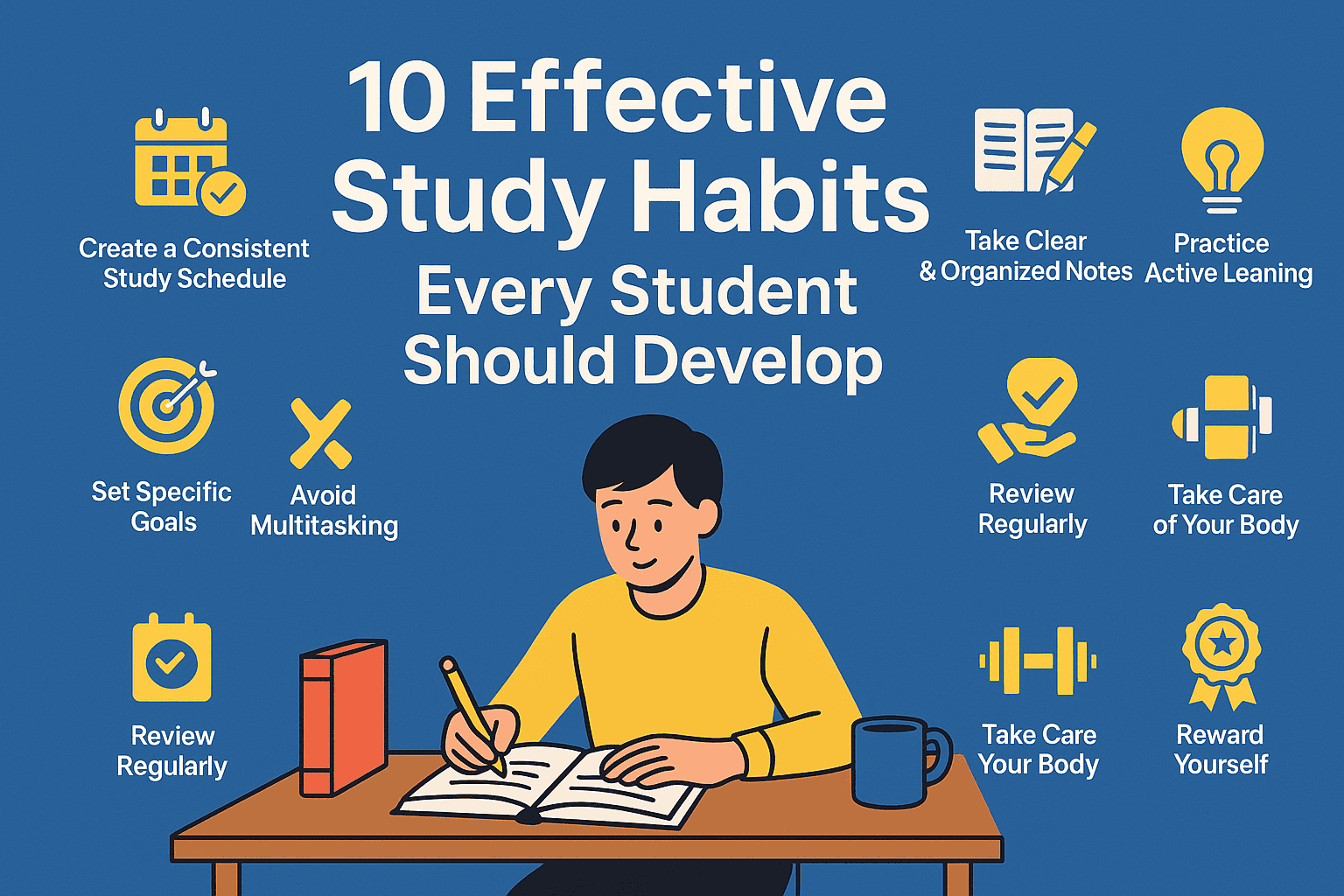
Introduction
1. Create a Consistent Study Schedule
One of the most effective study habits is consistency. Instead of cramming before exams, set a daily or weekly schedule that fits your life and classes.
- Choose fixed study times you can realistically keep.
- Break large tasks into smaller, time-boxed chunks.
- Stick to the routine—even 30 minutes a day adds up.
Pro tip: Treat studying like going to the gym—short, regular sessions beat one long, exhausting workout.
2. Find Your Ideal Study Environment
Your environment shapes your focus. Some students thrive in complete silence; others do better with low background noise.
- Experiment with libraries, quiet cafés, or a dedicated desk at home.
- Keep your space tidy and free from clutter and distractions.
- Avoid studying in bed—your brain associates it with sleep.
Pick a location that energizes you and supports deep work.
3. Use the Pomodoro Technique
The Pomodoro Technique helps you maintain focus without burning out.
- Study for 25 minutes (one “Pomodoro”).
- Take a 5-minute break.
- After four Pomodoros, rest for 15–20 minutes.
This rhythm keeps your mind sharp and prevents mental fatigue.
4. Take Clear & Organized Notes
Messy notes lead to messy thinking. Build a simple, repeatable system:
- Use headings, bullet points, and highlights for structure.
- Try the Cornell Note-Taking Method to separate cues, notes, and summaries.
- Rewrite or summarize notes after class to reinforce memory.
Organized notes make review sessions faster and more effective.
5. Practice Active Learning
Don’t just read—engage with the material so it sticks.
- Teach the concept to a friend—or pretend you’re teaching a class.
- Quiz yourself regularly to test recall.
- Create flashcards for quick, targeted reviews.
Explaining ideas in your own words turns passive reading into real understanding.
6. Set Specific Goals for Each Study Session
Going in without a plan is like driving without directions. Define exactly what success looks like before you start.
- Write down 1–3 tasks for each session.
- Use SMART goals: Specific, Measurable, Achievable, Relevant, Time-bound.
- Example: Instead of “study biology,” try “review Chapter 3 and complete 10 practice questions.”
Clear goals keep you motivated and on track.
7. Avoid Multitasking
Multitasking splits your attention and slows you down.
- Silence your phone or place it in another room.
- Use website blockers (e.g., StayFocusd, Freedom) during study windows.
- Focus on one subject or task at a time.
You’ll finish faster and remember more when you single-task.
8. Review Regularly with Spaced Repetition
Instead of memorizing everything the night before, space your reviews over time to strengthen long-term memory.
- Review notes within 24 hours after class.
- Revisit key topics multiple times across days and weeks.
- Use apps like Anki to automate spaced repetition flashcards.
This method dramatically improves retention and reduces last-minute stress.
9. Take Care of Your Body
Your brain performs best when your body is cared for.
- Aim for 7–8 hours of sleep each night.
- Stay hydrated and eat brain-boosting foods (nuts, fruits, fish, whole grains).
- Move daily—short walks or quick workouts can lift focus and mood.
Healthy habits power clearer thinking and better learning.
10. Reward Yourself
Motivation grows when progress is recognized. Make studying feel rewarding.
- After a session, enjoy a snack, stretch, or a quick scroll break.
- Set milestones (e.g., finish a chapter) and celebrate small wins.
- Protect time for hobbies and relaxation to avoid burnout.
Positive reinforcement keeps you consistent over the long run.
Frequently Asked Questions (FAQs)
1) How many hours a day should I study?
It depends on your workload, but many students do well with 2–4 focused hours daily. Quality matters more than quantity—focused, distraction-free time beats long, unfocused sessions.
2) What’s the best time of day to study?
Morning and late afternoon often work best since your brain is fresh, but it varies by person. Track your energy for a week and schedule study blocks during your peak hours.
3) Should I study every day?
Yes—short, consistent sessions build stronger memory than occasional marathon study days. Even 30–45 minutes daily can compound over time.
4) How can I stop procrastinating?
Break tasks into tiny steps, set a visible start time, and remove distractions. The Pomodoro Technique helps you get started and keep going with built-in breaks.
5) Are group study sessions effective?
They can be—if they’re structured. Agree on goals, time limits, and roles. Use the time to quiz each other, teach concepts, and solve practice problems—not to socialize.
6) How do I prepare for exams effectively?
Start early, review regularly with spaced repetition, practice past papers, and use active recall. Summarize key ideas, teach them out loud, and track weak spots for targeted review.
Conclusion
Developing Effective Study Habits isn’t about working harder—it’s about working smarter. By creating a consistent schedule, using active learning techniques, and looking after your body and mind, you’ll set yourself up for academic success without unnecessary stress. Habits take time to build, so start small, stay consistent, and let your progress compound.
Want more skill-building tips? Explore additional study strategies at Education Corner.