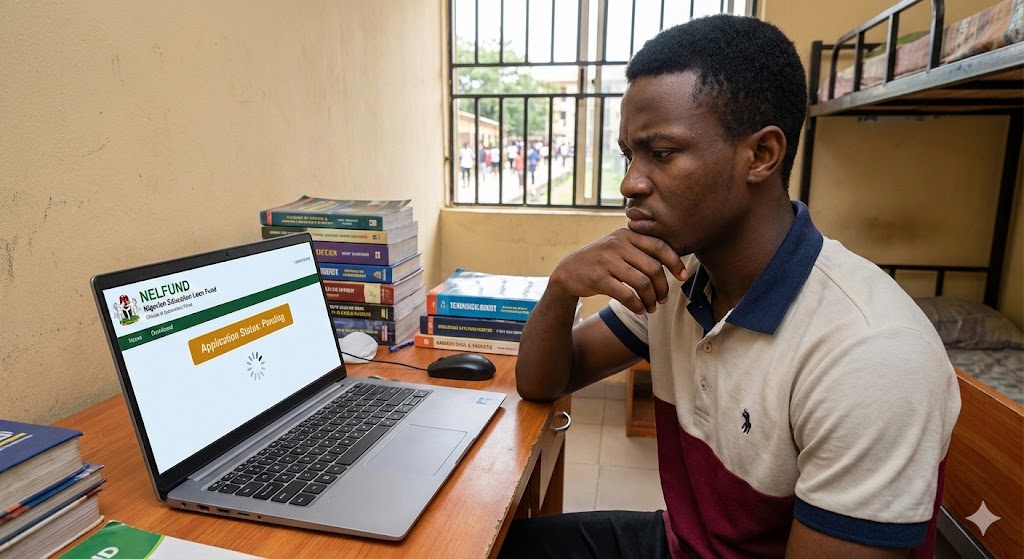
You are short on time, the exam is close, and you need a plan that works. This guide answers the main question right away:
25 minute focus blocks, replace rereading with active recall drills, mark your answers against a scheme, then fix weak spots with short reviews.
Pack your exam day logistics early, sleep properly, and arrive with a simple recall sheet. Everything here is tuned for Nigerian realities,
power that can flicker, data that is not always cheap, crowded libraries, and busy transport.
Key takeaways
- Triage first, find the 20 percent of topics that drive most marks, use past questions to choose.
- Build a micro schedule with 25 minute focus blocks and 5 minute breaks, place hard topics early.
- Use active recall, closed book answers, and past paper drills, stop passive rereading.
- Run a rapid feedback loop, mark against the scheme, fix only weak items, not entire chapters.
- Protect sleep and logistics, pack ID and tools the night before, review one recall page in the morning.
- Use simple templates, a timetable, a past questions tracker, and a one page recall sheet, to remove decision fatigue.

What is how to prepare for an exam in short time
Simple definition and why it matters now
When we say short time, we mean between 24 hours and 7 days before an exam. This is a rescue plan, not a full semester revision.
The goal is simple, capture the highest yield marks with the least time. Research shows that testing yourself improves memory more than rereading.
How to prepare for an exam in short time, step by step
Step 1, triage the syllabus and past questions, 60 minutes
Collect the official syllabus or course outline, plus three to five years of past questions. Skim the verbs in each question,
explain, outline, calculate, analyze, and note which topics repeat. Create a simple two column list, Topic and Likely Marks.
Circle the top five topics that recur most often. For each, write one sentence plain English definitions. This sets the target for the rest of the plan.
If you only have 24 hours, pick three topics, if you have 3 to 7 days, pick five to eight.
Triage tips for Nigeria conditions: If printing is hard, take phone photos of the noticeboard outline, or ask a class rep for the PDF.
Join course WhatsApp or Telegram groups for shared files. If the lecturer released a list of likely areas, prioritize them, but still check past papers for patterns.
Step 2, build a micro schedule with 25 or 30 minute focus blocks
Choose a schedule that fits your window, 1 to 3 days, or 4 to 7 days. Use 25 minute focus blocks with 5 minute breaks, or 30 and 5 if that feels better.
Place the toughest topics first when your focus is fresh. Reserve the last two blocks each day for quick review and a short quiz.
If power is unstable, lean on printed notes, phone screenshots, or a charged power bank, and use daylight hours for heavier reading.
Sample schedule for 48 hours:
- Day 1 morning, 4 blocks on Topic A, closed book drills, then mark.
- Day 1 afternoon, 4 blocks on Topic B, end with a 10 minute recall sweep.
- Day 1 evening, 2 blocks on mixed questions, then pack your bag, sleep.
- Day 2 morning, 3 blocks on Topic C, 1 block on formulas and definitions.
- Day 2 afternoon, 3 blocks on past paper set, mark and repair weak list.
- Day 2 evening, 1 block on recall sheet, 1 block on calm breathing, sleep.
Step 3, make active recall your default
Replace rereading with recall. Close the book and answer a past question from memory, then check the scheme.
Build quick question cards with a term on one side and a short answer on the other, especially for definitions, formulas, and steps.
For calculation subjects, write the formula from memory, then plug numbers into one example question.
For essay subjects, write a three point outline with topic sentences, then fill the detail from memory.
Testing yourself strengthens memory more than passive review,
Roediger and Karpicke, Psychological Science, April 2006.
Recall formats that work fast:
- One minute brain dump, list everything you know about a topic, then check.
- Two question drill, pick two common past questions, answer closed book, mark.
- Three step solution, write formula, write substitution, write conclusion, check units.
- Outline and speak, say your points aloud for two minutes, then compare to notes.
Step 4, create a rapid feedback loop
After each set of questions, mark strictly against a scheme or model answer. Put errors into a Weak List, concept, page reference, and a one line fix.
Redo only those items the next block. If you cannot find a scheme, ask a class group for a marking guide, or use the textbook’s end of chapter answers as a proxy.
Keep the loop short, attempt, mark, repair, then move on. Track your scores simply, 3 of 5 correct on Topic A, now 4 of 5 after repair,
so you can see progress and morale stays up.
What counts as a fix: A fix is not rereading the chapter. A fix is writing the step you missed, the formula you forgot, or the keyword the examiner expects.
Write it on the Weak List. Redo the same question after one block, then again at night for a spaced check.
Step 5, sort exam logistics and calm
Pack your ID card, two pens, pencil, eraser, sharpener, calculator if allowed, and a transparent water bottle.
Plan your transport, leave buffer time for Lagos traffic or campus shuttles. Make a one page recall sheet with formulas, definitions, and diagrams.
Sleep six to eight hours, short sleep hurts memory consolidation,
Krause et al., Nature Reviews Neuroscience, June 2017.
On the morning, do ten minutes of recall, not new study, arrive early, and breathe steadily before you start.
Use the first minute in the hall to scan the paper, pick friendliest questions first, then pace yourself.
For official rules and allowed items, always check your exam body or department, for example the
JAMB 2025 official training manual.
Policies can change, so confirm details for your paper.
Common mistakes in short prep, and quick fixes
When you attempt how to prepare for an exam in short time, a few traps waste time and energy. Here are the big ones and how to fix them.
- Passive rereading instead of recall: Fix by answering closed book first, then checking.
- All night cramming: Short sleep harms retention and attention, aim for at least six hours.
- Ignoring command words: If the prompt says compare, give similarities and differences, not a definition.
- Skipping the marking scheme: You need the expected structure, point allocations, and keywords.
- Leaving logistics to exam day: Pack and plan the night before, avoid last minute panic.
- Trying to cover everything: Pick the highest yield topics only, then go deep with questions.
Tools, templates, and checklists
Use these simple assets to speed your setup. Replace the placeholder links with your own site when you publish.
This toolkit is built for how to prepare for an exam in short time, so it removes guesswork and helps you start quickly.
- 72 hour study timetable template: start with 8 focus blocks per day, adjust up or down.
See the study timetable template. - Past questions tracker: date, topic, command verb, score, retry date.
Try the past questions toolkit. - Active recall worksheet: columns for Question, Your Answer, Scheme Points Missed, Fix.
- Recall sheet blueprint: one A4 page, formulas in a narrow left column, definitions and diagrams on the right.
- Exam day checklist: ID, stationery, calculator, transport plan, room number, arrival buffer, recall sheet.
Page experience note: when you publish templates or images, compress PNG or JPEG files and add lazy loading,
this improves Core Web Vitals like Largest Contentful Paint and Interaction to Next Paint on mobile.
Subject specific tactics that save time
Calculation heavy courses, for example CHM101, PHY101, MTH courses
- Put formulas on the recall sheet, write them from memory, then check.
- Solve one example per formula, focus on unit conversions and common traps.
- If a method takes more than six lines, write a numbered list of steps, so you do not skip.
Essay or theory heavy courses, for example GST, BUS, POL courses
- Build three point outlines with topic sentences, add two facts or examples per point.
- Practice introductions and conclusions with one sentence each, clear and direct.
- Write definitions in plain English first, then add the short technical term.
Lab or diagram heavy courses
- Practice the diagram three times, label left to right.
- Memorize the caption in one sentence, what it shows and why it matters.
- Use colored pencil only if allowed, check instructions.
Case snapshot from Nigeria, 48 hours to a pass
Mubarak mentored two classmates during a packed weekend for CHM101 in Abuja.
Friday evening, they triaged the last three years of past questions,
built a list of seven high yield topics, and chose twelve questions to drill.
Saturday, they ran ten focus blocks, five in the morning and five in the afternoon,
answering closed book and marking with a faculty scheme.
Sunday morning, they did a one hour Weak List repair, then built a single recall page.
Both slept by 11 pm and arrived early. One moved from a low C in the last test to a solid B, the other cleared a pass comfortably.
This is not magic, it is the same triage plus recall pattern you are applying when you think about how to prepare for an exam in short time.
Comparison table
| Approach | Time per topic | Retention after 48 hours | Stress risk | Best use case |
|---|---|---|---|---|
| Passive rereading | 20 to 40 minutes | Low | High | Only as a quick skim before recall |
| Past questions only | 25 to 35 minutes | Medium | Medium | If the course repeats formats and wording |
| Active recall plus spaced mini reviews | 30 to 45 minutes | High | Medium | Default for most subjects |
| Mixed plan, triage plus active recall plus past papers | 35 to 50 minutes | Very high | Medium | Best for comprehensive prep in short windows |
Caption: A quick comparison of methods shows why a mixed plan is the best answer to how to prepare for an exam in short time.
FAQ
Can I pass if I start two days before an exam
Yes, if you triage to the highest yield topics, switch to active recall, and run a tight feedback loop. Expect a pass or mid grade, not a top percentile result, unless your base is already strong.
What should I read first when time is short
Start with the most repeated topics in past questions, then cover definitions and core formulas. Solve at least five representative questions before the night ends.