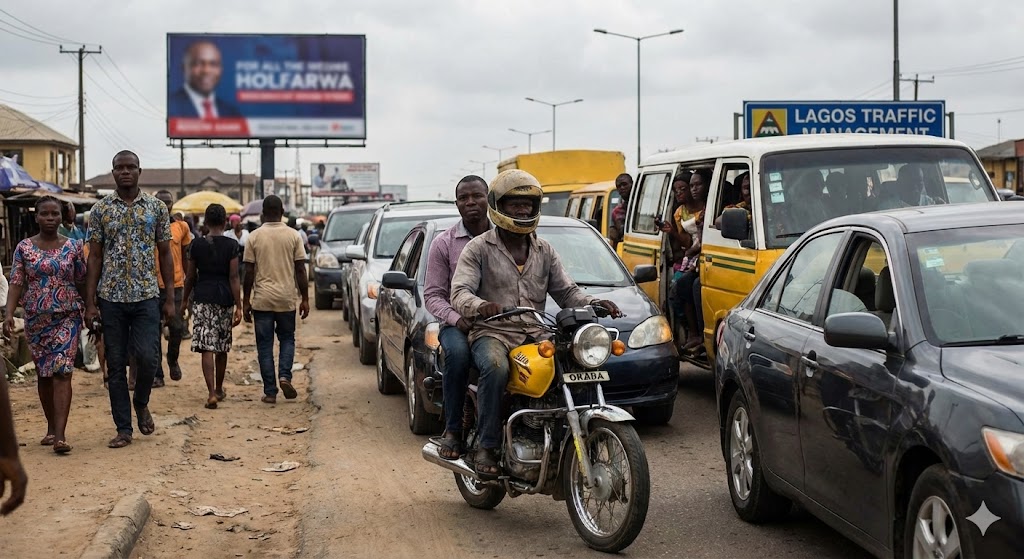
6 Winning Points: Banning Okadas (Motorcycles) in Cities is Anti-Poor
Good day, students!
Looking for the winning points for your next debate? You’ve come to the right place. Today, we are diving into one of the most heated topics in our cities: the Okada ban. Is it a necessary step for development, or is it a direct attack on the common man?
If you are supporting the motion that Banning Okadas (Motorcycles) in Cities is Anti-Poor, you need to speak to the reality on the ground. You need to show the judges that this policy doesn’t just clear the roads; it clears food from people’s tables.
Before we get into the script, let’s be clear on our terms. “Anti-poor” means a policy that disproportionately suffers low-income earners. “Okada” is the Nigerian term for commercial motorcycles—the lifeline of transportation for millions.
This article provides debate points supporting one side of the motion for educational purposes. It is not meant to encourage lawlessness but to help students build a logical, empathetic argument.
Winning Debate Points on Why Banning Okadas (Motorcycles) in Cities is Anti-Poor
Here are the arguments you need to silence the opposition. Say these with the “ginger” of a Lagosian stuck in traffic!
1. It Kills the Livelihood of the Masses
Let’s call a spade a spade. Who rides Okadas to make a living? It’s not the rich. It’s the young school leaver who couldn’t find a job. It’s the father who was retrenched and needs to feed his family.
My first point is that Banning Okadas (Motorcycles) in Cities is Anti-Poor because it instantly creates mass unemployment. When you ban Okadas without providing immediate alternatives, you are telling thousands of breadwinners to go home and starve. These riders are daily earners. They don’t have savings. Taking away their bikes is like taking away a farmer’s hoe. It pushes them deeper into economic hardship and poverty, which is the very definition of an anti-poor policy.
2. The “Last-Mile” Nightmare
Imagine this: You live in a street where the road is so bad that no car can enter. How do you get to the bus stop? You take a bike.
This is what experts call last-mile connectivity. Buses and BRTs only ply the major highways. They don’t come into the streets, the slumps, or the rough patches where the poor live. By banning Okadas, you are forcing the poor—who often live in these hard-to-reach areas—to trek for kilometers just to get a bus. The rich have SUVs that can handle bad roads; the poor have their legs. Forcing them to walk long distances is unfair and cruel. It’s a health risk, too, because as we know, [health is better than wealth], but stress kills faster than poverty.
3. Okadas Are the Only Affordable Option
Let’s talk about money. Have you tried booking an Uber or Bolt lately? The prices are crazy! Even a “drop” taxi is out of reach for the average student or market woman.
Okadas are the poor man’s taxi. They are cheap, fast, and accessible. When you ban them, you force people to compete for the few available buses, which drives the transport fare up. Suddenly, a journey that cost ₦200 becomes ₦500. For a minimum wage earner, that extra cost is a disaster. It means less money for food and school fees. The rich don’t feel this pinch, but the poor bleed for it.
4. Navigating the “Go-Slow” Gridlock
We all know the traffic situation in our cities. It is legendary. A car can be stuck in traffic gridlock for four hours.
For a wealthy person in an air-conditioned car, this is annoying. For a poor worker who will lose their pay if they are late, it is a tragedy. Okadas are the only means of transport that can weave through traffic and get people to work on time. By removing this option, you are effectively making it harder for the poor to keep their jobs. If you can’t get to work, you get fired. It’s that simple.
5. It Increases Crime Rates
They say an idle hand is the devil’s workshop. When you take jobs away from thousands of able-bodied men and give them nothing in return, what do you expect?
The ban often leads to a spike in crime and insecurity. Desperation forces people to do things they wouldn’t normally do. Instead of riding a bike to earn a legitimate living, some might turn to pickpocketing or robbery just to survive. According to a report by Stears on the Lagos Okada ban, removing this informal economy without a safety net has severe social consequences. We are essentially creating a bigger security problem by trying to solve a traffic problem.
6. The “Alternative” is a Myth
The opposition will tell you, “But there are buses!” Are there? Really?
The truth is, the government often bans Okadas before providing enough buses. We see thousands of people stranded at bus stops, fighting to enter a “Danfo” like they are fighting for their lives. The public transport system is not ready. The rich don’t queue at bus stops, so they don’t see this suffering. It is the poor who stand in the sun and rain. That is why I insist that Banning Okadas (Motorcycles) in Cities is Anti-Poor.
Frequently Asked Questions (FAQs)
What if the opposition says Okadas cause accidents? Acknowledge it, but pivot. Say, “Yes, accidents happen, but the solution is regulation, not a ban.” Argue that we should train riders and enforce helmet laws, rather than taking away their livelihood entirely.
How can I make my speech sound more passionate? Use rhetorical questions. Ask the audience, “Have you ever trekked under the hot sun because there was no bike?” Make them feel the pain of the common man. You can also check our guide on how to start a debate for impactful opening lines.
Is there a way to link this to education? Absolutely. If parents spend all their money on expensive transport, they have less for school fees. You can reference our article on education is better than money to explain why preserving a family’s income is crucial for their children’s future.
Conclusion / Summary
In conclusion, while we all want modern, beautiful cities, we cannot build them on the suffering of the poor. The motion that Banning Okadas (Motorcycles) in Cities is Anti-Poor is supported by the facts that it causes unemployment, increases the cost of living, and ignores the reality of our bad road networks.
Until the government can provide a bus on every street and paved roads in every neighborhood, the Okada remains a necessity, not a nuisance.
This article is a debate template supporting one side of the argument. City planning involves complex decisions, and safety is also a valid concern for policymakers.
External Reference: For more data on how transportation bans affect the economy, you can look at reports from the National Bureau of Statistics (NBS).
What do you think? Is the ban a step forward or a step back? Drop your opinions in the comments section below… Also, feel free to share this post with your coursemates or those in your team!