Practicals Specimen for Biology WAEC 2026: Valid List & How to Ace It Let’s be honest, the Biology practical is usually the moment most science students start to panic. You know the drill. You hear rumors that "snake" or "skeleton" is coming out, and suddenly everyone is scrambling to read everything. If you are searching for the Practicals specimen for Biology WAEC 2026, you are smart to start early. Waiting until the morning of the exam is a recipe for disaster. Here is the truth about the "Yellow Paper" (the instructions WAEC sends to schools). While the official list drops a few weeks before the exam, the specimens rarely change drastically. WAEC cycles through a specific set of organisms. So, instead of waiting for a "leak," let’s look at what you are highly likely to see and how to handle them. The "Usual Suspects": Likely Specimens for 2026 I’ve analyzed WAEC past questions for the last ten years. The examiners love consistency. They want to test if you can identify, classify, and draw. Based on these trends, here are the heavy hitters you should study right now. Group A: The Animals (Vertebrates & Invertebrates) You will almost certainly get an animal specimen. It’s usually something you can find in a typical Nigerian environment. Toad or Frog: They love asking for the dorsal view. Agama Lizard: Know the difference between the male (colorful) and female. Fish (Tilapia): Pay attention to the gills and fins. Termites/Soldier Ants: Usually linked to questions on social insects or adaptation. Pro Tip: Don't just look at the pictures. Understand their adaptive features. Why does the toad have webbed feet? Why does the lizard have dry scales? That is where the marks are. Group B: Plants & Fruits This section usually confuses students because many fruits look alike in black-and-white diagrams. Hibiscus Flower: The classic flower for teaching sexual reproduction. know the stamen and pistil. Shutterstock Pride of Barbados: Another common flower used for comparison. Maize vs. Bean Seed: This is for Monocot vs. Dicot questions. Fruits: Mango (drupe), Orange (hesperidium), and Tomato (berry). Know their mode of dispersal. Group C: Ecology & Physiology This is the part that doesn't involve drawing a whole animal. It often involves a process. Soil Samples: Loamy, Sandy, and Clay. You might need to test for water retention. Food Tests: Iodine solution (Starch), Biuret (Protein), and Benedict's solution (Sugar). Thermometer/Rain Gauge: Ecological instruments. How to Draw and Not Lose Marks I’ve marked scripts before, and it is painful to see brilliant students fail because of bad drawing skills. Biology drawings are not Art. We don't want "sketchy" artistic lines. 1. The Golden Rule: No Shading Never, ever shade a biology diagram. In Art, shading shows depth. In Biology, shading means you don't know what you are doing. Use clear, continuous lines. 2. Labeling Lines Your label lines must be drawn with a ruler. They should be horizontal and must not cross each other. If your lines cross, you lose the mark for that label. 3. Magnification Matters If the question says "Draw the specimen x1," draw it the exact same size. If it says "x2," draw it double the size. To calculate magnification: Magnification= Size of Specimen Size of Drawing ​ Always write the magnification at the bottom right of your drawing. Common Mistakes That Kill Grades You might think you know the Practicals specimen for Biology WAEC 2026, but knowing the specimen is only half the battle. Spelling Errors are Fatal In the theory section, you might get away with a small typo. In the practical section? No way. If you spell "Esophagus" or "Oesophagus" wrong, you score zero for that label. WAEC is very strict here. Vague Functions Don't just say "The skin is for protection." Protection from what? Mechanical injury? Desiccation? Be specific. Bad: "It is used for movement." Good: "It provides a large surface area for muscle attachment to aid swimming." Cramming Without Understanding I’ve seen students who memorized a diagram of a lizard, but when the specimen provided was a gecko, they still drew the lizard they memorized. Draw what you see, not what is in your textbook. Exam Day Checklist The morning of the exam is chaotic. Your lab attendant will be running around, and the smell of formalin might make you dizzy. Come prepared with these items: Sharp HB Pencils: Bring at least two. Mechanical pencils are great for sharp lines. Good Eraser: One that cleans without smudging. 30cm Ruler: For those label lines. Sharpener: A dull pencil is your enemy. Keep Your Ear to the Ground The official list usually circulates among teachers about 2-3 weeks before the exam. Check with your Biology teacher or check the WAEC official website for updates on the timetable. Also, resources like Khan Academy Biology are excellent for understanding the physiology parts of the practicals (like osmosis and photosynthesis) which often catch students off guard. Don't panic. You’ve done the work. Just follow the rules, keep your pencil sharp, and that A1 is yours. FAQ Is the specimen list out yet? As of late 2025, the official list for the 2026 exam is not yet public. It is usually released to schools in March/April. Can I use a pen for labeling? No. All drawings and labels must be done in pencil. Do practicals affect my total score much? Absolutely. The practical paper carries a significant percentage (usually 40%) of your total Biology score. You can pass theory and fail Biology if you bomb the practicals.

Practicals Specimen for Biology WAEC 2026: Valid List & How to Ace It

Practicals Specimen for Biology WAEC 2026: Valid List & How to Ace It

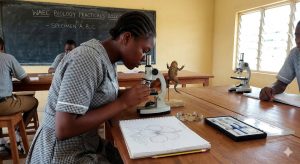
Let’s be honest, the Biology practical is usually the moment most science students start to panic.

You know the drill. You hear rumors that “snake” or “skeleton” is coming out, and suddenly everyone is scrambling to read everything. If you are searching for the Practicals specimen for Biology WAEC 2026, you are smart to start early. Waiting until the morning of the exam is a recipe for disaster.

Here is the truth about the “Yellow Paper” (the instructions WAEC sends to schools). While the official list drops a few weeks before the exam, the specimens rarely change drastically. WAEC cycles through a specific set of organisms.

So, instead of waiting for a “leak,” let’s look at what you are highly likely to see and how to handle them.
Practicals Specimen for Biology WAEC 2026: Valid List & How to Ace It Let’s be honest, the Biology practical is usually the moment most science students start to panic. You know the drill. You hear rumors that "snake" or "skeleton" is coming out, and suddenly everyone is scrambling to read everything. If you are searching for the Practicals specimen for Biology WAEC 2026, you are smart to start early. Waiting until the morning of the exam is a recipe for disaster. Here is the truth about the "Yellow Paper" (the instructions WAEC sends to schools). While the official list drops a few weeks before the exam, the specimens rarely change drastically. WAEC cycles through a specific set of organisms. So, instead of waiting for a "leak," let’s look at what you are highly likely to see and how to handle them. The "Usual Suspects": Likely Specimens for 2026 I’ve analyzed WAEC past questions for the last ten years. The examiners love consistency. They want to test if you can identify, classify, and draw. Based on these trends, here are the heavy hitters you should study right now. Group A: The Animals (Vertebrates & Invertebrates) You will almost certainly get an animal specimen. It’s usually something you can find in a typical Nigerian environment. Toad or Frog: They love asking for the dorsal view. Agama Lizard: Know the difference between the male (colorful) and female. Fish (Tilapia): Pay attention to the gills and fins. Termites/Soldier Ants: Usually linked to questions on social insects or adaptation. Pro Tip: Don't just look at the pictures. Understand their adaptive features. Why does the toad have webbed feet? Why does the lizard have dry scales? That is where the marks are. Group B: Plants & Fruits This section usually confuses students because many fruits look alike in black-and-white diagrams. Hibiscus Flower: The classic flower for teaching sexual reproduction. know the stamen and pistil. Shutterstock Pride of Barbados: Another common flower used for comparison. Maize vs. Bean Seed: This is for Monocot vs. Dicot questions. Fruits: Mango (drupe), Orange (hesperidium), and Tomato (berry). Know their mode of dispersal. Group C: Ecology & Physiology This is the part that doesn't involve drawing a whole animal. It often involves a process. Soil Samples: Loamy, Sandy, and Clay. You might need to test for water retention. Food Tests: Iodine solution (Starch), Biuret (Protein), and Benedict's solution (Sugar). Thermometer/Rain Gauge: Ecological instruments. How to Draw and Not Lose Marks I’ve marked scripts before, and it is painful to see brilliant students fail because of bad drawing skills. Biology drawings are not Art. We don't want "sketchy" artistic lines. 1. The Golden Rule: No Shading Never, ever shade a biology diagram. In Art, shading shows depth. In Biology, shading means you don't know what you are doing. Use clear, continuous lines. 2. Labeling Lines Your label lines must be drawn with a ruler. They should be horizontal and must not cross each other. If your lines cross, you lose the mark for that label. 3. Magnification Matters If the question says "Draw the specimen x1," draw it the exact same size. If it says "x2," draw it double the size. To calculate magnification: Magnification= Size of Specimen Size of Drawing ​ Always write the magnification at the bottom right of your drawing. Common Mistakes That Kill Grades You might think you know the Practicals specimen for Biology WAEC 2026, but knowing the specimen is only half the battle. Spelling Errors are Fatal In the theory section, you might get away with a small typo. In the practical section? No way. If you spell "Esophagus" or "Oesophagus" wrong, you score zero for that label. WAEC is very strict here. Vague Functions Don't just say "The skin is for protection." Protection from what? Mechanical injury? Desiccation? Be specific. Bad: "It is used for movement." Good: "It provides a large surface area for muscle attachment to aid swimming." Cramming Without Understanding I’ve seen students who memorized a diagram of a lizard, but when the specimen provided was a gecko, they still drew the lizard they memorized. Draw what you see, not what is in your textbook. Exam Day Checklist The morning of the exam is chaotic. Your lab attendant will be running around, and the smell of formalin might make you dizzy. Come prepared with these items: Sharp HB Pencils: Bring at least two. Mechanical pencils are great for sharp lines. Good Eraser: One that cleans without smudging. 30cm Ruler: For those label lines. Sharpener: A dull pencil is your enemy. Keep Your Ear to the Ground The official list usually circulates among teachers about 2-3 weeks before the exam. Check with your Biology teacher or check the WAEC official website for updates on the timetable. Also, resources like Khan Academy Biology are excellent for understanding the physiology parts of the practicals (like osmosis and photosynthesis) which often catch students off guard. Don't panic. You’ve done the work. Just follow the rules, keep your pencil sharp, and that A1 is yours. FAQ Is the specimen list out yet? As of late 2025, the official list for the 2026 exam is not yet public. It is usually released to schools in March/April. Can I use a pen for labeling? No. All drawings and labels must be done in pencil. Do practicals affect my total score much? Absolutely. The practical paper carries a significant percentage (usually 40%) of your total Biology score. You can pass theory and fail Biology if you bomb the practicals.

The “Usual Suspects”: Likely Specimens for 2026

I’ve analyzed WAEC past questions for the last ten years. The examiners love consistency. They want to test if you can identify, classify, and draw.

Based on these trends, here are the heavy hitters you should study right now.

Group A: The Animals (Vertebrates & Invertebrates)

You will almost certainly get an animal specimen. It’s usually something you can find in a typical Nigerian environment.

  • Toad or Frog: They love asking for the dorsal view.

  • Agama Lizard: Know the difference between the male (colorful) and female.

  • Fish (Tilapia): Pay attention to the gills and fins.

  • Termites/Soldier Ants: Usually linked to questions on social insects or adaptation.

Pro Tip: Don’t just look at the pictures. Understand their adaptive features. Why does the toad have webbed feet? Why does the lizard have dry scales? That is where the marks are.

Group B: Plants & Fruits

This section usually confuses students because many fruits look alike in black-and-white diagrams.

    • Hibiscus Flower: The classic flower for teaching sexual reproduction. know the stamen and pistil.

Shutterstock
  • Pride of Barbados: Another common flower used for comparison.

  • Maize vs. Bean Seed: This is for Monocot vs. Dicot questions.

  • Fruits: Mango (drupe), Orange (hesperidium), and Tomato (berry). Know their mode of dispersal.

Group C: Ecology & Physiology

This is the part that doesn’t involve drawing a whole animal. It often involves a process.

  • Soil Samples: Loamy, Sandy, and Clay. You might need to test for water retention.

  • Food Tests: Iodine solution (Starch), Biuret (Protein), and Benedict’s solution (Sugar).

  • Thermometer/Rain Gauge: Ecological instruments.

How to Draw and Not Lose Marks

I’ve marked scripts before, and it is painful to see brilliant students fail because of bad drawing skills.

Biology drawings are not Art. We don’t want “sketchy” artistic lines.

1. The Golden Rule: No Shading

Never, ever shade a biology diagram. In Art, shading shows depth. In Biology, shading means you don’t know what you are doing. Use clear, continuous lines.

2. Labeling Lines

Your label lines must be drawn with a ruler. They should be horizontal and must not cross each other. If your lines cross, you lose the mark for that label.

3. Magnification Matters

If the question says “Draw the specimen x1,” draw it the exact same size. If it says “x2,” draw it double the size.

To calculate magnification:


Magnification = Size of Drawing\Size of Specimen


Always write the magnification at the bottom right of your drawing.

Common Mistakes That Kill Grades

You might think you know the Practicals specimen for Biology WAEC 2026, but knowing the specimen is only half the battle.

Spelling Errors are Fatal

In the theory section, you might get away with a small typo. In the practical section? No way. If you spell “Esophagus” or “Oesophagus” wrong, you score zero for that label. WAEC is very strict here.

Vague Functions

Don’t just say “The skin is for protection.” Protection from what? Mechanical injury? Desiccation? Be specific.

  • Bad: “It is used for movement.”

  • Good: “It provides a large surface area for muscle attachment to aid swimming.”

Cramming Without Understanding

I’ve seen students who memorized a diagram of a lizard, but when the specimen provided was a gecko, they still drew the lizard they memorized. Draw what you see, not what is in your textbook.

Exam Day Checklist

The morning of the exam is chaotic. Your lab attendant will be running around, and the smell of formalin might make you dizzy.

Come prepared with these items:

  • Sharp HB Pencils: Bring at least two. Mechanical pencils are great for sharp lines.

  • Good Eraser: One that cleans without smudging.

  • 30cm Ruler: For those label lines.

  • Sharpener: A dull pencil is your enemy.

Keep Your Ear to the Ground

The official list usually circulates among teachers about 2-3 weeks before the exam. Check with your Biology teacher or check the WAEC official website for updates on the timetable.

Also, resources like Khan Academy Biology are excellent for understanding the physiology parts of the practicals (like osmosis and photosynthesis) which often catch students off guard.

Don’t panic. You’ve done the work. Just follow the rules, keep your pencil sharp, and that A1 is yours.

FAQ

Is the specimen list out yet?

As of late 2025, the official list for the 2026 exam is not yet public. It is usually released to schools in March/April.

Can I use a pen for labeling?

No. All drawings and labels must be done in pencil.

Do practicals affect my total score much?

Absolutely. The practical paper carries a significant percentage (usually 40%) of your total Biology score. You can pass theory and fail Biology if you bomb the practicals.

Related Posts