Here is the complete List of 34 trade subjects in Nigerian secondary schools 2026.
Trade subjects play a vital role in Nigeria’s secondary school curriculum. They are designed to equip students with practical, employable skills that prepare them for self-reliance, entrepreneurship, further technical education, and real-world problem solving.
In 2026, Nigerian secondary schools continue to emphasize technical and vocational education as part of the national drive to reduce unemployment and empower young people with hands-on skills.
This guide provides a comprehensive list of 34 trade subjects in Nigerian secondary schools, explains their importance, and helps parents, students, and educators make informed decisions.
What Are Trade Subjects in Nigerian Secondary Schools?
Trade subjects are skill-based subjects introduced mainly at the Junior Secondary School (JSS) and Senior Secondary School (SSS) levels. They focus on practical training rather than theory alone.
These subjects are regulated by:
-
The Federal Ministry of Education
-
NERDC (Nigerian Educational Research and Development Council)
-
Exam bodies such as WAEC and NECO
Trade subjects help students:
-
Acquire vocational and technical skills
-
Discover career interests early
-
Become employable after secondary school
-
Start small businesses
-
Prepare for polytechnics, technical colleges, and universities
Importance of Trade Subjects in Nigeria (2026)
Trade subjects are more relevant than ever in 2026 due to Nigeria’s changing economy and job market.
Key Benefits of Trade Subjects
-
Promote self-employment and entrepreneurship
-
Reduce dependence on white-collar jobs
-
Encourage creativity and innovation
-
Provide practical skills for daily life
-
Support Nigeria’s technical and vocational education goals
List of 34 Trade Subjects in Nigerian Secondary Schools (2026)
Below is the updated and widely recognized list of 34 trade subjects taught in Nigerian secondary schools.
Core Technical and Vocational Trade Subjects
1. Auto Mechanics
Focuses on vehicle maintenance, engine repairs, and automobile servicing.
2. Auto Electrical Work
Teaches electrical systems in vehicles, including wiring, batteries, and sensors.
3. Air Conditioning and Refrigeration
Covers installation, servicing, and repair of cooling systems.
4. Basic Electronics
Introduces electronic components, circuits, and simple device repairs.
5. Electrical Installation and Maintenance
Teaches domestic and industrial wiring, safety, and fault repairs.
6. Welding and Fabrication Engineering Craft Practice
Focuses on metal joining, fabrication, and industrial welding techniques.
7. Plumbing and Pipe Fitting
Covers water supply systems, drainage, and pipe installations.
Construction and Building Trade Subjects
Check out: How to Use the Pomodoro Technique to Smash Your WAEC and JAMB Exams
8. Building Construction
Teaches construction principles, site work, and building materials.
9. Carpentry and Joinery
Focuses on woodwork, furniture making, and structural carpentry.
10. Painting and Decorating
Covers surface finishing, painting techniques, and interior decoration.
11. Tiling, Blocklaying, and Concreting
Teaches masonry skills used in modern building projects.
Manufacturing, Craft, and Creative Trade Subjects
12. Furniture Making
Focuses on furniture design, wood selection, and finishing.
13. Ceramics
Covers clay work, pottery, glazing, and kiln operations.
14. Leather Goods Manufacturing and Repair
Teaches the production of bags, shoes, belts, and leather accessories.
15. Printing Craft Practice
Focuses on printing processes, graphic reproduction, and design basics.
16. Photography
Covers camera handling, lighting, editing, and visual storytelling.
ICT and Technology-Driven Trade Subjects
17. Computer Hardware Maintenance and Repair
Teaches computer assembly, troubleshooting, and repairs.
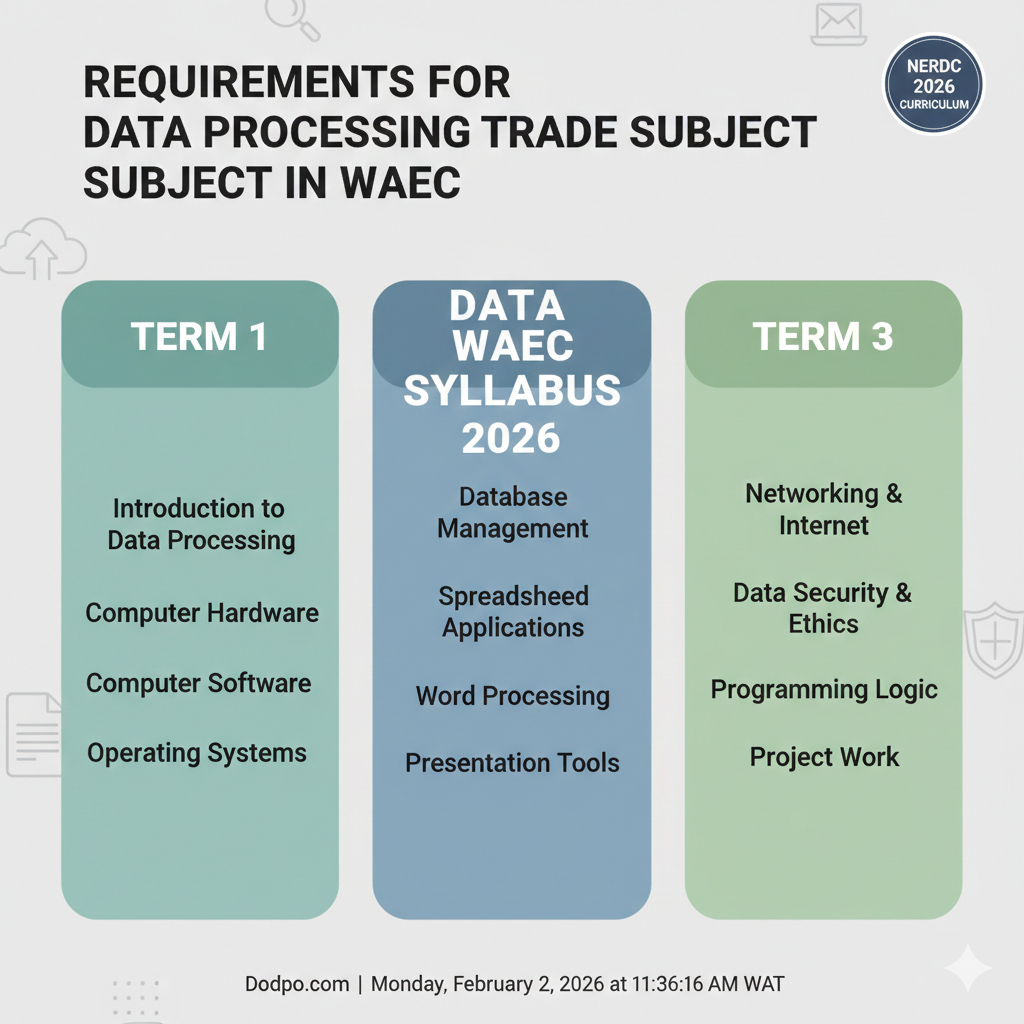
18. Data Processing
Focuses on data entry, document management, and office technology.
19. GSM Phones Maintenance and Repair
Covers mobile phone repairs, software updates, and hardware troubleshooting.
Home Economics and Lifestyle Trade Subjects
20. Catering Craft Practice
Teaches food preparation, menu planning, and kitchen management.
21. Garment Making
Focuses on sewing, fashion design, and clothing production.
22. Textile Trade
Covers fabric production, dyeing, weaving, and textile design.
23. Home Management
Teaches budgeting, household organization, and resource management.
24. Cosmetology
Focuses on beauty care, skincare, makeup, and hair treatment.
Agricultural Trade Subjects
See also: How to Use the Cornell Method to Take Better Lecture Notes (A Guide for Nigerian Students)
25. Animal Husbandry
Teaches livestock rearing, animal health, and farm management.
26. Fisheries
Covers fish farming, pond management, and aquaculture practices.
27. Horticulture
Focuses on gardening, landscaping, and ornamental plant production.
28. Crop Production
Teaches soil preparation, planting techniques, and crop management.
Hospitality, Tourism, and Service Trade Subjects
29. Tourism
Introduces travel management, tour operations, and cultural heritage.
30. Hotel and Hospitality Management
Covers customer service, hotel operations, and front desk skills.
Energy and Environmental Trade Subjects
31. Renewable Energy
Focuses on solar, wind, and alternative energy systems.
32. Environmental Studies
Teaches waste management, sustainability, and environmental protection.
Media and Communication Trade Subjects
33. Radio, Television, and Electronic Work
Covers broadcasting equipment, media technology, and electronics.
34. Graphic Design
Teaches visual communication, branding, and digital design tools.
Are Trade Subjects Compulsory in Nigerian Secondary Schools?
Trade subjects are not compulsory for all students, but:
-
Schools must offer a selection of trade subjects
-
Students are encouraged to choose at least one trade subject
-
WAEC and NECO recognize several trade subjects for examinations
How to Choose the Right Trade Subject
When selecting a trade subject, students should consider:
-
Personal interests and talents
-
Career goals
-
Availability of facilities in the school
-
Future employment opportunities
-
Relevance to local and national industries
Career Opportunities from Trade Subjects
Trade subjects can lead to:
-
Self-employment and small businesses
-
Technical college and polytechnic admission
-
Apprenticeship opportunities
-
Skilled technician roles
-
Entrepreneurship in Nigeria’s growing informal and formal sectors
Read on: How to Pass JAMB in One Sitting Without Cheating: A Practical Guide for Nigerian Students
Final Thoughts on Trade Subjects in Nigerian Secondary Schools (2026)
Trade subjects are no longer “backup options.” In 2026, they are essential pathways to success, innovation, and economic independence for Nigerian students.
By offering practical skills and real-world knowledge, these 34 trade subjects empower students to build sustainable careers, contribute to national development, and thrive in a competitive global economy.
Whether you are a student, parent, teacher, or school administrator, understanding and embracing trade subjects is a smart step toward a skill-driven future.