Pre Vocational Studies is one of the most practical and skill-based subjects taught at the primary school level. For Primary 4 Second Term, this subject becomes even more important because pupils begin to develop deeper understanding of basic technical skills, home economics, agriculture, entrepreneurship, and safety practices.
If you are a teacher preparing lesson plans, a parent supporting your child at home, or a school administrator organizing the academic term, this comprehensive guide will provide everything you need to know about Pre Vocational Studies for Primary 4 Second Term.
This article covers:
-
Meaning of Pre Vocational Studies
-
Objectives of the subject
-
Detailed scheme of work for Primary 4 Second Term
-
Weekly topic breakdown
-
Teaching methods
-
Assessment strategies
-
Importance of the subject for young learners
What Is Pre Vocational Studies?
Pre Vocational Studies is a subject designed to introduce pupils to practical life skills and early career awareness. It exposes children to different vocational areas such as:
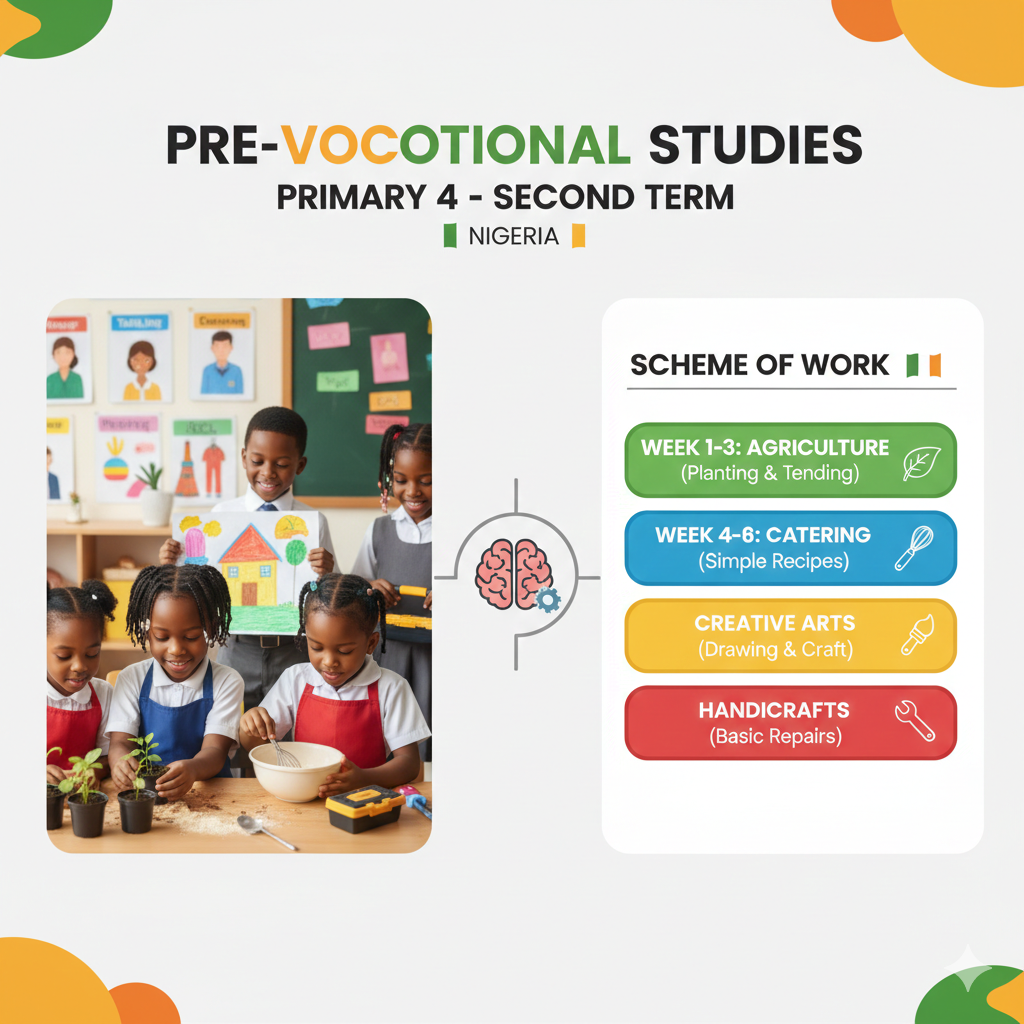
-
Agriculture
-
Home Economics
-
Basic Technology
-
Entrepreneurship
-
Safety Education
-
Creative Arts and Crafts
The aim is to build practical knowledge, creativity, and responsibility from an early age.
Objectives of Pre Vocational Studies for Primary 4
By the end of Primary 4 Second Term, pupils should be able to:
-
Identify different vocational skills in their environment.
-
Practice simple home management and safety rules.
-
Understand basic agricultural activities.
-
Recognize simple tools and their uses.
-
Develop interest in entrepreneurship and creativity.
-
Apply safety measures at home and school.
The subject prepares pupils for future vocational learning in upper primary and junior secondary school.
Primary 4 Pre Vocational Studies Scheme of Work – Second Term
Below is a detailed weekly breakdown of topics commonly covered during the second term.
Week 1–2: Revision of First Term Work
-
Review of basic vocational concepts
-
Recap of simple tools and materials
-
Questions and answers session
-
Practical demonstration
Purpose: Reinforce previously learned concepts and ensure continuity.
See now: The Complete List of 26 Tradepreneur Subjects for WAEC: How to Choose a Profitable Skill
Week 3: Meaning and Importance of Agriculture
Topics Covered:
-
Definition of agriculture
-
Importance of agriculture in society
-
Products obtained from farming
Learning Outcomes:
Pupils should be able to explain agriculture in simple terms and mention why farming is important for food production and employment.
Practical Activity:
Drawing farm products or visiting a school garden.
Week 4: Types of Crops
Topics Covered:
-
Food crops (rice, maize, yam)
-
Cash crops (cocoa, cotton, palm oil)
-
Vegetables
Learning Outcomes:
Pupils identify different crops grown in their locality.
Teaching Method:
Use pictures, charts, or real samples where possible.
Week 5: Simple Farm Tools and Their Uses
Topics Covered:
-
Cutlass
-
Hoe
-
Rake
-
Watering can
Learning Outcomes:
Pupils should identify tools and explain their functions.
Safety Emphasis:
Teachers should stress safe handling of sharp tools.
Check out: How to Create a Personal Reading Timetable That Works (Stop Failing Exams!)
Week 6: Basic Home Management
Topics Covered:
-
Meaning of home management
-
Keeping the home clean
-
Arranging household items
Learning Outcomes:
Pupils understand the importance of cleanliness and organization.
Practical Activity:
Classroom cleaning demonstration.
Week 7: Safety in the Home and School
Topics Covered:
-
Fire safety
-
Electrical safety
-
Handling sharp objects
-
Emergency numbers
Learning Outcomes:
Pupils identify common hazards and explain safety precautions.
Activity:
Role-play emergency situations.
Week 8: Introduction to Entrepreneurship
Topics Covered:
-
Meaning of entrepreneurship
-
Small business examples (selling snacks, fruits)
-
Importance of saving money
Learning Outcomes:
Pupils understand the concept of small-scale trading.
Practical Activity:
Mock buying and selling exercise.
Week 9: Simple Craft and Creative Work
Topics Covered:
-
Paper folding
-
Bead making
-
Drawing and coloring
-
Recycling materials
Learning Outcomes:
Develop creativity and hand skills.
Activity:
Make simple crafts from recycled materials.
Week 10: Personal Hygiene and Grooming
Topics Covered:
-
Importance of bathing
-
Brushing teeth
-
Wearing clean clothes
-
Nail trimming
Learning Outcomes:
Pupils understand personal cleanliness and health benefits.
Week 11: Revision
-
Review of all topics
-
Question and answer session
-
Practical demonstrations
Week 12: Examination
Assessment may include:
Read more: How to Use the Pomodoro Technique to Smash Your WAEC and JAMB Exams
-
Written test
-
Oral questions
-
Practical demonstration
Teaching Methods for Pre Vocational Studies
Because Pre Vocational Studies is practical, teachers should use interactive methods such as:
-
Demonstration
-
Group work
-
Role-play
-
Field trips
-
Visual aids
-
Hands-on activities
Children learn better when they see and practice rather than just listen.
Materials Needed for Teaching
Teachers may need:
Check out: How to Handle Panic Attacks in the Exam Hall: A Survival Guide for Nigerian Students
-
Charts and posters
-
Farm tool samples
-
Craft materials
-
Drawing books
-
Cleaning materials
-
Visual pictures
Proper materials make lessons more engaging and easier to understand.
Importance of Pre Vocational Studies in Primary 4
1. Develops Practical Skills
Pupils learn skills they can use daily at home and school.
2. Encourages Responsibility
Children learn to take care of their environment and belongings.
3. Promotes Creativity
Craft activities enhance imagination and artistic skills.
4. Builds Early Career Awareness
Pupils are introduced to different occupations.
5. Teaches Safety Awareness
Safety education prevents accidents.
Role of Parents in Supporting Learning
Parents can support their children by:
-
Encouraging home chores
-
Teaching basic savings habits
-
Allowing supervised gardening
-
Monitoring personal hygiene
Learning becomes more effective when reinforced at home.
Read more: How to Apply for Student Loans in Nigeria (NELFUND Guide): The Complete Step-by-Step
Assessment and Evaluation Methods
Evaluation should include:
-
Continuous assessment
-
Practical work grading
-
Oral questioning
-
Class participation
-
Written tests
Practical performance should be emphasized more than theory.
Challenges in Teaching Pre Vocational Studies
Some common challenges include:
-
Lack of teaching materials
-
Limited practical space
-
Insufficient funding
-
Overcrowded classrooms
Solutions include creativity in using local materials and community involvement.
Conclusion
Pre Vocational Studies for Primary 4 Second Term plays a vital role in developing practical life skills, responsibility, creativity, and safety awareness among pupils.
The subject prepares young learners for future vocational education and encourages independence from an early age.
With proper teaching methods, adequate materials, and parental support, pupils can gain valuable skills that will benefit them throughout their lives.
Pre Vocational Studies is not just about classroom learning it is about preparing children for real life.