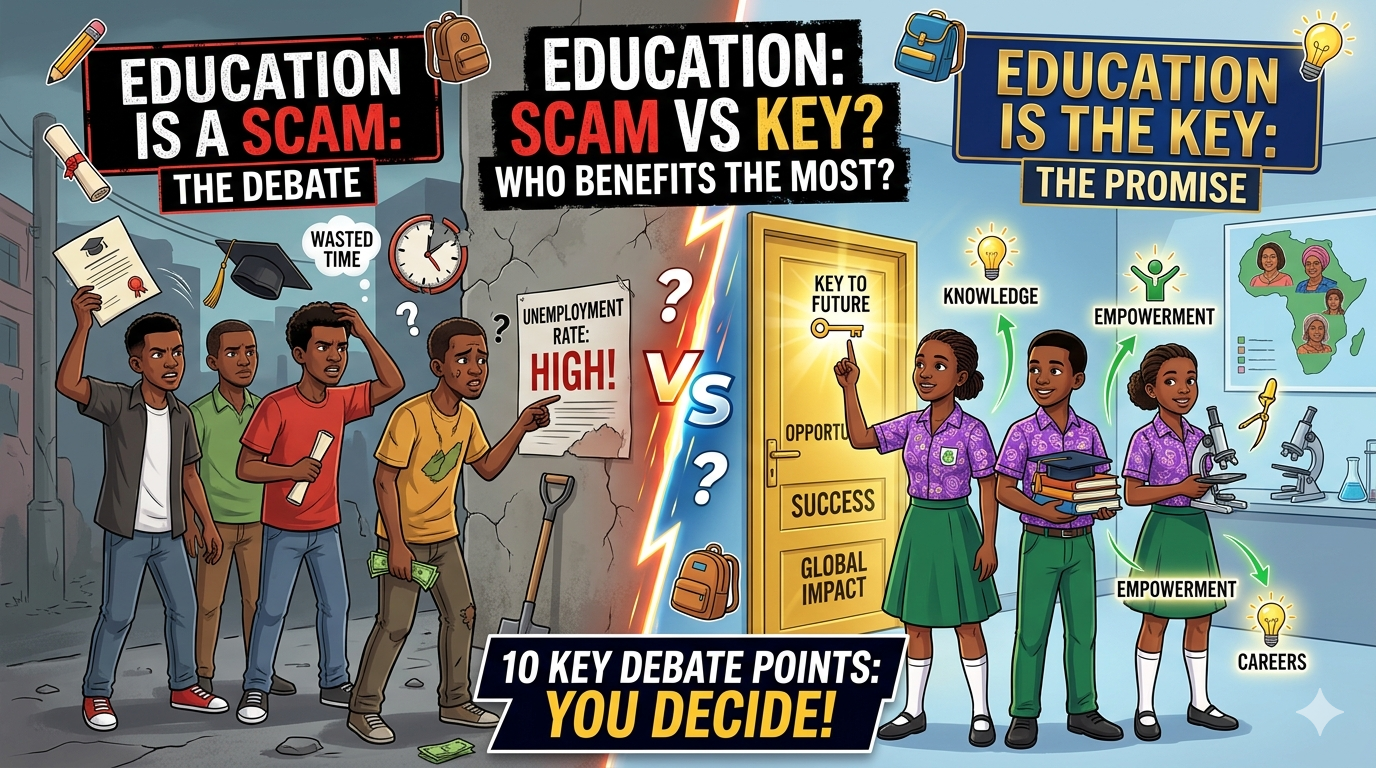
In today’s fast-changing world, one debate continues to spark strong opinions: “Education is a Scam vs Education is the Key – Is education a scam, or is it truly the key to success?”
With rising tuition costs, unemployment among graduates, and the explosion of online opportunities, many people are beginning to question the traditional value of education.
At the same time, millions still believe education remains the most powerful tool for personal and national development.
So, which side is right? Let’s break it down.
What Does “Education Is a Scam” Really Mean?
When people say education is a scam, they are not always dismissing learning itself. Instead, they are criticizing the system—especially formal schooling.
See more: How to Survive the 3 Weeks NYSC Orientation Camp: The Ultimate Survival Guide for New Corpers
Common Arguments Supporting This View
1. High Cost with Uncertain Returns
Many graduates spend years in school and come out with:
- Little or no job opportunities
- Financial pressure or debt
- Skills that don’t match the job market
This creates the feeling that the system overpromises and underdelivers.
2. Outdated Curriculum
Some critics argue that schools:
- Focus too much on theory
- Ignore practical, real-world skills
- Don’t adapt quickly to modern industries
As a result, graduates may struggle to apply what they’ve learned.
3. Success Without Formal Education
In the age of the internet, many successful individuals have built careers through:
- Digital skills
- Entrepreneurship
- Self-education
This raises the question: Do you really need a degree to succeed?
4. One-Size-Fits-All System
Not everyone thrives in a traditional classroom. Critics argue that:
- The system rewards memorization over creativity
- Talents outside academics are often ignored
- Students are not taught how to think independently
What Does “Education Is the Key” Mean?
On the other side of the debate, many believe education remains the foundation of progress and opportunity.
Check out: How to Use the Cornell Method to Take Better Lecture Notes (A Guide for Nigerian Students)
Strong Arguments Supporting Education
1. Access to Better Opportunities
Education opens doors to:
- Professional careers
- Higher-paying jobs
- Global opportunities
In many industries, formal qualifications are still essential.
2. Personal Development and Awareness
Education helps individuals:
- Think critically
- Make informed decisions
- Understand their rights and responsibilities
It builds confidence and independence.
3. National Growth and Development
No country can develop without an educated population. Education:
- Produces skilled professionals
- Drives innovation
- Reduces poverty and inequality
4. Social Empowerment
Education plays a major role in:
- Gender equality
- Reducing crime
- Promoting social justice
An educated society is more stable and progressive.
The Real Problem: Education vs The System
The truth lies somewhere in between.
See also: The Complete List of 26 Tradepreneur Subjects for WAEC: How to Choose a Profitable Skill
Education itself is not a scam. However, the way it is delivered can sometimes be flawed.
Key Issues in the System
- Lack of practical skill training
- Poor infrastructure (especially in developing countries)
- Limited career guidance
- Disconnect between education and industry needs
These challenges make education feel like a scam for some people.
Modern Reality: You Need Both Education and Skills
In today’s world, success is no longer about choosing one side.
The Winning Formula
To truly succeed, you need a combination of:
- Formal education (degrees, certifications)
- Practical skills (tech, communication, problem-solving)
- Self-education (online learning, personal growth)
- Experience (internships, projects, freelancing)
Education in Nigeria: A Unique Perspective
In Nigeria, the debate is even more relevant due to:
- High unemployment rates among graduates
- Limited access to quality education
- Growing digital economy opportunities
However, education still plays a vital role in:
- Professional careers (medicine, law, engineering)
- Social mobility
- National development
The challenge is not whether education matters—but how it can be improved.
Read now: How to Use the Cornell Method to Take Better Lecture Notes (A Guide for Nigerian Students)
So, Is Education a Scam or the Key?
The Honest Answer:
Education is only a scam if you rely on it blindly.
It becomes the key when you use it strategically.
How to Make Education Work for You
Here are practical tips:
1. Combine School with Skills
Learn in-demand skills like:
- Digital marketing
- Tech (coding, data analysis)
- Communication and leadership
2. Focus on Practical Knowledge
Don’t just study to pass exams. Learn to:
- Solve real-world problems
- Think critically
- Apply your knowledge
3. Invest in Self-Education
Use free and paid platforms to:
- Learn new skills
- Stay updated
- Build multiple income streams
Read more: How to Avoid Daydreaming/Zoning Out in the Library: A Student’s Guide to Staying Focused
4. Gain Experience Early
- Take internships
- Volunteer
- Start small projects
Experience often matters as much as education.
Conclusion: Rethinking Education for the Future
The debate between “education is a scam” and “education is the key” is not black and white.
Education is still one of the most powerful tools available—but it must evolve with the times. Individuals must also take responsibility by combining formal education with real-world skills.
In the end, education is not the problem—how we use it is.
FAQs
Is education really a scam?
No, but the system can be flawed. Education becomes ineffective when it lacks practical value.
Can you succeed without education?
Yes, but it’s often harder. Many careers still require formal qualifications.
What is more important: education or skills?
Both are important. The most successful people combine education with practical skills.