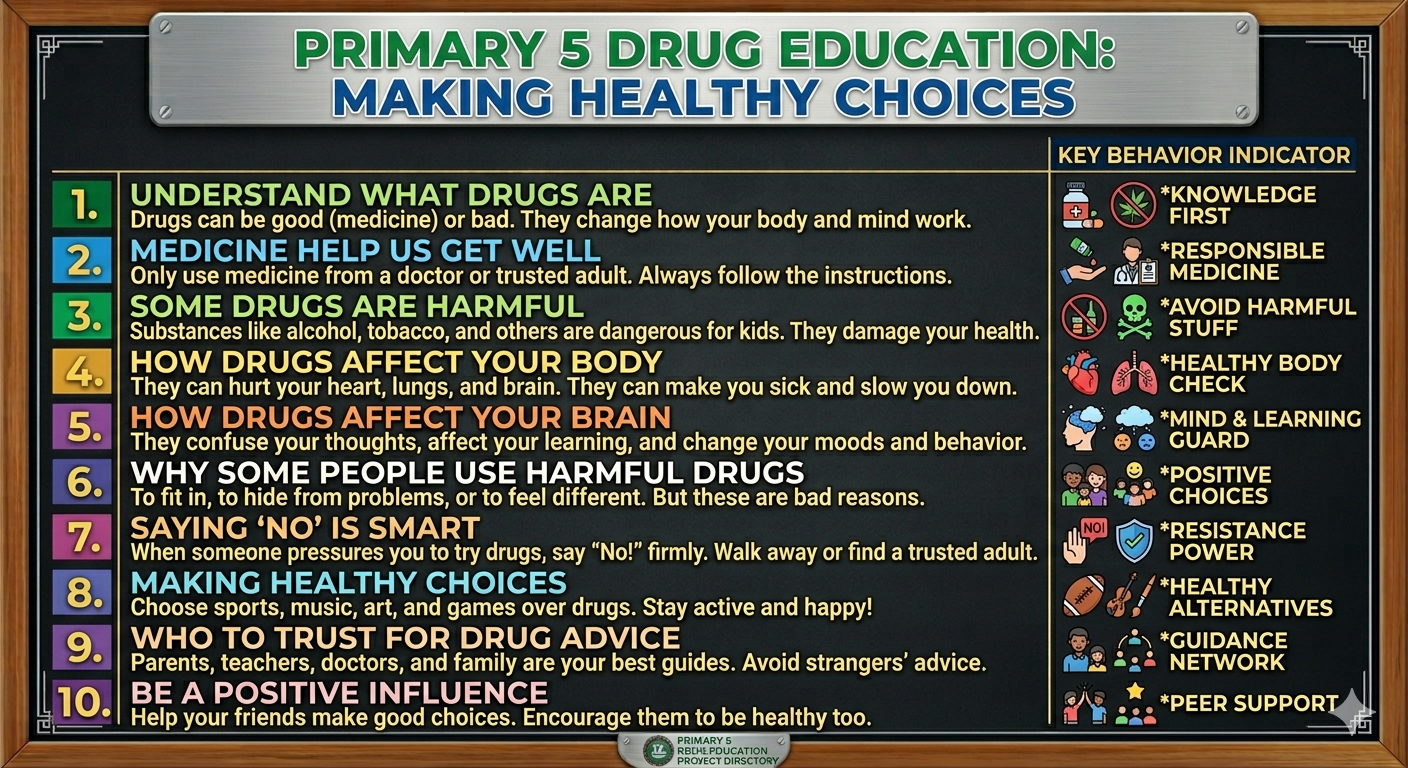
Drug education for Primary 5 is an essential part of helping children grow into healthy, responsible, and informed individuals. At the Primary 5 level, pupils are curious, impressionable, and beginning to understand the world around them—making it the perfect time to teach them about drugs, their uses, and their dangers.
This comprehensive guide explains drug education for Primary 5 pupils in simple, clear language, making it easy for teachers and parents to teach and for children to understand.
What Is Drug Education?
Drug education is the process of teaching people—especially children—about:
- What drugs are
- The types of drugs
- Their uses and effects
- The dangers of misuse and abuse
The goal is to help pupils make safe and healthy decisions.
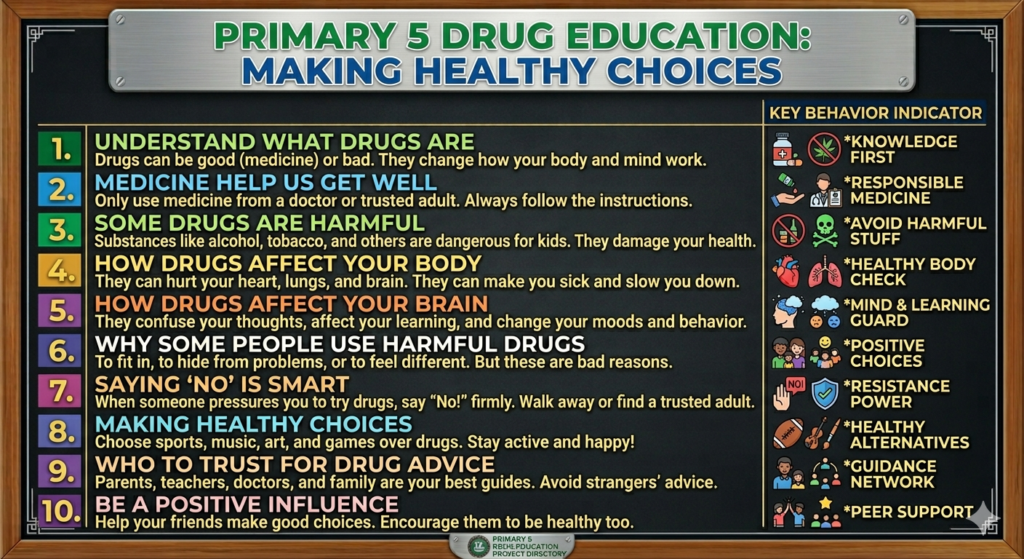
What Is a Drug?
A drug is any substance that changes how the body works.
Drugs can:
- Help us feel better (medicine)
- Treat illnesses
- Or harm the body if misused
Types of Drugs (Simple Explanation for Primary 5)
1. Good Drugs (Medicines)
These are drugs given by doctors to help people get well.
Examples:
- Paracetamol
- Antibiotics
- Cough syrup
These drugs are safe when used correctly.
2. Harmful Drugs
These are drugs that can damage the body, especially when used wrongly.
Examples:
- Cigarettes
- Alcohol
- Hard drugs like cocaine and heroin
These drugs are dangerous and addictive.
What Is Drug Abuse?
Drug abuse is the wrong use of drugs.
This includes:
- Taking drugs without a doctor’s advice
- Taking too much medicine
- Using harmful drugs
Drug abuse can lead to serious health problems.
Examples of Drug Abuse
- Taking someone else’s medicine
- Using drugs for fun or curiosity
- Ignoring doctor’s instructions
- Taking overdose
Effects of Drug Abuse on the Body
Drug abuse can harm the body in many ways:
- Brain damage
- Heart problems
- Weakness and tiredness
- Illness and poor health
- Addiction (cannot stop using drugs)
It can also affect school performance and behavior.
Social Effects of Drug Abuse
Drug abuse doesn’t only affect the body—it also affects life:
- Poor academic performance
- Bad behavior
- Loss of friends
- Family problems
- Trouble with the law
How to Prevent Drug Abuse (For Pupils)
Primary 5 pupils can stay safe by:
See also: Science Is Better Than Art? A Deep Dive Into Logic, Creativity, and Real-World Impact
- Saying NO to unknown substances
- Taking medicine only from parents or doctors
- Avoiding bad friends
- Asking questions when unsure
- Learning about the dangers of drugs
Always remember: Not everything you see others do is good for you.
Tips for Teachers
Teachers can improve drug education by:
- Using simple language and real-life examples
- Encouraging questions and discussions
- Teaching through stories and role-play
- Creating awareness about peer pressure
Tips for Parents
Parents play a big role in drug education:
- Talk openly with children about drugs
- Monitor what children watch and learn
- Set good examples
- Teach children to say NO
Importance of Drug Education for Primary 5
Drug education helps pupils:
Read now: How to Use the Cornell Method to Take Better Lecture Notes (A Guide for Nigerian Students)
- Understand what drugs are
- Avoid dangerous substances
- Make good decisions
- Stay healthy and safe
- Build confidence to resist peer pressure
People Also Ask
What is drug education for primary school?
It is teaching children about drugs, their uses, and dangers in a simple and understandable way.
Why is drug education important for Primary 5 pupils?
Because it helps them avoid harmful substances and make safe choices early in life.
What are examples of drug abuse?
Taking drugs without prescription, overdose, or using harmful substances like cigarettes and alcohol.
Conclusion
Drug education for Primary 5 is not just a school topic—it is a life skill.
By teaching children early:
- What drugs are
- How to use them safely
- And why misuse is dangerous
We prepare them to live healthy, safe, and responsible lives.