In a debate, bold claims get attention but strong reasoning wins points. The statement “teachers are better than farmers” is provocative by design.
If you’re preparing for a classroom or club debate and must defend that stance, this article provides 10 respectful, evidence-based points you can use.
Remember: this is a debate strategy, not an insult. Farmers feed nations; teachers shape minds.
These points below highlight why, in certain contexts, teachers may have a broader or longer-lasting societal influence.
10 reasons why teachers are better than farmers debate points
1. Multiplier Effect: Teachers Shape Many Lives
A single teacher can influence dozens or hundreds of students over a career. Those students go on to become parents, professionals, and community leaders multiplying the teacher’s impact across generations.
In debates, frame this as the multiplier effect: teachers’ influence compounds over time, whereas the immediate outputs of many other roles, while vital, usually serve more direct needs.
Read on: Debate: Oppose the Motion That Says a Female Child Is Better Than a Male Child
How to use it: Cite the long-term ripple effect educating a child can change family income, health choices, and civic participation for years.
2. Human Capital and Economic Growth
Education fuels economic development. Teachers develop the skills and knowledge that power innovation, entrepreneurship, and productivity.
When arguing this point, stress that skilled workforces depend on solid education systems.
How to use it: Reference the economic concept of human capital and argue that teachers are direct architects of a country’s productive capacity.
3. Civic Formation & Social Stability
Teachers don’t just teach math and science they teach civics, ethics, and social skills. By shaping civic-minded citizens, teachers contribute to social stability and democratic participation.
How to use it: Argue that stable, functioning societies require informed citizens an outcome heavily tied to education and educators.
4. Formalized Training & Pedagogical Expertise
Teachers typically undergo structured training in pedagogy, classroom management, and curriculum design. This formalized expertise equips them to deliver complex learning effectively.
How to use it: Contrast consistent teacher training with the variable, often informal pathways into other professions demonstrating professionalism and accountability in teaching.
5. Scalability & Replicability of Knowledge
Education is a scalable system: curricula, textbooks, and digital platforms allow teachers’ methods to be replicated and scaled.
One effective model can be adopted by many educators, amplifying impact.
See also: Education Is Better Than Money Debate: 7 Powerful Reasons Why Knowledge Wins
How to use it: Point to distance learning and teacher training programs as evidence of how teaching innovations spread.
6. Community Leadership & Social Infrastructure
Schools often function as community hubs offering events, adult education, and social services.
Teachers help coordinate these functions, making them local leaders beyond their classroom roles.
How to use it: Offer examples of school-based community programs or parent-teacher initiatives that strengthen neighborhoods.
7. Measurable Outcomes & Accountability
Education systems track measurable outcomes (test scores, graduation rates), which helps assess and improve impact.
This transparency creates accountability for results in a way that’s harder to measure in many other sectors.
How to use it: Emphasize the value of measurable improvement and the ability of teachers to show demonstrable gains in student learning.
8. Adaptability: From Traditional to Digital Classrooms
Teachers have adapted rapidly to digital platforms, flipped classrooms, and blended learning.
Their ability to change methods and reach students remotely demonstrates flexibility that keeps education resilient.
How to use it: Use the pivot to online learning during recent crises as a concrete example.
9. Preparation for All Professions; Including Farming
Teachers equip future farmers with modern agronomy knowledge, business management, and science, strengthening agricultural productivity. In that sense, teachers indirectly elevate the farming profession too.
See now: Debate on Teachers Are Better Than Farmers: Full Debate with Examples
How to use it: Argue that teachers undergird all sectors of the economy by supplying knowledge and critical thinking skills.
10. Long-Term Social Return on Investment
Investing in teachers often yields high social returns: higher lifetime earnings for students, lower crime rates, and improved health outcomes.
Economists frequently cite returns to education as a reliable development lever.
How to use it: Frame teachers as high-ROI investments that benefit individuals and societies over decades.
How to Structure These Points in a Debate
Opening: Acknowledge the vital role of farmers. Then pivot “Yet, when comparing societal scale and durability of impact, teachers have a unique edge.”
Body: Use 3–4 strongest points (multiplier effect, human capital, civic formation, ROI), backing each with explanation or anecdote.
Rebuttal Prep: Anticipate farmer-focused counters (food security, essential labor) and concede their necessity while distinguishing types of impact (immediate survival vs. long-term societal shaping).
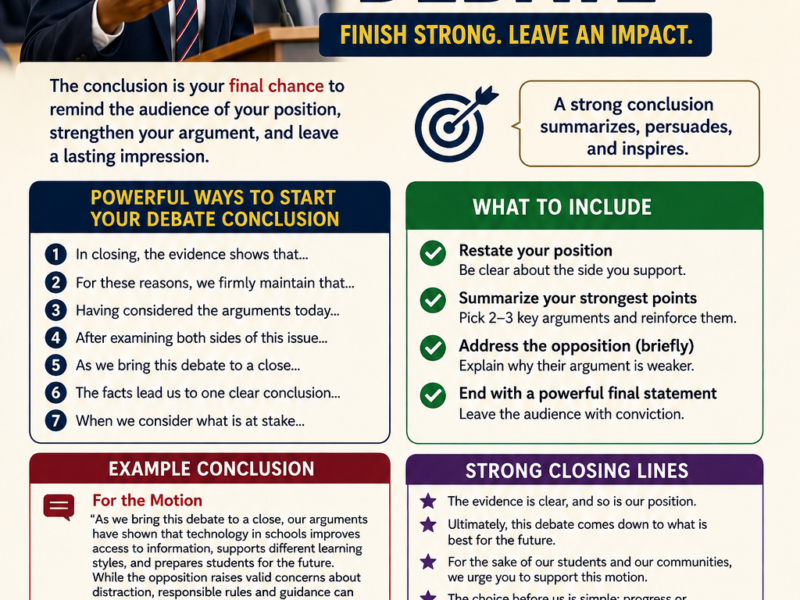
Closing: Reiterate that teachers’ influence permeates society and end with a compelling, concise summary.
Counterpoints & Nuance (Respect Matters)
Debates are clearer and more persuasive when respectful. Acknowledge that farmers are indispensable they feed nations and sustain economies.
This approach prevents alienating the audience and strengthens your ethical standing.
Read more: Debate: Oppose the Motion That Says a Female Child Is Better Than a Male Child
The goal is to show why teachers may have broader socio-economic influence in certain ways, not to diminish farming’s critical role.
Conclusion
If you’re arguing “teachers are better than farmers” in a debate, you’ll serve yourself well by focusing on scale of influence, measurable social returns, and the capacity of education to catalyze change across sectors.
Use evidence, remain respectful, and remember: a winning debater convinces the audience, not humiliates an opposing profession.
FAQs on 10 reasons why teachers are better than farmers debate points
1. Is it offensive to argue teachers are better than farmers?
It can be if framed disrespectfully. In a debate, present your points as comparisons of impact types, not as personal attacks.
2. Can farmers make the same societal impact as teachers?
Yes, in specific ways (food security, rural employment, environmental stewardship). But teachers influence across many sectors, creating broad secondary effects.
3. What’s the strongest single argument for teachers?
The multiplier effect; one teacher’s influence multiplies across students, families, and future generations.
4. How do I defend against the food-security argument?
Concede that farmers are essential for survival, then pivot: explain how education improves agricultural productivity, health, and policy, thus complementing farming.
5. Should I use statistics in this debate?
Yes, but ensure sources are reliable. Use education ROI studies, graduation rates, or documented impacts of teacher training programs.