Beauty and cosmetology education equips students with practical skills in personal grooming, skincare, hair care, and makeup artistry.
As the beauty industry continues to grow in Nigeria and globally, schools and vocational centers are increasingly adopting a structured Beauty and Cosmetology Scheme of Work to prepare students for employment and entrepreneurship.
This article provides a detailed, well-organized beauty and cosmetology scheme of work, explains its objectives, outlines weekly topics, and highlights teaching and assessment methods.
What Is a Beauty and Cosmetology Scheme of Work?
A beauty and cosmetology scheme of work is a structured teaching plan that outlines:
-
Topics to be taught
-
Learning objectives
-
Practical activities
-
Teaching resources
-
Assessment methods
It serves as a guide for teachers throughout a term or academic session.
Read more: How to Avoid Daydreaming/Zoning Out in the Library: A Student’s Guide to Staying Focused
Importance of a Beauty and Cosmetology Scheme of Work
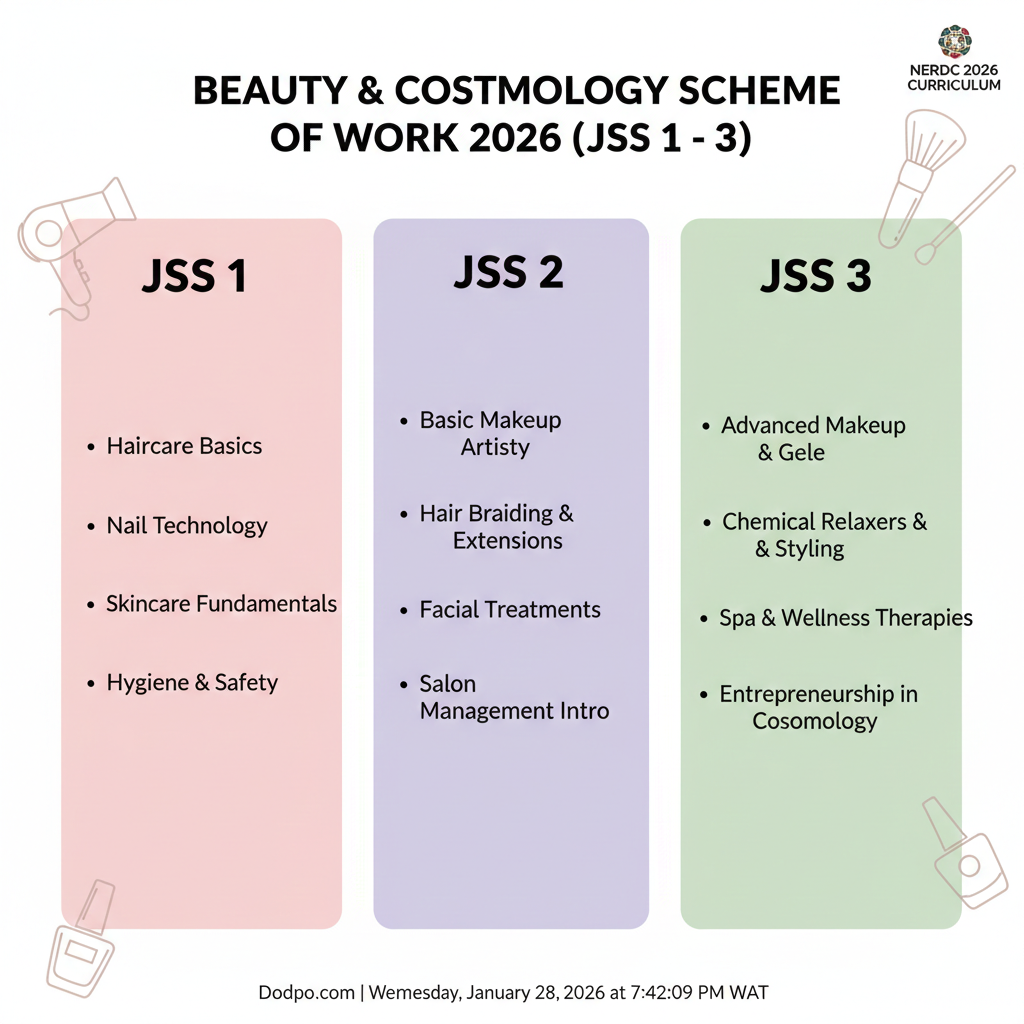
A well-planned scheme of work helps ensure consistency and quality in teaching.
Key Benefits
-
Provides clear lesson direction for instructors
-
Ensures balanced theory and practical learning
-
Helps students develop employable skills
-
Aligns lessons with national curriculum standards
-
Supports effective student assessment
Target Audience for Beauty and Cosmetology Education
This scheme of work is suitable for:
-
Junior Secondary Schools (Pre-Vocational Studies)
-
Senior Secondary Schools (Vocational Subjects)
-
Technical Colleges
-
Vocational Training Centers
-
Private Beauty Academies
General Objectives of Beauty and Cosmetology Education
By the end of the course, students should be able to:
-
Understand basic beauty and cosmetology concepts
-
Practice personal hygiene and salon safety
-
Identify beauty tools and cosmetics
-
Perform basic hair, skin, and nail care
-
Demonstrate professional salon ethics
Beauty and Cosmetology Scheme of Work Breakdown
See now: How to Register for NYSC Mobilization: The Complete Guide for Fresh Graduates
Week 1 – Introduction to Beauty and Cosmetology
Topics Covered:
-
Meaning of beauty and cosmetology
-
Areas of cosmetology
-
Career opportunities in the beauty industry
Activities:
-
Class discussion
-
Visual demonstrations
Week 2 – Personal Hygiene and Grooming
Topics Covered:
-
Importance of personal cleanliness
-
Body hygiene practices
-
Grooming standards for professionals
Activities:
-
Demonstration of hygiene practices
-
Student participation
Week 3 – Salon Safety and First Aid
Topics Covered:
-
Salon safety rules
-
Common salon accidents
-
Basic first aid procedures
Activities:
-
Role-play scenarios
-
Safety equipment identification
Week 4 – Tools and Equipment in Cosmetology
Topics Covered:
-
Hair care tools
-
Makeup tools
-
Nail care equipment
Activities:
-
Identification of tools
-
Practical handling exercises
Week 5 – Introduction to Hair Care
Topics Covered:
-
Types of hair
-
Hair structure
-
Basic hair care routines
Activities:
-
Hair type observation
-
Demonstration
Week 6 – Hair Styling Techniques
Topics Covered:
-
Simple hair styling methods
-
Braiding and weaving basics
-
Use of hair accessories
Activities:
-
Practical styling sessions
Week 7 – Introduction to Skin Care
Topics Covered:
-
Types of skin
-
Skin care routines
-
Common skin problems
Activities:
-
Skin analysis demonstration
Week 8 – Makeup Basics
Check out: A Woman’s Place Is Not In The Kitchen Debate Points (7 Winning Arguments)
Topics Covered:
-
Types of makeup products
-
Basic makeup tools
-
Simple makeup application
Activities:
-
Makeup practice on models or mannequins
Week 9 – Nail Care and Manicure
Topics Covered:
-
Nail structure
-
Nail care tools
-
Manicure and pedicure basics
Activities:
-
Practical nail care session
Week 10 – Customer Care and Salon Ethics
Topics Covered:
-
Customer relations
-
Professional ethics
-
Communication skills
Activities:
-
Role-play and discussions
Week 11 – Entrepreneurship in Beauty and Cosmetology
Topics Covered:
-
Starting a beauty business
-
Salon management basics
-
Marketing beauty services
Activities:
-
Business idea discussions
Week 12 – Revision and Practical Assessment
Topics Covered:
-
Review of all topics
-
Practical and written assessments
Teaching Methods for Beauty and Cosmetology
Effective teaching requires a hands-on approach.
Recommended Teaching Strategies
-
Demonstrations
-
Practical workshops
-
Group discussions
-
Visual aids and charts
-
Project-based learning
Assessment Methods
Assessment should test both theory and skills.
Assessment Techniques
-
Written tests
-
Practical demonstrations
-
Continuous assessment
-
Projects and assignments
Career Opportunities in Beauty and Cosmetology
Students trained under this scheme of work can pursue careers as:
-
Hair stylists
-
Makeup artists
-
Nail technicians
-
Skincare therapists
-
Salon managers
-
Beauty entrepreneurs
Why Beauty and Cosmetology Education Matters Today
Check out: How to Use the Cornell Method to Take Better Lecture Notes (A Guide for Nigerian Students)
Beauty and cosmetology education supports:
-
Skill acquisition and self-reliance
-
Youth employment
-
Creative expression
-
Economic growth
Conclusion
A well-structured Beauty and Cosmetology Scheme of Work is essential for delivering quality vocational education. It provides students with practical beauty skills, professional ethics, and entrepreneurial knowledge needed to succeed in the beauty industry.
Schools and training centers that adopt this scheme help prepare students for meaningful careers and self-employment in a growing global industry.
Frequently Asked Questions (FAQs)
Is beauty and cosmetology suitable for secondary school students?
Yes. It is a practical subject that builds early vocational skills.
Does cosmetology require expensive equipment?
Basic tools can be used at beginner levels.
Can students start a business after training?
Yes. With proper skills and guidance, students can start small beauty businesses.