DRUG EDUCATION FOR PRIMARY 5
What Every Child Should Know
Health Education • Suitable for Ages 9–11 • 10-Minute Read
A complete, age-appropriate guide to help Primary 5 students understand what drugs are, why they are dangerous, and how to stay safe and make smart choices.
TABLE OF CONTENTS
- What Are Drugs?
- Types of Drugs Children Should Know About
- Why Are Drugs Dangerous?
- How Drugs Affect the Body and Brain
- What Is Drug Addiction?
- Peer Pressure and How to Say No
- Who Can You Talk To?
- How to Stay Safe
- Frequently Asked Questions (FAQs)
1. What Are Drugs?
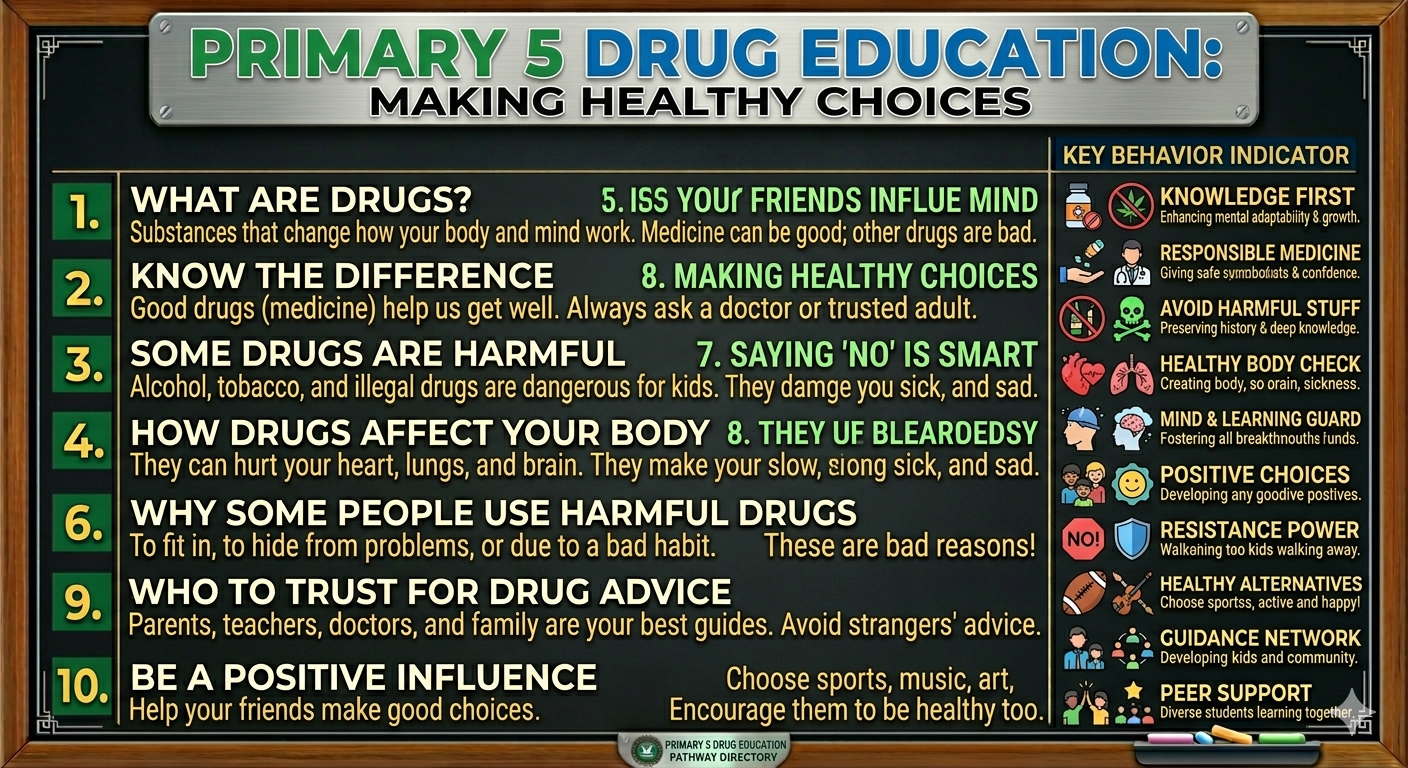
Drugs are substances that change the way your body and brain work. Some drugs are medicines — they are made by scientists and doctors to help sick people feel better. But there are also harmful drugs that are dangerous and illegal.
The important thing to know is: not all drugs are the same. Even helpful medicines can be dangerous if they are used wrongly or taken by the wrong person.
Read now: The Importance of Girl Child Education in Nigeria Debate: Why It Matters More Than Ever
| Key Definition
A drug is any chemical substance that changes how your mind or body works. This includes medicines, alcohol, cigarettes, and illegal substances. |
Safe medicines vs. harmful drugs
When a doctor gives you medicine, it is meant to help you. But drugs that people take to “feel good” or because they are pressured by others can seriously damage the body and brain — especially in children and young people whose bodies are still growing.
2. Types of Drugs Children Should Know About
It is important to know the different types of harmful substances so you can recognise and avoid them:
| Substance | What You Need to Know |
| Alcohol | Found in beer, wine and spirits. Legal for adults but very harmful for children whose brains are still developing. |
| Tobacco / Cigarettes | Contains nicotine and over 4,000 harmful chemicals. Causes cancer, heart disease, and lung damage. |
| Illegal Drugs | Examples include marijuana, cocaine, and heroin. These are illegal and extremely dangerous, even in small amounts. |
| Inhalants | Household chemicals that some people sniff or breathe in. They are very harmful to the brain and can cause sudden death. |
| WARNING
Even if someone offers you something that looks harmless — like a sweet or a drink — always check with a trusted adult before taking anything from strangers. |
3. Why Are Drugs Dangerous?
Drugs can cause serious harm to your health, your relationships, your future, and even your life. Here is why they are so dangerous:
- They damage important organs like the brain, heart, lungs and liver
- They can make you addicted — meaning you feel you cannot stop using them
- They affect your ability to think clearly and make good decisions
- They can lead to accidents, violence, and dangerous situations
- They can destroy friendships, family relationships, and school performance
- Some drugs can cause death — even the very first time they are used
| DID YOU KNOW?
Children and teenagers are more at risk from drugs than adults because their brains are still developing. Drugs can permanently damage a young person’s brain in ways that affect learning, memory, and emotions for life. |
Read more: How to Link Email to JAMB Profile (2025 Guide): The Fast SMS Method
4. How Drugs Affect the Body and Brain
Your brain is like the control centre of your body. It controls how you think, feel, move, and behave. Drugs interfere with the brain’s normal working and can cause serious problems.
Short-term effects (what happens right away)
- Nausea and vomiting
- Dizziness and confusion
- Fast or irregular heartbeat
- Seeing or hearing things that aren’t there (hallucinations)
- Anger or aggression
Long-term effects (what happens over time)
- Brain damage and memory loss
- Lung disease from smoking
- Heart disease
- Depression and mental illness
- Ruined opportunities in school and life
| BRAIN FACT
The brain does not finish developing until about age 25. Using drugs as a child or teenager can cause lasting damage to the parts of the brain used for learning, memory, decision-making, and controlling emotions. |
See now: How to Use the Cornell Method to Take Better Lecture Notes (A Guide for Nigerian Students)
5. What Is Drug Addiction?
Addiction means that a person feels a very strong need to keep using a drug, even when they know it is hurting them. Once someone is addicted, it is very hard — and sometimes very painful — to stop.
This is why it is so important never to start. You cannot become addicted to something you have never tried.
| IMPORTANT
Addiction is not a sign of weakness. It is a medical condition caused by changes in the brain. However, the best way to avoid addiction is to never use harmful drugs in the first place. |
Signs that someone may have a drug problem
- They change behaviour suddenly — becoming angry, sad, or secretive
- They stop caring about school, friends, or hobbies
- They look unhealthy — red eyes, weight loss, bad skin
- They ask for or steal money
- They have strange smells on their breath or clothes
If you notice these signs in a friend or family member, talk to a trusted adult immediately. Getting help early makes a big difference.
Read more: How to Use the Cornell Method to Take Better Lecture Notes (And Stop Cramming)
6. Peer Pressure and How to Say No
Peer pressure means when people your age try to convince you to do something — even something harmful — so you feel like you “fit in.” It can feel very uncomfortable to say no, especially to friends.
But here is the truth: real friends do not pressure you to harm yourself.
Phrases you can use to say no
“No thanks, I don’t want to.”
“That’s not for me.”
“My parents would be so upset — no way!”
“I have to go, see you later.”
“I care too much about my health.”
“I have practice and I need to stay sharp.”
Tips for handling peer pressure
- Say no confidently — you don’t owe anyone an explanation
- Walk away from the situation if it feels uncomfortable
- Stay close to friends who share your values
- Remember your goals — drugs can ruin your future dreams
- Tell a trusted adult if you are being pressured
7. Who Can You Talk To?
If you are ever offered drugs, see someone using drugs, or feel unsafe, you should always tell a trusted adult immediately. You are not in trouble — you are being brave by speaking up.
| Your Parents | Always your first and safest option. They want to keep you safe. |
| Your Teacher | Teachers are trained to help with these situations at school. |
| A School Counsellor | They provide confidential support for students. |
| Any Trusted Adult | An uncle, aunt, older sibling, or neighbour you feel safe with. |
| YOU WILL NOT GET IN TROUBLE
Telling an adult about drugs is the right and brave thing to do. It could save your life or someone else’s. You are not a snitch — you are a hero. |
8. How to Stay Safe
You have the power to protect yourself! Here are the most important safety rules every Primary 5 student should follow:
Read now: How to Use the Cornell Method to Take Better Lecture Notes (And Stop Cramming)
- Never accept food, drinks, or medicines from strangers
- Only take medicine given by your parents or a doctor
- Avoid areas where you know drugs are being used
- Choose friends who have positive values and goals
- Stay busy with sports, music, reading, or hobbies you love
- Learn the facts about drugs — the more you know, the safer you are
- Always trust your gut — if something feels wrong, leave immediately
- Report suspicious activities to a trusted adult
| HEALTHY ALTERNATIVES
Sports, arts, music, dance, and reading are all amazing ways to feel happy, confident, and energised — with no harmful side effects! Invest in your talents, not in drugs. |
9. Frequently Asked Questions (FAQs)
Q: Are medicines the same as drugs?
Medicines are a type of drug, but they are safe and helpful when used correctly. The dangerous drugs we discuss in drug education are those used to get “high” or are taken without a doctor’s instruction.
Q: What should I do if someone offers me drugs?
Say no confidently and walk away. Then tell a trusted adult — a parent, teacher, or counsellor — as soon as possible. You will not be in trouble.
Q: Can one try of a drug really hurt me?
Yes. Some drugs are so powerful that a single use can cause addiction, serious illness, or even death. There is no “safe” way to try harmful drugs.
Q: Why do some people use drugs if they are so dangerous?
Some people start because of curiosity, peer pressure, or to escape problems. But the short-term feeling is never worth the long-term damage. Healthy coping skills are always a better option.
Q: Can children get addicted to drugs?
Yes — and actually, children and teenagers get addicted more quickly than adults because their brains are still developing. That is why it is so important to stay away from drugs completely.
Remember: Your health is your most valuable asset.
Stay informed. Stay safe. Make smart choices.