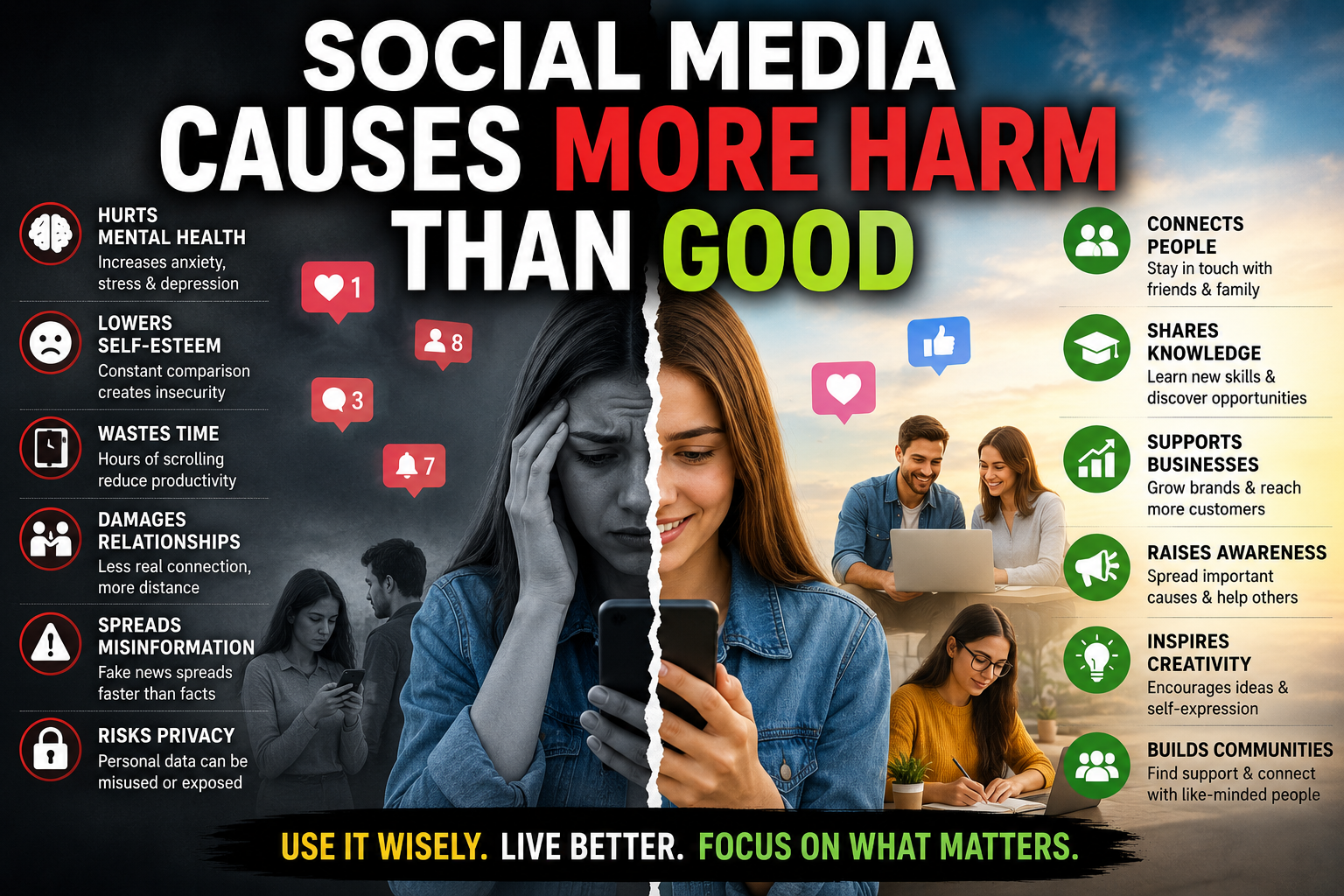
Social media has changed the way people communicate, learn, entertain themselves, build businesses, and follow events around the world. It allows users to connect instantly, share ideas, promote creativity, and discover opportunities that may not have been available before.
But despite these benefits, there is a growing concern that social media causes more harm than good, especially when it is used excessively or without self-control.
The problem is not simply that people use social media. The deeper issue is how much power it now has over attention, emotions, relationships, self-esteem, privacy, and even the way people understand truth.
For many users, social media is no longer just a tool. It has become a habit, a distraction, a comparison machine, and sometimes a source of anxiety, pressure, and misinformation.
So, does social media help society more than it hurts it? Or does the harm outweigh the benefits?
A fair answer must recognise both sides. Social media can be useful when used wisely. However, in everyday life, its negative effects are becoming harder to ignore. For students, teenagers, families, workers, and even adults, social media often creates more problems than it solves.
Why Social Media Feels So Powerful
Social media is designed to keep people engaged.
Every notification, like, comment, share, and new post gives users a reason to return. The platforms are built around speed, emotion, reaction, and constant updates.
This is why many people open an app for “just five minutes” and end up scrolling for an hour.
Social media gives quick entertainment, but it also quietly trains the mind to crave more stimulation. The more a person scrolls, the harder it can become to focus on slower but more meaningful activities such as reading, studying, praying, working deeply, exercising, or having face-to-face conversations.
That is one of the biggest reasons social media can become harmful. It does not always damage people suddenly. It often does so gradually.
The Benefits of Social Media
To be fair, social media is not completely bad. It has helped many people and businesses in meaningful ways.
1. Social Media Helps People Stay Connected
Social media allows friends and family members to stay in touch even when they live far apart.
Someone can send a message, share photos, celebrate birthdays, or check on loved ones without needing to travel. For people living abroad, students away from home, or families separated by distance, this can be valuable.
Social media can also help people reconnect with old classmates, former colleagues, and distant relatives.
In this sense, social media supports communication.
2. Social Media Can Educate and Inform
Many people use social media to learn new things.
Students can find study tips. Entrepreneurs can learn marketing. Parents can discover helpful advice. Professionals can follow industry experts. People can watch tutorials on cooking, finance, fitness, design, technology, language learning, and many other topics.
Social media has made information more accessible.
Someone who cannot afford a paid course may still learn useful skills from free content online.
3. Social Media Helps Businesses Grow
For small businesses, social media can be a powerful marketing tool.
A business owner can showcase products, reach customers, run ads, answer questions, collect reviews, and build a brand without needing a physical shop in every location.
Many creators, freelancers, coaches, designers, writers, and online sellers have used social media to build income and visibility.
This is one of the strongest positive uses of social media.
See more The Importance of Girl Child Education in Nigeria Debate: Why It Matters More Than Ever
4. Social Media Gives People a Voice
Social media allows ordinary people to share opinions, raise awareness, and speak about issues that may otherwise be ignored.
It can help people campaign for justice, support causes, expose wrongdoing, and gather communities around important topics.
In some situations, social media has helped people find support, donations, legal help, and emotional encouragement.
These benefits are real.
However, they do not erase the damage that excessive and careless social media use can cause.
Why Social Media Causes More Harm Than Good
1. Social Media Damages Mental Health
One of the biggest concerns about social media is its effect on mental health.
Many users constantly compare their lives with what they see online. They compare their bodies, homes, relationships, careers, clothes, holidays, achievements, and lifestyle with carefully selected posts from other people.
The problem is that social media often shows edited highlights, not full reality.
Someone may post a beautiful picture but hide the stress behind it. A couple may look happy online while struggling privately. A person may appear wealthy because of photos, but their real financial situation may be different.
When users compare their normal life with someone else’s best moments, they may begin to feel inadequate.
This can lead to:
- Low self-esteem
- Anxiety
- Jealousy
- Depression
- Body image issues
- Fear of missing out
- Pressure to appear successful
- Emotional exhaustion
For teenagers and young adults, this pressure can be especially intense because identity and confidence are still developing.
2. Social Media Encourages Addiction
Social media can become addictive.
Many people check their phones immediately after waking up. They scroll during meals, in bed, at work, in class, while walking, and even during conversations.
The urge to check notifications can become difficult to control.
This addiction may not look as serious as other forms of addiction, but it can still affect daily life. It can reduce productivity, damage relationships, interrupt sleep, and prevent people from focusing on important responsibilities.
A person may know they are wasting time, yet still keep scrolling.
That is one of the dangers of social media. It often gives small rewards that keep users coming back, even when they no longer feel happy using it.
3. Social Media Reduces Attention Span
Social media trains people to consume information quickly.
Short videos, fast captions, trending sounds, memes, quick reactions, and endless scrolling can make the brain used to constant change.
Over time, slower activities may begin to feel boring.
Reading a book feels too long. Studying feels difficult. Sitting quietly feels uncomfortable. Working deeply on one task becomes harder.
This is especially harmful for students and young people. Academic success requires concentration, patience, memory, and deep thinking. Social media often rewards the opposite: speed, distraction, reaction, and shallow attention.
When students spend too much time scrolling, it can affect their ability to focus in class, complete assignments, and prepare properly for exams.
See more How to Create Flashcards for Quick Revision: The Ultimate Guide for Nigerian Students
4. Social Media Spreads Misinformation
One of the most serious dangers of social media is misinformation.
False information can spread quickly because people often share emotional content before checking if it is true. A misleading post, fake news story, edited video, or false health claim can reach thousands or millions of people within hours.
This is dangerous because misinformation can influence decisions about health, politics, finance, relationships, education, and public safety.
Many people believe something simply because they saw it repeatedly online.
Social media rewards attention, not always accuracy. Posts that make people angry, afraid, shocked, or excited often spread faster than calm, balanced information.
This creates a serious problem for society.
5. Social Media Increases Cyberbullying
Cyberbullying is another major harm caused by social media.
People can insult, mock, threaten, embarrass, or spread rumours about others from behind a screen. Some users say things online that they would never say face-to-face.
For victims, the pain can be deep.
Unlike traditional bullying, cyberbullying can follow someone everywhere. It can happen at school, at home, at night, and in public comment sections. Harmful posts can be shared repeatedly, making the embarrassment feel impossible to escape.
Cyberbullying can affect confidence, mental health, school performance, friendships, and even personal safety.
This is one of the clearest examples of how social media can cause real-world harm.
6. Social Media Can Damage Real Relationships
Social media promises connection, but it can also weaken real relationships.
People may sit together physically but remain mentally absent because everyone is looking at a screen. A family may spend dinner scrolling. Friends may meet up but focus more on taking pictures than enjoying the moment.
Relationships need attention, listening, and presence.
Social media can create unnecessary arguments too. Misunderstood posts, jealousy, online flirting, public embarrassment, and comparison with other people’s relationships can create tension.
Sometimes people begin performing relationships online instead of building them privately.
A healthy relationship cannot survive only on likes and comments. It needs real communication.
7. Social Media Encourages Unrealistic Lifestyles
Many social media platforms promote unrealistic standards of beauty, wealth, success, and happiness.
Users see luxury cars, perfect bodies, expensive houses, designer clothes, flawless skin, dream holidays, and dramatic success stories.
Some of these posts are real. Many are exaggerated. Some are rented, edited, staged, filtered, or sponsored.
The danger is that viewers may begin to believe they are behind in life because they do not have what they see online.
This can create pressure to overspend, fake success, take unnecessary risks, or feel ashamed of a normal life.
A young person may begin to believe that success must happen quickly, publicly, and dramatically. This mindset can damage patience, discipline, contentment, and long-term growth.
8. Social Media Wastes Time
Time is one of the biggest things social media takes from people.
A few minutes here and there may not seem serious, but those minutes add up. Many people spend hours every day scrolling through content they barely remember afterwards.
That time could have been used for:
- Studying
- Building a skill
- Exercising
- Reading
- Sleeping
- Working on a business
- Spending time with family
- Praying or reflecting
- Planning for the future
- Resting properly
The problem is not entertainment itself. Everyone needs rest. The problem is when social media consumes time without adding meaningful value.
When people lose control of their time, they slowly lose control of their goals.
9. Social Media Can Harm Privacy
Many people share too much online without thinking about the long-term consequences.
They post their location, personal problems, family details, financial achievements, travel plans, workplace complaints, relationship conflicts, and private moments.
This can create risks.
Strangers may misuse personal information. Employers may see unprofessional posts. Scammers may gather details for fraud. A careless post can damage reputation years later.
The internet does not forget easily.
Once something is posted, it can be saved, copied, screenshotted, shared, or used out of context.
This makes privacy one of the biggest concerns in social media use.
10. Social Media Can Affect Sleep and Health
Excessive social media use can affect physical health, especially sleep.
Many people scroll late at night, even when they are tired. One video becomes another. One post leads to another. Before they know it, they have lost an hour of sleep.
Poor sleep affects mood, memory, learning, productivity, and general health.
Social media can also reduce physical activity. A person may spend hours sitting or lying down while scrolling instead of moving, exercising, or doing something active.
In this way, social media harms not only the mind but also the body.
Does Social Media Affect Students Negatively?
Yes, social media can affect students negatively when it becomes excessive or distracting.
Students need focus, discipline, reading time, study habits, and emotional stability. Social media can interfere with all of these.
It may lead to:
- Poor concentration
- Late-night phone use
- Lower academic performance
- Comparison with classmates
- Cyberbullying
- Reduced reading habits
- Procrastination
- Dependence on quick entertainment
- Anxiety about popularity
Students can still use social media responsibly, but they need boundaries. Without limits, social media can become one of the biggest obstacles to academic success.
Read more How to Use the Cornell Method to Take Better Lecture Notes (A Guide for Nigerian Students)
Is Social Media Bad for Teenagers?
Social media can be especially harmful to teenagers because they are still developing emotionally, socially, and mentally.
Teenagers often care deeply about acceptance, appearance, popularity, and peer approval. Social media can intensify these pressures.
A teenager may measure self-worth by likes, comments, followers, views, or shares. They may feel rejected if a post performs badly or if they are excluded from online conversations.
This can create emotional instability.
Teenagers need guidance from parents, teachers, and mentors. They should be taught that social media is not real life, and online approval is not the same as true value.
Can Social Media Be Used Positively?
Yes, social media can be used positively.
It becomes more helpful when users:
- Follow educational accounts
- Limit screen time
- Avoid toxic comparisons
- Think before posting
- Verify information before sharing
- Use it for business or learning
- Avoid arguments with strangers
- Protect personal information
- Take breaks when overwhelmed
- Keep real-life relationships first
The tool itself is not the only issue. The habits around the tool matter.
A knife can prepare food or cause harm. Social media can educate or damage. The result depends on use, purpose, and self-control.
However, because social media is designed to hold attention, responsible use requires intentional discipline.
Why Social Media Often Does More Harm Than Good
The reason social media often causes more harm than good is that its benefits require discipline, but its harms can happen automatically.
To benefit from social media, a person must choose wisely. They must follow the right accounts, limit time, ignore distractions, avoid comparison, check facts, and use the platform with purpose.
But the harmful effects require almost no effort.
A person can become distracted without planning to. They can compare themselves without realising it. They can lose sleep without intending to. They can believe false information without checking it. They can waste hours without noticing.
That imbalance is the problem.
Social media gives benefits, but it constantly pulls users toward habits that may damage their peace, focus, relationships, and confidence.
How to Reduce the Harmful Effects of Social Media
People do not have to delete every social media account to live a healthier life. But they do need boundaries.
Here are practical ways to reduce harm:
1. Set Daily Time Limits
Use app timers or personal rules to control how long you spend online.
A set limit helps prevent endless scrolling.
2. Avoid Social Media First Thing in the Morning
Starting the day with social media can fill the mind with noise before the day even begins.
Try beginning with prayer, reading, planning, exercise, or quiet reflection instead.
3. Do Not Use Social Media Before Bed
Late-night scrolling can affect sleep and increase anxiety.
Keep the phone away from the bed or stop using social media at least one hour before sleeping.
4. Unfollow Accounts That Make You Feel Insecure
If an account constantly makes you feel jealous, angry, anxious, or worthless, unfollow it.
Your peace matters more than someone else’s content.
5. Verify Information Before Sharing
Do not share posts just because they are emotional or popular.
Check the source. Look for evidence. Avoid spreading fear or false information.
6. Protect Your Privacy
Do not post everything about your life.
Keep personal information, family matters, location details, and private struggles offline when necessary.
7. Spend More Time in Real Life
Meet people. Read books. Learn skills. Exercise. Work on goals. Talk to family. Build offline relationships.
A healthy life cannot be lived only through a screen.
Should People Quit Social Media Completely?
See now Education Is a Scam vs Education Is the Key: A Balanced Debate for Today’s World
Some people may benefit from quitting social media completely, especially if it is affecting their mental health, productivity, relationships, or spiritual life.
Others may not need to quit entirely but should reduce their usage.
The decision depends on the person.
If social media helps your business, education, or communication, you may choose to keep it with boundaries. But if it constantly drains your peace, wastes your time, or damages your confidence, taking a break may be wise.
A social media detox can help people reset their habits and remember what life feels like without constant scrolling.
Final Verdict: Does Social Media Cause More Harm Than Good?
Yes, social media often causes more harm than good when used without discipline.
Although it can connect people, support businesses, spread information, and create opportunities, its negative effects are serious. It can damage mental health, reduce attention span, increase comparison, spread misinformation, encourage addiction, harm privacy, fuel cyberbullying, and weaken real relationships.
Social media is useful as a tool, but dangerous as a lifestyle.
The best approach is not blind rejection or careless use. The best approach is controlled, purposeful, and limited use.
People should use social media to support their lives, not allow social media to control their lives.
Frequently Asked Questions
Does social media cause more harm than good?
Social media can cause more harm than good when it is used excessively or without boundaries. It can affect mental health, focus, sleep, relationships, privacy, and productivity.
What are the main harmful effects of social media?
The main harmful effects include anxiety, depression, comparison, addiction, cyberbullying, misinformation, sleep problems, reduced attention span, and wasted time.
Is social media bad for students?
Social media can be bad for students if it distracts them from studying, affects sleep, encourages comparison, or exposes them to cyberbullying and misinformation.
Can social media be good?
Yes, social media can be good when used for learning, business, communication, creativity, networking, and awareness. The problem is excessive or careless use.
Why is social media addictive?
Social media is addictive because it provides constant rewards through likes, comments, notifications, videos, and new content. These small rewards encourage users to keep returning.
How does social media affect mental health?
Social media can affect mental health by increasing comparison, fear of missing out, online pressure, cyberbullying, and anxiety about appearance or popularity.
Should teenagers use social media?
Teenagers can use social media, but they need strong boundaries, parental guidance, privacy awareness, and limits on screen time.
How can I use social media in a healthy way?
Use social media with time limits, follow positive accounts, avoid comparison, protect your privacy, verify information, and take breaks when it affects your peace.
Conclusion
Social media has many benefits, but its dangers are too serious to ignore.
It connects people, supports businesses, and spreads information quickly. But it also distracts, pressures, misleads, and emotionally drains millions of users.
The question is not whether social media should exist. It already does. The real question is whether people can use it without becoming controlled by it.
For many people, the answer depends on discipline.
If social media helps you learn, grow, connect, or build something meaningful, use it wisely. But if it steals your time, damages your peace, weakens your focus, or makes you feel less valuable, it may be doing more harm than good.
In the end, social media should be a tool in your hands, not a master over your mind.