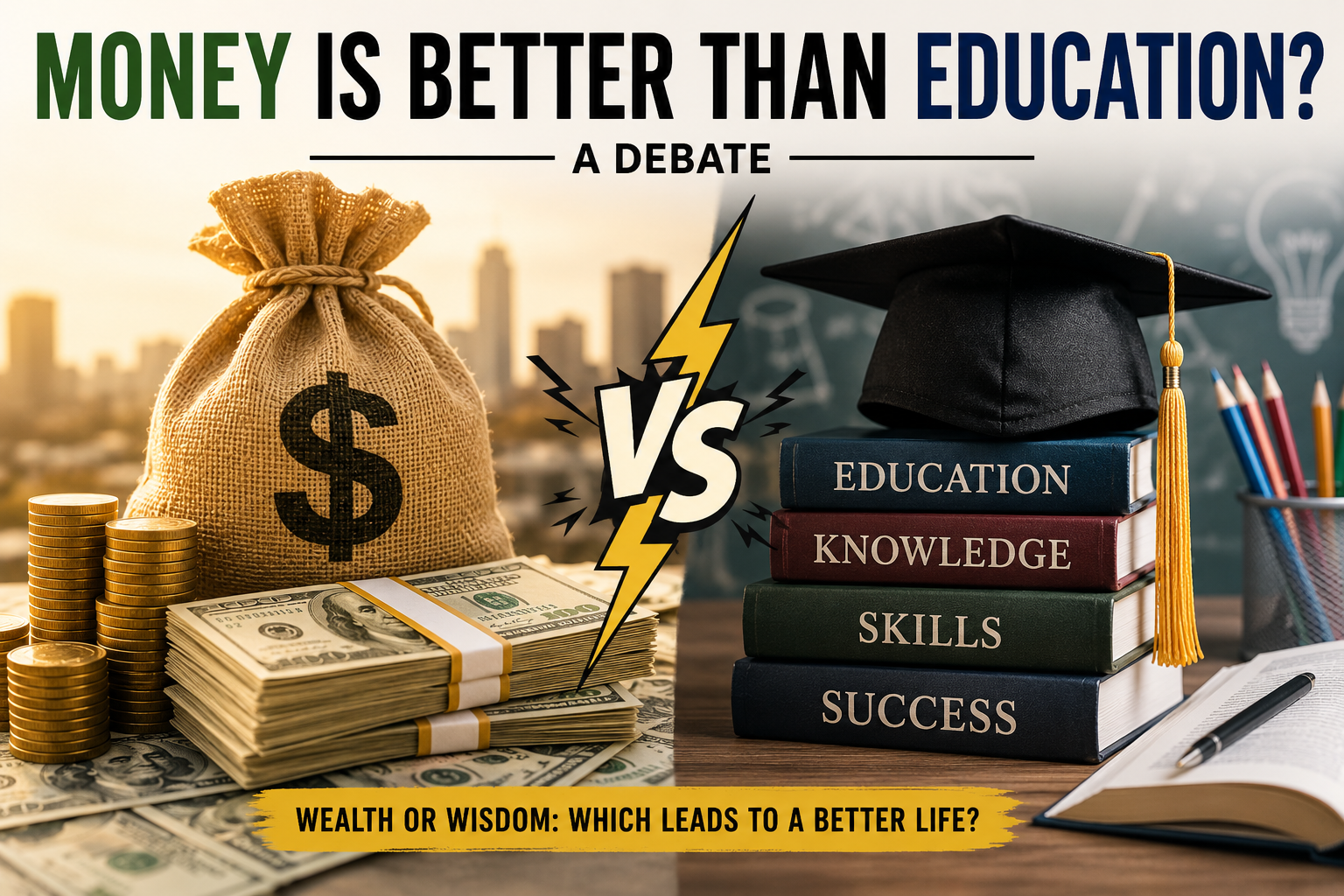
Money and education are two of the most powerful forces in society. One gives access to opportunities, comfort, and influence. The other builds knowledge, skills, and personal growth. For years, students, teachers, and public speakers have debated the question: which is more important?
The debate on “money is better than education” remains popular in schools, competitions, and social discussions because both sides have strong arguments. Some people believe education creates success, while others argue that money opens doors faster than certificates ever can.
In reality, many successful individuals gained influence through wealth before formal education played a major role in their lives. Money can provide security, access, and freedom in ways education alone sometimes cannot.
This article explores strong debate points supporting the argument that money is better than education while also examining the wider conversation around success and opportunity.
See also: How to Handle Panic Attacks in the Exam Hall: A Survival Guide for Nigerian Students
What Does the Debate Mean?
The “money is better than education” debate focuses on which factor has greater value in achieving success and improving life.

Education is the process of gaining knowledge, skills, training, and understanding through schools or life experiences. Money refers to financial resources used to meet needs, create comfort, and access opportunities.
Supporters of money argue that wealth can solve immediate problems, create opportunities, and improve quality of life faster than education. They believe money often determines access to education itself, healthcare, housing, and social status.
Why Money Is Considered Better Than Education
Many people support the argument that money has more practical value in modern society. Here are some major points often used during debates.
Money Solves Basic Human Needs
One of the strongest debate points is that money helps people survive.
Food, shelter, healthcare, transportation, and clothing all require financial resources. A highly educated person without money may still struggle to meet daily needs.
People cannot pay rent or hospital bills using certificates alone. In many situations, financial stability becomes more urgent than academic achievement.
A wealthy individual can access comfort and security immediately, while education often takes years before producing financial results.
Money Creates Opportunities Faster
Money opens doors quickly.
With enough financial resources, people can start businesses, invest in real estate, travel abroad, or access premium services. Wealth often creates shortcuts that education alone cannot provide.
For example, a wealthy entrepreneur can hire experts, advisors, and professionals without personally studying every subject.
Money also allows people to take risks. Someone with financial backing may pursue business ideas more confidently than a struggling graduate burdened by debt.
Education Often Depends on Money
Another strong point in this debate is that education itself requires money.
School fees, books, internet access, transportation, and accommodation all cost money. Students from wealthy families often receive better educational opportunities than those from poor backgrounds.
This reality shows how money frequently controls access to quality education.
A person with financial resources can attend private schools, hire tutors, and study abroad. Without money, even talented students may struggle to complete their education.
Read also: How to Use the Cornell Method to Take Better Lecture Notes (And Stop Cramming)
Wealth Brings Social Influence
Money often increases social status and influence.
Wealthy individuals usually gain attention, respect, and connections in society. Many powerful people influence politics, entertainment, business, and media mainly because of their financial position.
In many situations, society treats wealthy individuals differently from highly educated people with limited income.
Business owners, investors, and celebrities often command influence without advanced academic qualifications.
Money Provides Freedom and Flexibility
Financial independence gives people freedom to make choices.
A wealthy person can travel, retire early, support family members, or pursue personal interests without depending on employers.
Education does not always guarantee this freedom. Many graduates still struggle with unemployment or low paying jobs despite years of schooling.
Money creates options and reduces dependence on others.
Many Successful People Became Rich Without Higher Education
Supporters of this debate often point to successful entrepreneurs who achieved massive wealth without completing formal education.
Some business leaders focused more on innovation, risk taking, and practical skills than traditional academic paths.
Examples often mentioned in debates include:
- Tech entrepreneurs
- Entertainment figures
- Athletes
- Investors
- Business owners
These examples are used to argue that financial success does not always depend on university degrees.
Money Can Buy Better Healthcare
Healthcare is another major debate point.
People with money usually access better hospitals, treatments, medications, and specialists. In serious situations, wealth can directly affect quality of life and survival chances.
An educated person without financial resources may still struggle to afford proper medical care.
This makes money extremely valuable in protecting health and wellbeing.
Money Reduces Stress
Financial problems create pressure for millions of people worldwide.
Lack of money can lead to anxiety, depression, family conflict, and insecurity. Wealth often reduces these struggles by creating stability.
People with strong financial support generally feel more secure about housing, emergencies, and future planning.
Education can improve knowledge, but money often provides immediate peace of mind.
Read now: How to Use the Cornell Method to Take Better Lecture Notes (And Stop Cramming)
Businesses Value Results More Than Certificates
In modern industries, practical skills and results sometimes matter more than academic qualifications.
Many employers now focus on:
- Experience
- Communication skills
- Creativity
- Problem solving
- Sales ability
- Technical talent
Some highly profitable careers value performance over degrees. Social media creators, online entrepreneurs, and digital marketers often earn substantial income without advanced formal education.
Money Supports Education
An interesting argument is that money can buy education, but education cannot always buy money.
Wealthy individuals can hire teachers, attend elite schools, and access learning resources at any time.
On the other hand, educated people may still struggle financially despite years of study.
This point is commonly used in debates to show the power money holds in society.
Counterarguments Against “Money Is Better Than Education”
Strong debates also require understanding opposing views.
Critics argue that education remains more valuable because it creates knowledge, discipline, innovation, and long term societal progress.
Here are common counterarguments:
Education Helps People Earn Money
Many professions require formal education, including medicine, law, engineering, and teaching.
Without education, some careers would be impossible to enter.
Education Builds Critical Thinking
Schools and learning environments teach problem solving, communication, and decision making skills that support long term success.
Wealth Can Disappear
Money can be lost through poor decisions or economic problems. Education and knowledge often remain valuable for life.
Education Improves Society
Educated populations contribute to scientific discoveries, healthcare advancements, and national development.
These counterpoints make the debate more balanced and intellectually engaging.
Strong Debate Points Supporting Money Over Education
If you are preparing for a school debate, here are concise points you can use confidently:
- Money solves immediate human needs faster than education.
- Wealth creates access to better opportunities and connections.
- Education itself depends heavily on money.
- Rich individuals often receive greater social influence.
- Financial freedom improves quality of life.
- Many successful people became wealthy without degrees.
- Money provides access to healthcare and security.
- Practical skills and business talent sometimes matter more than certificates.
- Wealth creates flexibility and independence.
- Money can purchase education, but education does not guarantee wealth.
Which Is More Important in Real Life?
The truth is more balanced than the debate suggests.
Money and education often work best together. Education can help people develop skills and knowledge, while money provides resources and opportunities.
Still, many people argue that financial stability becomes more urgent in daily life because survival depends heavily on income and access to resources.
A person may survive without advanced education, but surviving without money is extremely difficult in modern society.
How to Prepare for a Debate on Money vs Education
If you are preparing for a classroom debate or speech competition, here are a few useful tips:
Understand Both Sides
Even if you support one side, study opposing arguments carefully. Strong debaters know how to respond confidently.
See more: Pen is mightier than the sword debate points for secondary school
Use Real Life Examples
Examples make arguments stronger and more believable.
Speak Clearly and Confidently
Good delivery matters as much as strong points.
Avoid Memorizing Everything
Focus on understanding ideas instead of repeating scripted lines.
Stay Respectful
Debates should remain thoughtful and professional.
Frequently Asked Questions
Is money more important than education?
Some people believe money is more important because it provides security, opportunities, and access to essential needs. Others argue education creates long term success and knowledge.
Can someone succeed without education?
Yes. Many successful entrepreneurs, entertainers, and athletes achieved wealth without advanced formal education. However, success usually still requires skills, discipline, and hard work.
Why do people say education is power?
Education helps people gain knowledge, critical thinking abilities, and professional qualifications that can improve career opportunities and societal progress.
What are the advantages of money?
Money provides comfort, healthcare access, freedom, business opportunities, and financial security.
Can education guarantee wealth?
No. Education can improve opportunities, but it does not automatically guarantee financial success.
Conclusion
The debate on “money is better than education” continues because both play important roles in life. Supporters of money argue that wealth creates opportunities, solves immediate problems, and provides freedom in ways education alone sometimes cannot.
From healthcare and housing to business opportunities and social influence, money affects nearly every part of modern living. Many people therefore see financial stability as more practical and urgent than academic qualifications.
At the same time, education remains valuable for building knowledge, skills, and long term development. In reality, the strongest position may be finding a balance between both.
Still, for debate purposes, there are many powerful arguments supporting the idea that money can have greater immediate impact than education in today’s world.