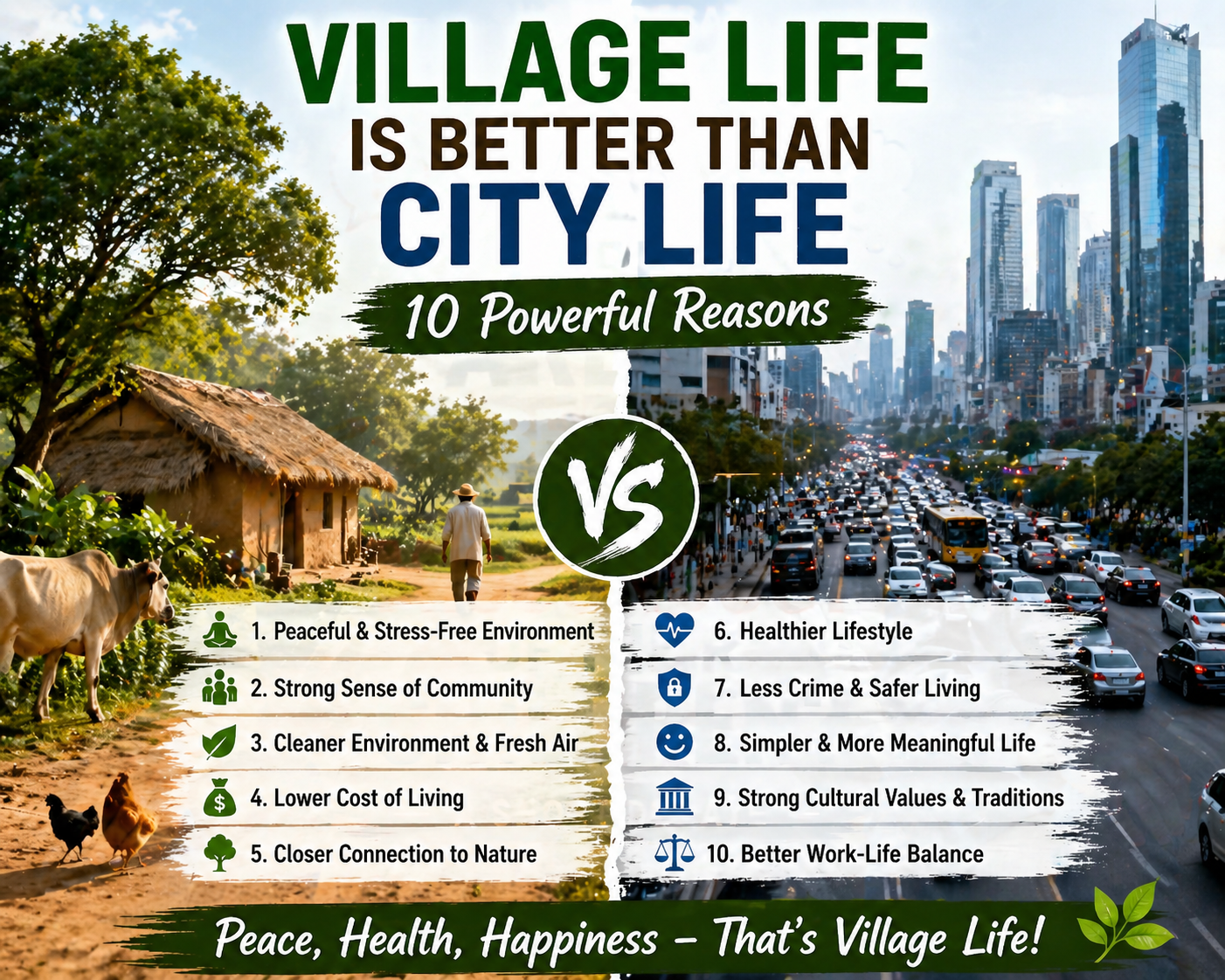
Here’s a debate on village life is better than city life 10 points
There’s a quiet charm to village life that many people don’t fully appreciate—until they experience it. In a world that constantly celebrates fast-paced living, skyscrapers, traffic, and endless noise, the simplicity of rural life often gets overlooked.
But here’s the truth…
More people are beginning to question whether city life is truly “better” or just busier. When you strip away the distractions, village life offers something many urban environments struggle to provide: peace, connection, and balance.
So, is village life really better than city life?
See now:
Let’s explore this through 10 compelling points that highlight why rural living continues to win hearts around the world.
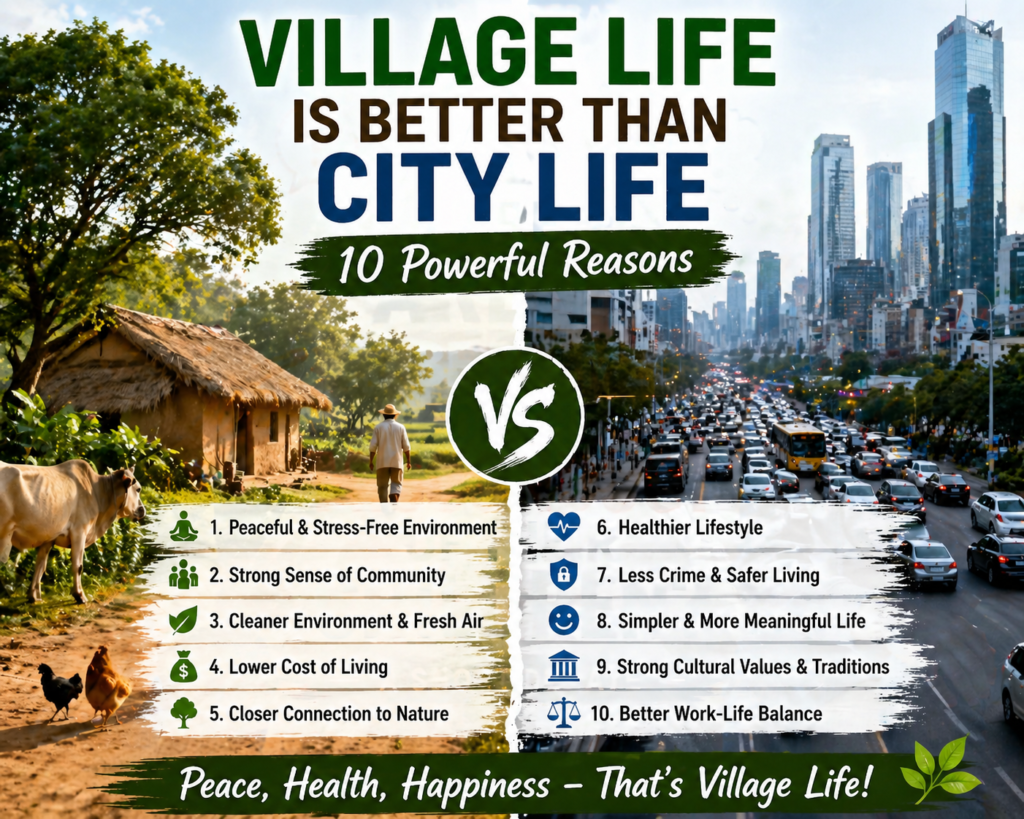
1. Peaceful and Stress-Free Environment
One of the biggest advantages of village life is the calm and quiet atmosphere.
Unlike cities filled with traffic noise, sirens, and constant activity, villages offer:
- Fresh air
- Minimal noise pollution
- A slower, more relaxed pace of life
This peaceful environment reduces stress and promotes mental well-being. You’re not constantly rushing. You have time to breathe, think, and truly live.
See more: Pen is mightier than the sword debate points for secondary school
2. Strong Sense of Community
In villages, people know each other.
Neighbors aren’t strangers—they’re friends, extended family, and support systems. Whether it’s helping during difficult times or celebrating together, there’s a strong sense of belonging and unity.
In contrast, city life can feel isolating. You might live next door to someone for years without even knowing their name.
Village life reminds us that human connection still matters.
3. Cleaner Environment and Fresh Air
Air pollution is a serious issue in many cities. Smog, industrial emissions, and vehicle exhaust affect both health and quality of life.
Villages, on the other hand, offer:
- Cleaner air
- Less pollution
- More greenery
Living close to nature means your body and mind benefit daily. It’s not just refreshing—it’s healthier.
4. Lower Cost of Living
City life often comes with high expenses:
- Rent
- Transportation
- Food
- Utilities
In villages, the cost of living is significantly lower. Many people grow their own food, reducing daily expenses.
This means you can live comfortably without constantly worrying about money—a huge advantage in today’s economy.
5. Closer Connection to Nature
Village life allows you to experience nature in its purest form.
From sunrise over fields to the sound of birds in the morning, nature becomes part of your everyday routine.
See now: JAMB 2026 Novel Summary: The Lekki Headmaster by Kabir Alabi Garba (Complete Guide)
This connection:
- Improves mental health
- Encourages physical activity
- Creates a sense of peace
In cities, nature often feels distant or artificial—limited to parks or controlled spaces.
6. Healthier Lifestyle
Life in the village naturally promotes healthier habits.
People tend to:
- Eat fresh, organic food
- Engage in physical activities like farming or walking
- Maintain regular daily routines
In cities, fast food, sedentary jobs, and irregular schedules can negatively impact health.
Village life, without trying too hard, encourages a balanced and healthy lifestyle.
7. Less Crime and Safer Living
Villages generally have lower crime rates compared to cities.
With strong community ties and fewer population pressures, people tend to look out for one another. This creates a safer environment, especially for:
- Children
- Elderly individuals
- Families
Safety isn’t just about security systems—it’s about trust. And villages offer that naturally.
8. Simpler and More Meaningful Life
City life often revolves around competition, deadlines, and material success.
Village life, however, focuses on:
- Simplicity
- Contentment
- Meaningful relationships
You don’t need luxury to feel fulfilled. Happiness comes from small, everyday moments—sharing meals, working together, and enjoying nature.
9. Strong Cultural Values and Traditions
Villages are often the heart of cultural heritage.
Traditions, festivals, and local customs are preserved and celebrated with pride. This helps individuals stay connected to their roots and identity.
In cities, globalization and modern lifestyles sometimes dilute these traditions.
Village life keeps culture alive.
10. Better Work-Life Balance
In cities, work often takes over life.
Long hours, traffic, and stress leave little time for personal life. In villages, the pace is different. People have more time for:
- Family
- Rest
- Personal interests
This balance leads to greater satisfaction and overall happiness.
Check out: How to Use the Pomodoro Technique to Smash Your WAEC and JAMB Exams
Village Life vs City Life: A Balanced View
While village life has many advantages, it’s important to acknowledge that city life also offers:
- Better access to healthcare
- More job opportunities
- Advanced education facilities
However, the question isn’t which is perfect—it’s which provides a better quality of life.
For many people, the peace, health benefits, and strong community of village life outweigh the convenience of city living.
See more:
Conclusion
Village life may not have the bright lights or endless opportunities of the city, but it offers something deeper—a sense of peace, purpose, and connection.
In a time when stress, burnout, and disconnection are increasingly common, the simplicity of rural living feels more valuable than ever.
So, is village life better than city life?
For those who value health, happiness, and human connection, the answer is often a resounding yes.