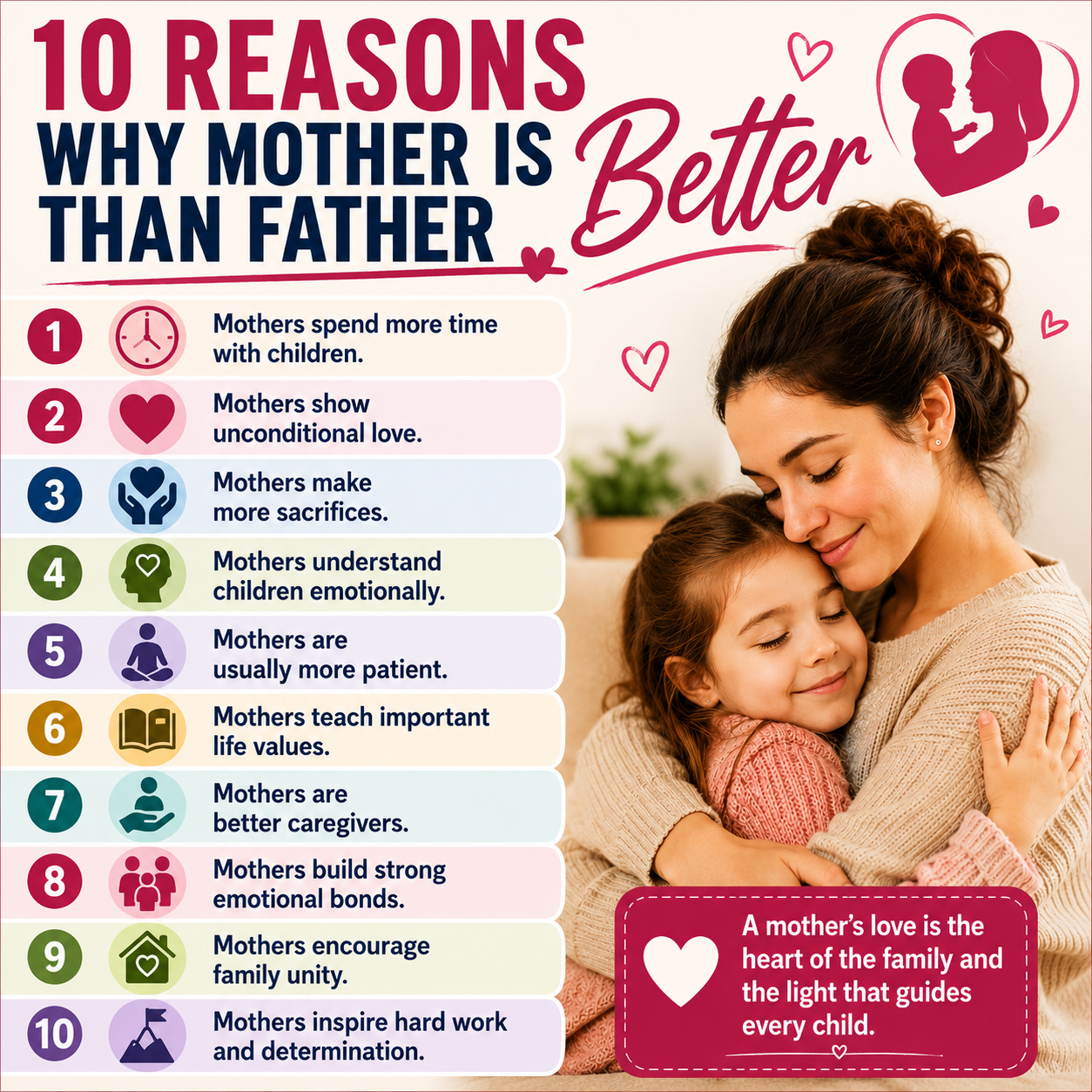
When people discuss the roles of parents in a child’s life, one debate that often comes up is: Who is better between a mother and a father? While both parents are important and play unique roles in the family, many people believe mothers often have a deeper emotional connection and greater day-to-day involvement in raising children.
From nurturing and emotional support to sacrifice and unconditional love, mothers are often seen as the heart of the home. Their influence shapes children emotionally, mentally, and morally from infancy into adulthood.
In this article, we’ll explore 10 powerful reasons why many people argue that mothers are better than fathers in certain aspects of parenting. Whether you need debate points, school assignment ideas, or thoughtful discussion content, this guide provides strong arguments in a clear and relatable way.
Why the “Mother Is Better Than Father” Debate Is Popular
This debate remains common in schools, social discussions, and family conversations because both parents contribute differently to a child’s development.
However, mothers are often praised for:
- Emotional care
- Daily nurturing
- Sacrifices
- Patience
- Closer bonding with children
The topic encourages students and readers to think deeply about parenting roles and family relationships.
See now: How to Use the Cornell Method to Take Better Lecture Notes (A Guide for Nigerian Students)
1. Mothers Usually Spend More Time With Children
One major reason many people believe mothers are better than fathers is that mothers often spend more time caring for children, especially during infancy and early childhood.
From feeding and bathing to helping with homework and emotional support, mothers are deeply involved in children’s daily lives.
Because of this close interaction, children often feel more emotionally connected to their mothers.
A mother is usually the first person a child runs to when:
- They are sick
- They feel sad
- They need comfort
- They feel afraid
That emotional closeness is difficult to replace.
2. Mothers Show Unconditional Love
Mothers are widely known for loving their children regardless of circumstances.
Even when children make mistakes, mothers often continue to:
- Support them
- Protect them
- Encourage them
- Forgive them
This unconditional love creates emotional security and confidence in children.
While fathers also love their children deeply, mothers are often more expressive emotionally, which helps children feel understood and accepted.
3. Mothers Make More Sacrifices
Another strong debate point is the level of sacrifice mothers make.
Many mothers:
- Carry children for nine months
- Endure childbirth pain
- Lose sleep caring for babies
- Put their children’s needs before their own
Some mothers even pause careers, personal dreams, or social lives to focus on raising their children.
These sacrifices demonstrate extraordinary dedication and commitment.
4. Mothers Understand Children Emotionally
Mothers are often more emotionally sensitive and observant.
They can quickly notice when a child is:
- Angry
- Worried
- Hurt
- Stressed
- Unhappy
Even without words, many mothers understand their children’s feelings through behavior and body language.
This emotional intelligence helps children feel supported during difficult moments.
5. Mothers Are Usually More Patient
Patience is one of the most important qualities in parenting.
Mothers often display remarkable patience when:
- Teaching children
- Correcting mistakes
- Helping with schoolwork
- Caring for sick children
Raising children requires constant attention, and many mothers handle these responsibilities calmly despite stress and exhaustion.
This patience helps create a more loving and stable home environment.
Check out: How to Use the Pomodoro Technique to Crush WAEC and JAMB (Without Burning Out)
6. Mothers Teach Important Life Values
Children often learn essential values from their mothers, including:
- Respect
- Kindness
- Discipline
- Honesty
- Compassion
- Responsibility
Mothers usually play a major role in shaping a child’s character and behavior.
The lessons learned from a caring mother often stay with children throughout life.
7. Mothers Are Better Caregivers
Many people believe mothers naturally excel at caregiving.
When children are sick or struggling emotionally, mothers are often the primary caregivers providing:
- Comfort
- Attention
- Encouragement
- Emotional healing
A mother’s nurturing nature helps children feel safe and protected.
This caregiving ability is one reason mothers are often called the “backbone of the family.”
8. Mothers Build Strong Emotional Bonds
Because mothers are closely involved in daily routines, children usually develop stronger emotional attachment to them.
Simple activities like:
- Cooking together
- Talking about problems
- Helping with homework
- Bedtime conversations
create lifelong memories and stronger family relationships.
These bonds often remain strong even after children become adults.
9. Mothers Encourage Family Unity
In many homes, mothers help keep the family connected emotionally.
They often:
- Organize family activities
- Resolve conflicts
- Support communication
- Maintain emotional balance in the home
A loving mother can create warmth and peace within the family environment.
Many families rely heavily on mothers for emotional stability.
10. Mothers Inspire Hard Work and Determination
Children are often inspired by the strength and resilience of their mothers.
Many mothers:
- Work long hours
- Manage homes
- Raise children
- Handle financial pressure
- Support the family emotionally
Watching a mother overcome challenges teaches children:
- Hard work
- Determination
- Responsibility
- Strength during difficult times
These lessons can shape children into successful adults.
Read more: Parents Are NOT Solely to Blame for the Misconduct of Their Children
Why Are Mothers Important in a Child’s Life?
Mothers play a critical role in emotional development, care, and guidance.
They help children:
- Feel loved
- Build confidence
- Learn values
- Develop emotionally
The relationship between a mother and child often becomes one of the strongest emotional bonds in life.
Can Fathers Also Be Great Parents?
Absolutely.
Fathers are also extremely important in raising children. Many fathers provide:
- Protection
- Financial support
- Discipline
- Guidance
- Emotional encouragement
The purpose of this debate is not to disrespect fathers but to compare parenting strengths from different perspectives.
Both parents contribute significantly to family success.
Why Do Students Debate Mother vs Father?
This debate topic encourages students to:
- Develop critical thinking
- Improve public speaking skills
- Explore family values
- Understand parenting roles
It also helps students learn how to present arguments respectfully and logically.
Is Mother’s Love Different From Father’s Love?
Many people believe a mother’s love is more nurturing and emotionally expressive, while a father’s love may be more protective and disciplinary.
However, every family is different.
Some fathers are highly emotional and nurturing, while some mothers may be stricter.
The debate mainly focuses on general parenting tendencies.
What Makes Mothers Special?
Mothers are often admired for:
- Their sacrifices
- Their patience
- Their emotional support
- Their nurturing nature
- Their unconditional care
These qualities make mothers deeply respected around the world.
See more: Pen is mightier than the sword debate points for secondary school
Counterargument: Why Some People Say Fathers Are Better
To create a balanced discussion, it’s important to acknowledge opposing opinions.
Some people argue fathers are better because they:
- Provide discipline
- Protect the family
- Offer financial stability
- Teach independence
- Prepare children for challenges
These are valid points.
However, supporters of mothers in the debate often argue that emotional care and nurturing are even more important in shaping a child’s development.
Conclusion
Both mothers and fathers play valuable roles in a child’s life, but many people believe mothers have a unique emotional connection and nurturing ability that makes them especially important.
From unconditional love and sacrifices to caregiving and emotional support, mothers contribute greatly to the growth and happiness of their children.
Their patience, strength, and dedication leave lasting impacts that children often carry throughout their lives.
In the end, while fathers are important, the argument that mothers are better often centers on the extraordinary care, emotional bonding, and sacrifices mothers make every single day.