Women’s education has been a topic of discussion for generations. While many people believe that educating women is essential for social and economic development, others have historically argued that women should focus mainly on domestic responsibilities.
Today, the importance of women’s education is widely recognized across the world, yet debates about access, equality, and cultural expectations still exist in some communities.
This article examines the debate on women’s education, presenting arguments from both sides while highlighting the impact education has on individuals, families, and society as a whole.
What Is Women’s Education?
Women’s education refers to the process of providing girls and women with equal access to learning opportunities at all levels, from primary school to higher education and professional training.
Education equips women with knowledge, skills, confidence, and opportunities that help them participate fully in society. It allows them to make informed decisions, pursue careers, and contribute to national development.
See more Pen is mightier than the sword debate points for secondary school
Historical Background of Women’s Education
In many parts of the world, women were once denied access to formal education. Traditional beliefs often limited women’s roles to household duties and child-rearing.
Over time, social reformers, activists, and governments recognized the importance of educating girls. As educational opportunities expanded, women began contributing significantly to fields such as medicine, science, business, politics, and technology.
Today, although progress has been made, millions of girls still face barriers to education due to poverty, cultural practices, conflict, and discrimination.
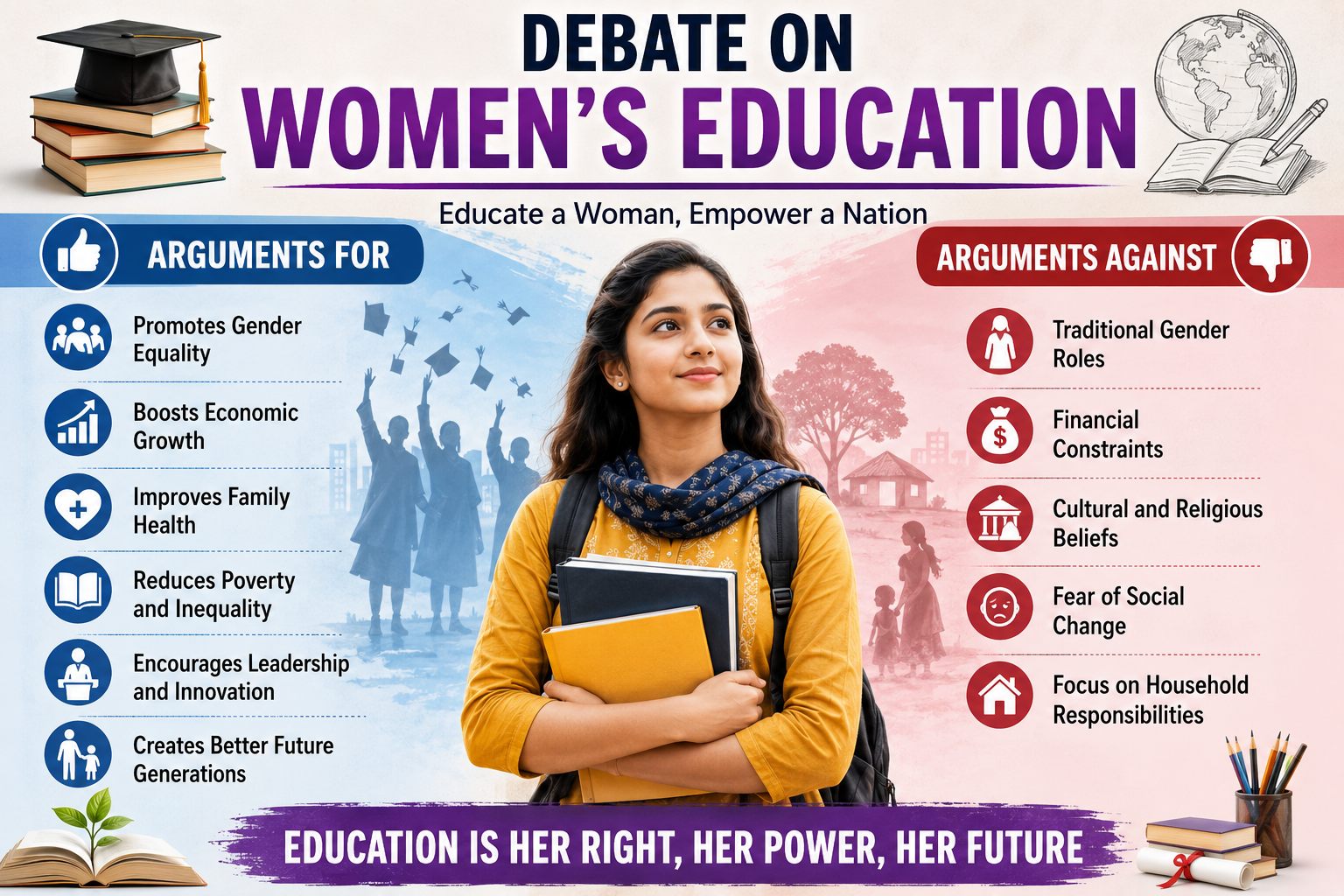
Arguments in Favor of Women’s Education
1. Promotes Gender Equality
Education helps bridge the gap between men and women by providing equal opportunities for growth and development.
An educated woman is more likely to understand her rights, participate in decision-making, and challenge unfair practices that limit her potential.
Check out JAMB 2026 Novel Summary: The Lekki Headmaster by Kabir Alabi Garba (Complete Guide)
2. Improves Economic Development
Educated women contribute significantly to the workforce and economy.
Benefits include:
- Higher employment rates
- Increased family income
- Reduced poverty levels
- Greater entrepreneurial activities
- Economic growth for communities and nations
When women earn income, they often invest in their children’s health and education, creating long-term benefits for society.
3. Enhances Family Health
Studies consistently show that educated women make better health decisions for themselves and their families.
They are more likely to:
- Seek medical care when needed
- Follow proper nutrition practices
- Ensure children receive vaccinations
- Maintain healthier living conditions
As a result, communities experience lower mortality rates and improved overall well-being.
4. Reduces Early Marriage and Child Labor
Girls who remain in school are less likely to marry at a young age.
Education provides opportunities and future career prospects that encourage young women to delay marriage and focus on personal development.
This also helps reduce child labor and other forms of exploitation.
5. Strengthens Future Generations
An educated mother often places a high value on education for her children.
This creates a positive cycle where future generations receive better learning opportunities, leading to stronger communities and nations.
6. Encourages Leadership and Innovation
Many successful leaders, entrepreneurs, scientists, and professionals are women whose achievements became possible through education.
Educated women contribute fresh perspectives and innovative solutions to social and economic challenges.
Arguments Against Women’s Education
Although most modern societies support women’s education, some arguments have historically been raised against it.
1. Traditional Gender Roles
Some people believe women should focus primarily on household responsibilities rather than formal education.
According to this view, investing heavily in women’s education may conflict with traditional cultural expectations.
However, critics argue that education does not prevent women from fulfilling family responsibilities. Instead, it equips them to perform these roles more effectively.
2. Financial Constraints
In low-income families, limited resources sometimes force parents to choose which children can attend school.
Historically, boys were often prioritized because they were viewed as future breadwinners.
While financial challenges are real, denying girls education can perpetuate poverty rather than solve it.
See also How to Create Flashcards for Quick Revision: The Ultimate Guide for Nigerian Students
3. Cultural and Religious Beliefs
Certain communities maintain customs that restrict educational opportunities for girls.
Supporters of these traditions may believe that extensive education is unnecessary for women.
However, many religious and cultural leaders today advocate for female education, recognizing its benefits for families and society.
4. Fear of Social Change
Some critics worry that educating women may challenge existing social structures and traditional authority systems.
Yet social progress often depends on education, understanding, and equal participation from all members of society.
Why Women’s Education Is Important in Modern Society
Economic Independence
Education helps women gain employment, start businesses, and become financially independent.
Financial independence allows women to make choices that improve their quality of life and reduce dependence on others.
Political Participation
Educated women are more likely to vote, engage in civic activities, and participate in leadership roles.
Their involvement helps create more inclusive and representative governance systems.
Technological Advancement
Modern industries require skilled workers with strong educational backgrounds.
Women who receive quality education can contribute to innovation in fields such as:
- Engineering
- Information technology
- Healthcare
- Science
- Research
Social Development
Communities with higher female literacy rates often experience:
- Better healthcare outcomes
- Lower crime rates
- Improved child welfare
- Greater social stability
Challenges Facing Women’s Education
Despite progress, several barriers still affect girls’ education worldwide.
Poverty
Many families struggle to afford school fees, uniforms, books, and transportation.
Gender Discrimination
In some regions, girls continue to face unequal treatment regarding educational opportunities.
Early Marriage
Child marriage remains a significant obstacle to education in many developing countries.
Safety Concerns
Long travel distances, conflict zones, and unsafe learning environments can discourage school attendance.
Lack of Educational Resources
Schools in underserved areas often lack qualified teachers, facilities, and learning materials.
See now The Lekki Headmaster: Themes and Symbolism (Complete Literature Guide)
Solutions to Improve Women’s Education
To increase educational opportunities for women and girls, governments and organizations can:
Provide Free or Affordable Education
Reducing financial barriers makes schooling accessible to more families.
Offer Scholarships
Scholarship programs encourage girls to continue their education.
Raise Public Awareness
Community campaigns can highlight the benefits of educating girls.
Improve School Infrastructure
Safe classrooms, sanitation facilities, and transportation options help increase attendance.
Enforce Laws Against Child Marriage
Strong legal protections can keep girls in school longer.
Support Adult Education Programs
Women who missed educational opportunities earlier in life can still gain valuable skills through adult learning initiatives.
Conclusion
The debate on women’s education has evolved significantly over time. While historical arguments against female education often centered on tradition and cultural expectations, modern evidence overwhelmingly demonstrates the benefits of educating women.
Women’s education promotes economic growth, improves family health, reduces poverty, strengthens future generations, and contributes to national development. Although challenges such as poverty, discrimination, and early marriage still exist, continued efforts to expand educational opportunities can create lasting positive change.
Educating women is not only a matter of equality; it is an investment in stronger families, healthier communities, and a more prosperous future for everyone.
Frequently Asked Questions
Why is women’s education important?
Women’s education improves economic opportunities, promotes gender equality, enhances family health, and supports national development.
What are the benefits of educating girls?
Benefits include reduced poverty, delayed marriage, improved healthcare, higher income potential, and stronger future generations.
What challenges affect women’s education?
Common challenges include poverty, cultural barriers, gender discrimination, child marriage, and limited educational resources.
How does women’s education help society?
Educated women contribute to economic growth, political participation, community development, and improved quality of life for families and future generations.
Is women’s education a human right?
Yes. Access to education is recognized as a fundamental human right for both men and women.