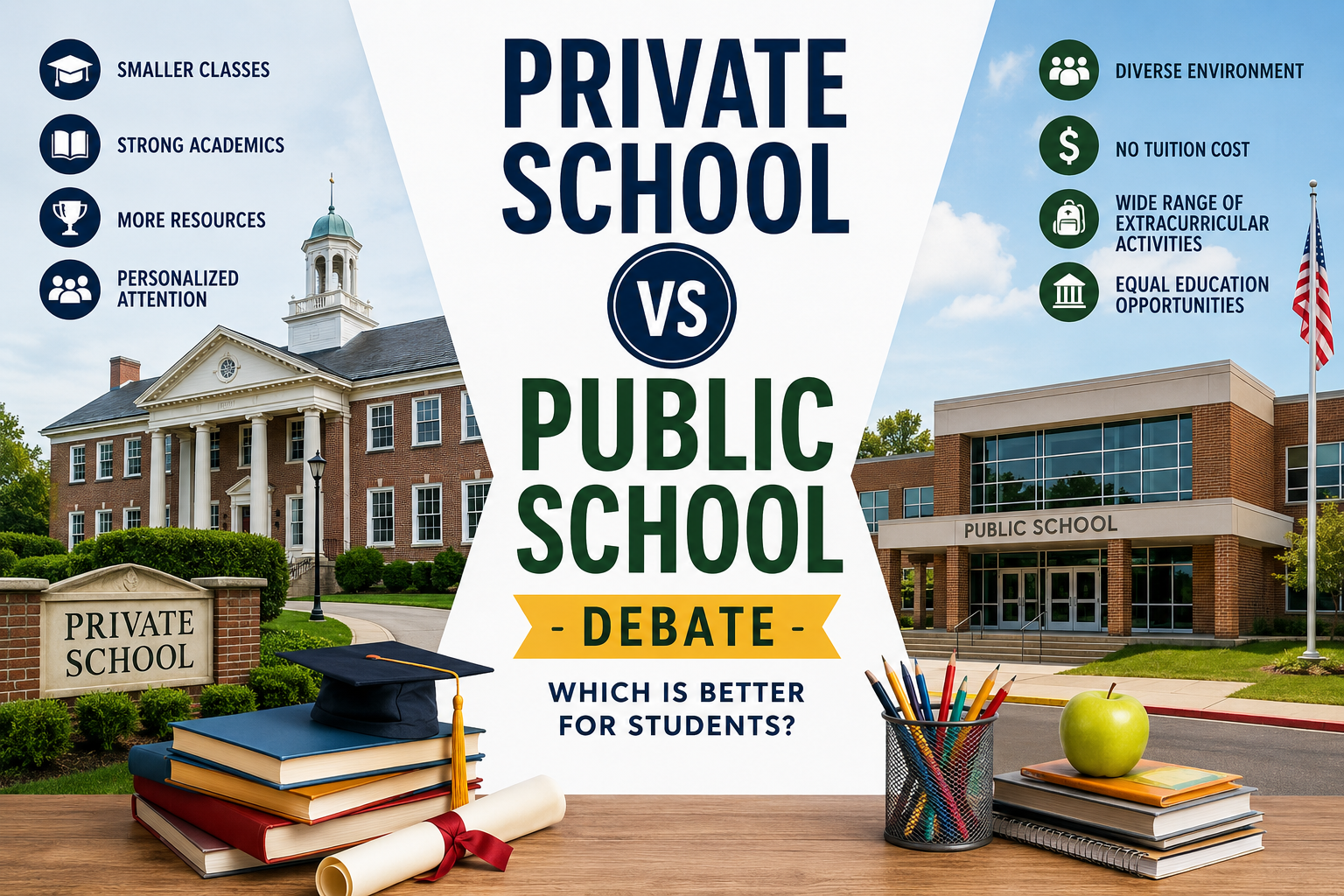
Choosing the right school is one of the most important decisions parents and students make. The debate between private school and public school has been ongoing for decades, with strong arguments on both sides.
Some people believe private schools provide better education, smaller class sizes, and more opportunities for success. Others argue that public schools offer quality education, diversity, and equal access for all students.
The truth is that both types of schools have advantages and disadvantages. What works best for one student may not work for another. Factors such as academic goals, family budget, learning style, extracurricular interests, and future career plans all play a role in determining the best choice.
In this article, we will explore the private school vs public school debate, examine the key differences between them, discuss the arguments for each side, and help you understand which option may be better for different students.
What Is a Public School?
A public school is an educational institution funded primarily by government taxes. Public schools are managed by local, state, or federal authorities and are open to all students within a designated area.
Key Features of Public Schools
- Free education for students
- Funded by taxpayers
- Follow government-approved curriculum
- Open admission policies
- Diverse student populations
- Certified teachers
Public schools are designed to provide equal educational opportunities to all children regardless of their family’s income level.
See more Education Is a Scam vs Education Is the Key: A Balanced Debate for Today’s World
What Is a Private School?
A private school is independently operated and funded mainly through tuition fees, donations, and private organizations. These schools are not fully controlled by the government and often have greater flexibility in designing their educational programs.
Key Features of Private Schools
- Tuition-based enrollment
- Smaller class sizes
- Selective admission process
- Specialized programs
- More independence in curriculum design
- Often religious or mission-based
Private schools typically have more freedom to create unique educational experiences and may offer specialized learning environments.
Major Differences Between Private and Public Schools
1. Cost of Education
One of the biggest differences is the cost.
Public Schools
Public schools are generally free because they are funded through taxes.
Private Schools
Private schools charge tuition fees, which can range from a few thousand dollars to tens of thousands of dollars annually.
Debate Point
Supporters of public schools argue that quality education should be accessible to everyone.
Supporters of private schools argue that tuition allows schools to provide additional resources and specialized programs.
Check out The Lekki Headmaster: Themes and Symbolism (Complete Literature Guide)
2. Class Size
Class size often affects the learning experience.
Public Schools
Public schools may have larger classes due to higher enrollment numbers.
Private Schools
Private schools usually maintain smaller classes, allowing teachers to give more individual attention.
Debate Point
Private school supporters believe smaller classes improve academic performance.
Public school supporters argue that larger classes help students develop social skills and prepare for real-world environments.
3. Academic Performance
Academic achievement is a major topic in this debate.
Private Schools
Many private schools report strong academic outcomes and high college acceptance rates.
Public Schools
Many public schools also achieve excellent academic results, especially those located in well-funded districts.
Debate Point
Private school advocates claim their schools provide more rigorous academics.
Public school advocates argue that student success depends more on effort, family support, and teacher quality than school type.
4. Diversity
Diversity is another important consideration.
Public Schools
Public schools often serve students from different social, economic, racial, and cultural backgrounds.
Private Schools
Private schools may have less diversity depending on tuition costs and admission policies.
Debate Point
Supporters of public schools believe diverse environments help students understand different perspectives.
Private school supporters argue that focused educational communities can create stronger learning environments.
5. Curriculum Flexibility
Public Schools
Public schools must follow state or national educational standards.
Private Schools
Private schools often have more flexibility in designing courses and teaching methods.
Debate Point
Private schools can introduce innovative programs faster.
Public schools provide consistency and standardized learning outcomes.
Arguments in Favor of Private Schools
Better Individual Attention
Smaller class sizes often mean teachers can spend more time helping individual students.
Students who need extra support or advanced challenges may benefit from more personalized instruction.
Strong Academic Programs
Many private schools offer advanced placement courses, specialized programs, and college preparation services.
Parents often choose private schools because of their academic reputation.
Greater Discipline
Private schools usually have stricter behavioral expectations and disciplinary policies.
Supporters believe this creates a safer and more focused learning environment.
More Extracurricular Opportunities
Private schools often provide unique extracurricular activities, including arts, athletics, leadership programs, and international experiences.
Arguments in Favor of Public Schools
Free and Accessible Education
Public schools ensure that all children can receive an education regardless of financial circumstances.
This supports educational equality and social mobility.
Greater Diversity
Students interact with classmates from different backgrounds, helping them develop social awareness and communication skills.
Certified and Qualified Teachers
Public school teachers must meet government certification requirements.
Many public schools employ highly experienced educators.
Broad Range of Programs
Large public schools often offer extensive sports teams, clubs, music programs, and academic opportunities.
Students can explore many interests without paying additional tuition.
Private School vs Public School: Debate Points for Students
If you are participating in a school debate, here are useful points for both sides.
Points Supporting Private Schools
- Smaller classes improve learning.
- Students receive more individual attention.
- Private schools often have better facilities.
- Strong discipline policies improve academic focus.
- Flexible curriculum allows innovation.
- Higher college preparation support.
- Specialized programs meet diverse learning needs.
Points Supporting Public Schools
- Education is free and accessible.
- Greater diversity prepares students for society.
- Equal opportunities for all children.
- Qualified teachers meet government standards.
- Larger extracurricular offerings.
- Exposure to real-world social environments.
- Public funding supports educational equity.
Which School Produces Better Results?
There is no simple answer.
Research often shows that family involvement, student motivation, and socioeconomic factors play major roles in academic success.
A highly motivated student can succeed in either a public or private school.
Likewise, students who lack support may struggle regardless of the type of school they attend.
The quality of the individual school often matters more than whether it is public or private.
See now How to Use the Cornell Method to Take Better Lecture Notes (And Stop Cramming)
Factors Parents Should Consider
Before choosing between public and private schools, parents should evaluate:
Budget
Can tuition costs be comfortably managed?
Academic Needs
Does the child need specialized support or advanced programs?
Learning Style
Would the student benefit from smaller classes or a larger environment?
Extracurricular Interests
Which school offers programs aligned with the student’s interests?
School Culture
Does the school’s environment match the family’s values and expectations?
Frequently Asked Questions
Are private schools better than public schools?
Not necessarily. Some private schools offer advantages such as smaller classes and specialized programs, while many public schools provide excellent education at no cost.
Why do parents choose private schools?
Parents often choose private schools for smaller class sizes, specialized instruction, religious education, or stronger academic reputations.
Do public schools prepare students for college?
Yes. Many public schools have excellent college preparation programs and send graduates to top universities every year.
Are private school students more successful?
Success depends on many factors, including student effort, family support, and personal motivation. School type alone does not determine future success.
Which is more affordable?
Public schools are generally more affordable because they are funded through taxes and do not charge tuition.
Conclusion
The private school vs public school debate continues because both options offer valuable benefits. Private schools may provide smaller classes, personalized attention, and specialized programs, while public schools offer accessibility, diversity, and equal educational opportunities.
Rather than asking which type of school is universally better, parents and students should focus on which environment best meets their individual needs. The right school is the one that supports a student’s academic growth, personal development, and long-term goals.
Ultimately, success depends less on whether a school is public or private and more on the quality of education, family involvement, and the student’s willingness to learn and grow.