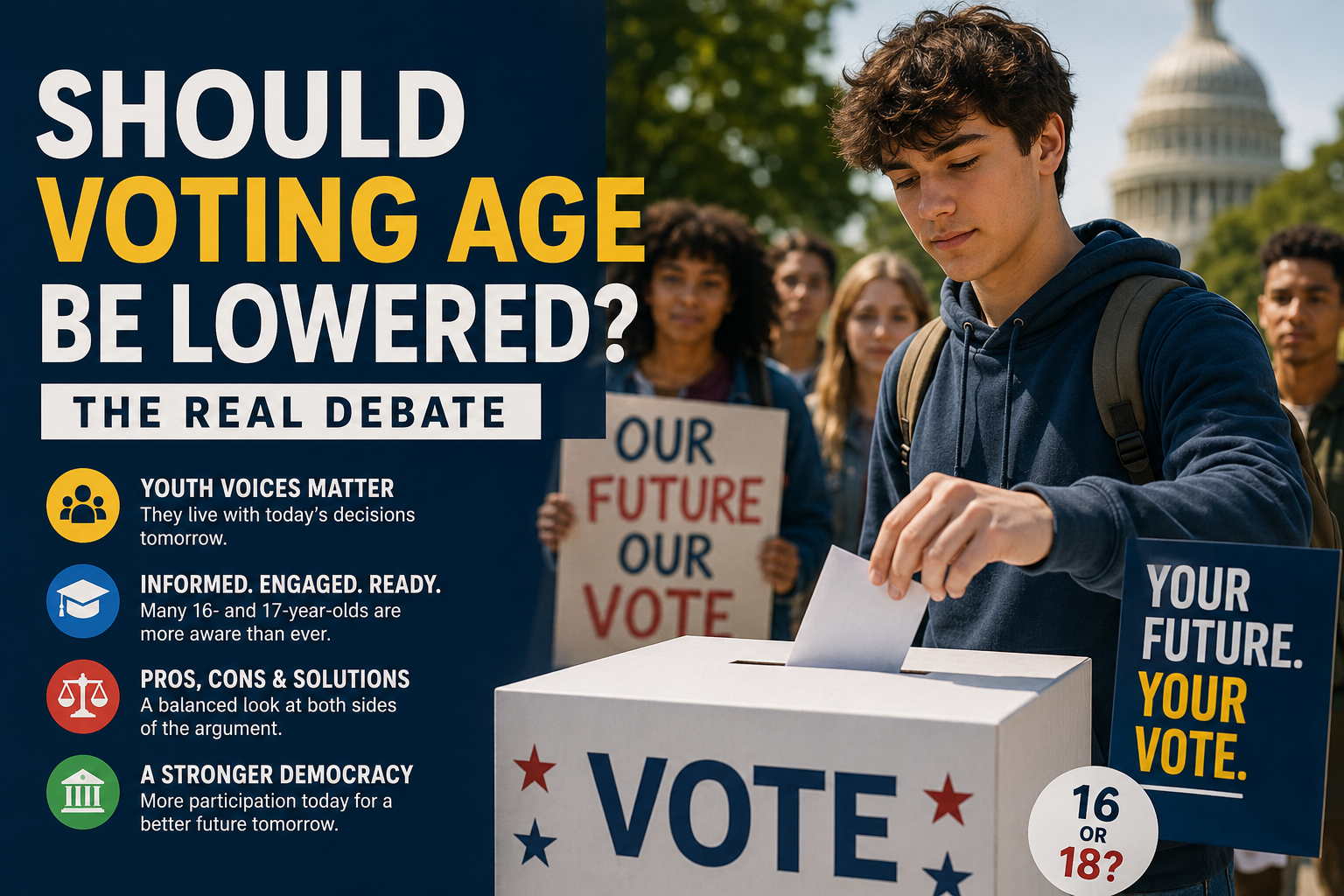
The question sounds simple at first: Should the voting age be lowered?
But once you look closer, it becomes one of the most important debates in modern democracy. On one side, supporters argue that 16- and 17-year-olds are affected by government decisions, pay taxes in some cases, work jobs, use public services, and deserve a voice in shaping the future they will inherit.
On the other side, critics argue that voting is a serious civic responsibility and that younger teenagers may not yet have the maturity, life experience, or political independence needed to vote wisely.
So, should the voting age be lowered from 18 to 16?
The honest answer is this: it depends on how prepared a country is to combine youth voting rights with strong civic education, voter protection, and public trust. Lowering the voting age is not just about giving teenagers a ballot. It is about deciding whether society believes young people should have a direct say in laws, leadership, taxation, education, climate policy, healthcare, housing, and the economy.
This article explores both sides of the debate in a balanced, easy-to-understand way.
What Does Lowering the Voting Age Mean?
Lowering the voting age means allowing citizens younger than the current legal voting age to participate in elections. In many countries, the voting age is 18. The most common proposal is to lower it to 16.
This could apply to national elections, local elections, school board elections, referendums, or only certain types of elections. Some countries and regions may allow 16-year-olds to vote in local elections but not national elections. Others may extend voting rights across all levels.
The debate is not only legal. It is also social, political, and educational.
See now How to Avoid Daydreaming/Zoning Out in the Library: A Student’s Guide to Staying Focused
Supporters see it as a way to strengthen democracy and bring young people into public life earlier. Opponents worry that it could create poorly informed voting, political manipulation, or pressure from parents, teachers, social media, or activist groups.
Both arguments deserve attention.
Why the Voting Age Debate Is Trending
The debate over lowering the voting age is becoming more popular because young people are more politically aware than ever. Teenagers today grow up surrounded by news, social media, global events, economic uncertainty, climate concerns, education debates, and conversations about equality and opportunity.
Many young people are not waiting until adulthood to care about politics. They are already discussing it online, protesting, organizing, volunteering, and speaking out on issues that directly affect their lives.
At the same time, many democracies are struggling with low voter turnout, political distrust, and public frustration. Supporters of lowering the voting age believe that engaging people earlier could build stronger voting habits for life.
See more Mother Is More Important Than Father Debate: Arguments, Facts, and Perspectives
this topic connects with several high-search phrases, including:
Should voting age be lowered?
Pros and cons of lowering voting age
Why voting age should be 16
Should 16-year-olds be allowed to vote?
Arguments against lowering voting age
Voting age debate essay
Youth voting rights
Civic education and democracy
This is why the topic is useful for students, bloggers, political writers, teachers, debate clubs, and anyone interested in democracy.
Arguments For Lowering the Voting Age
Supporters of lowering the voting age believe that young people deserve a voice because government decisions affect them deeply.
Education policy affects students directly. Climate policy affects their future. Economic decisions shape the job market they will enter. Housing policy affects whether they will be able to afford a home. Healthcare, technology regulation, public transportation, and national debt are all issues that will follow them into adulthood.
If young people are affected by these decisions, the argument goes, they should have a voice in choosing the leaders who make them.
Another strong argument is that voting is a habit. If people vote early in life, they may be more likely to continue voting later. Lowering the voting age could help build lifelong civic participation.
There is also the fairness argument. In many places, 16- and 17-year-olds can work, pay taxes, drive, care for family members, and make serious educational or career decisions. Some supporters ask: if teenagers can contribute to society, why should they have no say in how society is governed?
Lowering the voting age could also force schools to take civic education more seriously. If students know they can vote, lessons about government, elections, media literacy, and public policy may feel more real and urgent.
Arguments Against Lowering the Voting Age
Critics believe voting should remain at 18 because voting requires maturity, independence, and judgment.
Their concern is not that young people are unintelligent. Many teenagers are thoughtful, informed, and passionate. The concern is that 16-year-olds are still developing emotionally, socially, and mentally. They may be more influenced by parents, teachers, celebrities, online trends, or peer pressure.
Opponents also argue that many teenagers have limited life experience. They may not yet pay rent, manage full financial responsibilities, raise children, run businesses, or understand the long-term impact of tax and economic policies.
Another argument is consistency. In many countries, people under 18 cannot legally buy alcohol, sign major contracts, serve on juries, or take on certain adult responsibilities. Critics ask why voting should be treated differently.
There is also concern about political strategy. Some people worry that parties may support lowering the voting age because they believe young voters will favor them. If the reform is seen as partisan rather than democratic, it could reduce trust in the system.
Should 16-Year-Olds Be Allowed to Vote?
This is the heart of the debate.
Supporters say yes, because 16-year-olds are already affected by politics and should not be ignored. They argue that many teenagers are informed enough to vote, especially when supported by civic education.
Critics say no, because voting is not just about having opinions. It is about making decisions that affect the entire country. They believe 18 remains a more reasonable age because it better matches legal adulthood in many societies.
A middle-ground approach may be to begin with local elections. Local politics affects schools, roads, libraries, youth services, public safety, and community life. Allowing 16-year-olds to vote locally could be a way to test youth voting without immediately changing national elections.
Can Lowering the Voting Age Improve Democracy?
It could, but only if done properly.
Lowering the voting age may improve democracy by increasing participation, giving young people a stronger voice, and making politicians pay attention to youth issues. It could also encourage families and schools to discuss politics more often.
But voting rights alone are not enough. If young people are allowed to vote without good civic education, the reform may not achieve much. A strong democracy needs informed voters, not just more voters.
For lowering the voting age to work well, schools should teach students how elections work, how to evaluate political claims, how to identify misinformation, and how to understand public policy without forcing them toward one political side.
Pros and Cons of Lowering the Voting Age
The pros are clear. More young people would participate in democracy. Politicians may pay more attention to education, climate, jobs, housing, and mental health. Young voters may form lifelong voting habits. Teenagers who work or pay taxes would have more representation.
The cons are also serious. Some teenagers may lack political maturity. Others may be influenced too easily. Schools may not be ready to provide neutral civic education. Political parties may try to use young voters for strategic advantage.
This is why the debate should not be reduced to “young people are smart” versus “young people are immature.” The real question is whether a society can create the right system around youth voting.
Why Voting Age Should Be Lowered
The strongest argument for lowering the voting age is representation.
Young people have the longest future ahead of them, yet they often have the least political power. Decisions made today about climate change, national debt, education funding, technology, healthcare, and employment will shape their lives for decades.
Allowing 16- and 17-year-olds to vote could make democracy more forward-looking. It could push politicians to consider long-term consequences instead of focusing only on older voters who already participate at higher rates.
Another reason is education. A 16-year-old is usually still in school, which means voting could be connected to civic education. Teachers could explain elections while students are preparing to participate in real life. By age 18, many young adults may have left school, started work, or moved away, making civic engagement harder to reinforce.
Why Voting Age Should Not Be Lowered
The strongest argument against lowering the voting age is readiness.
Voting is powerful. It helps decide who writes laws, manages public money, appoints officials, and represents the country. Critics believe that responsibility should begin at 18 because it aligns more closely with adulthood.
Another concern is independence. A 16-year-old may still be highly dependent on parents or guardians. This does not mean they cannot think for themselves, but critics worry that family pressure could affect voting choices.
There is also the problem of political misinformation. Social media already shapes public opinion in powerful ways. Younger voters may need stronger media literacy before being added to the electorate.
Best Age to Start Voting
There is no perfect voting age. Every age limit is partly a social judgment.
At 18, many people are considered legal adults. That makes 18 a simple and widely accepted standard. At 16, many young people are old enough to understand public issues but still young enough to be reached through school-based civic education.
A good compromise may be phased voting rights. For example, a country could allow voting at 16 in local elections first, then study turnout, voter knowledge, and public confidence before expanding it nationally.
This approach would allow reform without rushing.
Should Voting Be Taught in Schools?
Yes. Whether the voting age is 16, 18, or older, schools should teach voting more seriously.
Civic education should explain how government works, what political parties do, how laws are made, how taxes are used, how to compare candidates, and how to spot misinformation.
Students should not be told what to think politically. They should be taught how to think critically.
If the voting age is lowered, civic education becomes even more important. But even if it is not lowered, better civic education would still help democracy.
People Also Ask: Is 16 Too Young to Vote?
Some people believe 16 is too young because teenagers are still developing and may not have enough life experience. Others argue that many 16-year-olds are capable of understanding political issues, especially when they receive proper civic education.
The best answer is that age alone does not determine political wisdom. Some 16-year-olds are highly informed, while some adults vote with very little research. The issue is not just age. It is preparation, education, and access to reliable information.
People Also Ask: What Are the Benefits of Lowering the Voting Age?
See more Less Competitive Nigerian Universities 2026: Schools With Higher Admission Chances
The main benefits include stronger youth representation, earlier civic engagement, increased political awareness, and the possibility of building lifelong voting habits.
Lowering the voting age may also encourage politicians to pay more attention to issues affecting young people, such as education, student debt, climate change, employment, housing affordability, public safety, and digital rights.
It may also make democracy feel more inclusive.
What Are the Disadvantages of Lowering the Voting Age?
The disadvantages include concerns about maturity, political influence, misinformation, and lack of life experience.
Critics also worry that young voters may be targeted by political campaigns in emotional or manipulative ways. Without strong civic education, lowering the voting age may add voters who are not fully prepared to evaluate policies and candidates.
This is why many opponents prefer keeping the voting age at 18.
Do Young People Vote Less Than Older People?
In many democracies, younger voters often participate at lower rates than older voters. That is one reason some people argue for earlier voting habits. If young people are introduced to voting while still in school and community life, they may become more consistent voters over time.
However, turnout depends on many factors, including political interest, education, trust in government, registration rules, and whether young people feel candidates speak to their concerns.
Is Lowering the Voting Age Good for Society?
It can be good for society if it is supported by strong civic education, neutral political information, and safeguards against manipulation.
A society benefits when more citizens feel included and responsible. But lowering the voting age should not be done carelessly. It should be part of a bigger plan to improve democratic participation for everyone.
Should Voting Age Be Lowered Essay
If you are writing an essay on whether the voting age should be lowered, the best approach is to present both sides.
Start with the argument that young people deserve representation because political decisions affect their future. Then explain the opposing view that voting requires maturity and independence. Finally, offer your position.
A strong thesis could be:
“The voting age should be lowered to 16 only if governments also strengthen civic education and protect young voters from misinformation and political pressure.”
This gives a balanced and thoughtful answer.
Pros and Cons of Lowering Voting Age
The pros include youth representation, stronger civic habits, increased political engagement, and better attention to long-term issues.
The cons include concerns about maturity, political influence, limited life experience, and possible misuse by political parties.
A fair debate must admit that both sides have valid concerns.
Why Should the Voting Age Be 16?
The voting age should be 16, according to supporters, because many teenagers are already affected by government policy and are capable of forming political opinions.
They attend schools shaped by government funding, live in communities affected by public decisions, and will inherit the long-term results of today’s policies.
Supporters believe voting at 16 would make democracy more inclusive and future-focused.
Arguments Against Lowering the Voting Age
Arguments against lowering the voting age include lack of maturity, limited independence, vulnerability to influence, and inconsistency with other legal age limits.
Critics believe 18 is a reasonable age because it is widely connected to adulthood, legal responsibility, and personal independence.
They also argue that improving civic education should come before expanding voting rights.
See more Mother Is More Important Than Father Debate: Arguments, Facts, and Perspectives
Youth Voting Rights
Youth voting rights are about whether young people should have a formal voice in democracy before adulthood. Supporters see this as a civil rights issue. Opponents see it as a question of readiness.
The debate is likely to continue because young people are becoming more visible in politics, especially on issues like climate change, education, housing, technology, and social justice.
Final Verdict: Should Voting Age Be Lowered?
The voting age should be lowered only if society is ready to support young voters properly.
Lowering the voting age to 16 could strengthen democracy, increase youth participation, and make politics more responsive to the future. But it should not happen in isolation. It should come with serious civic education, media literacy training, clear voter registration systems, and protections against political manipulation.
A smart approach would be to start with local elections, study the results, and expand gradually if the reform works well.
So, should the voting age be lowered?
Yes, but carefully.
Young people deserve a voice. Democracy should not ignore the generation that will live longest with the consequences of today’s decisions. But giving that voice real power requires preparation, education, and responsibility.
A lower voting age can work, but only when it is treated as democratic reform, not political strategy.