Homework has been a long-standing part of education systems around the world. For decades, it’s been seen as a necessary extension of classroom learning. But in recent years, students, parents, and even educators have begun to question its true value.
Is homework really helping students succeed—or is it doing more harm than good?
In this article, we’ll explore strong, research-backed arguments against homework, why many experts are pushing for change, and what better alternatives might look like.
The Original Purpose of Homework
Homework was designed to:
- Reinforce what students learn in school
- Encourage independent study habits
- Improve academic performance
But here’s the problem:
Modern research suggests homework often fails to achieve these goals—especially for younger students.
Read now: The Importance of Girl Child Education in Nigeria Debate: Why It Matters More Than Ever
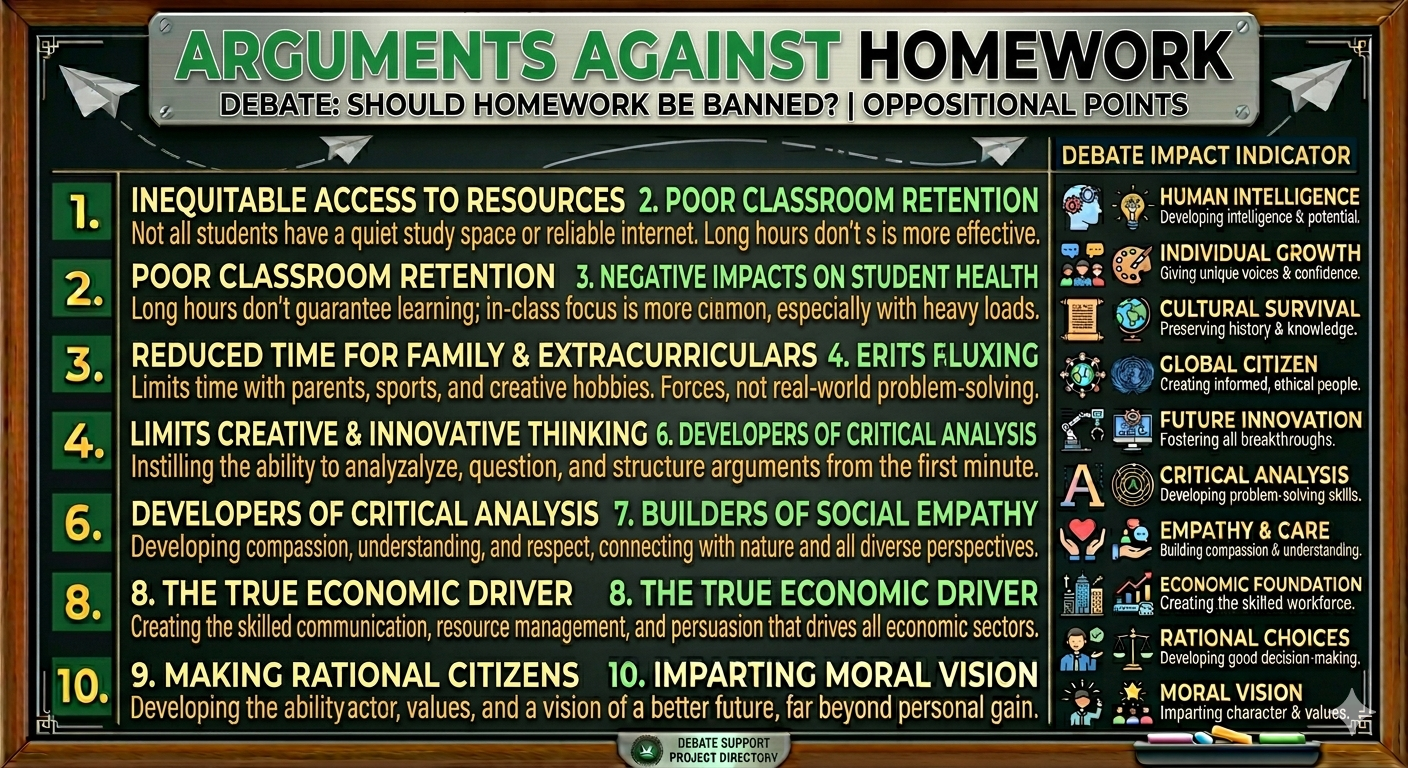
1. Homework Causes Unnecessary Stress and Burnout
One of the biggest criticisms of homework is its impact on mental health.
Students already spend:
- 6–8 hours in school
- Additional hours on assignments at home
The result?
- Increased stress
- Anxiety and burnout
- Lack of proper rest
Many students feel overwhelmed trying to balance:
- Schoolwork
- Extracurricular activities
- Family time
Over time, this can negatively affect both mental health and academic performance.
2. Homework Reduces Time for Important Life Skills
Learning doesn’t only happen in textbooks.
Students need time to develop:
- Social skills
- Hobbies and creativity
- Physical activity
- Real-world problem-solving
When homework consumes most of their free time, these essential experiences are lost.
Ironically, these “non-academic” skills are often what matter most in adulthood.
3. It Creates Inequality Among Students
Not all students have the same home environment.
Some students have:
- Quiet study spaces
- Access to internet and resources
- Support from educated parents
Others may struggle with:
- Noisy environments
- Limited resources
- Little or no academic support
Homework can widen the gap between privileged and disadvantaged students.
4. Homework Doesn’t Always Improve Academic Performance
Research shows mixed results when it comes to homework effectiveness.
- Elementary school students: little to no academic benefit
- Middle school students: minimal improvement
- High school students: only moderate benefits when used properly
More homework does not equal better learning.
In fact, too much homework can reduce retention and motivation.
5. It Encourages Memorization Instead of Understanding
Many homework assignments focus on:
- Repetition
- Memorization
- Completing tasks quickly
This often leads to:
- Surface-level learning
- Lack of critical thinking
- Reduced curiosity
Students may complete homework just to “get it done,” not to truly understand the material.
6. Homework Can Damage Family Relationships
Evenings should be a time for:
- Family bonding
- Relaxation
- Meaningful conversations
Instead, homework often leads to:
- Arguments between parents and children
- Frustration and pressure
- Stressful home environments
This can weaken relationships and create negative associations with learning.
Check out: How to Use the Cornell Method to Take Better Lecture Notes (And Stop Cramming)
7. Lack of Personalization
Every student learns differently.
But homework is often:
- Standardized
- One-size-fits-all
This means:
- Struggling students feel overwhelmed
- Advanced students feel bored
Homework rarely adapts to individual learning needs.
8. It Reduces Motivation and Love for Learning
When students are overloaded with assignments:
- Learning starts to feel like a chore
- Curiosity declines
- Motivation drops
Over time, students may begin to dislike school altogether.
9. Homework Takes Away Sleep
Sleep is critical for:
- Memory retention
- Brain development
- Overall health
But excessive homework often leads to:
- Late nights
- Poor sleep quality
- Fatigue in class
Sleep deprivation directly affects academic performance—ironically defeating homework’s purpose.
10. There Are Better Alternatives to Homework
Instead of traditional homework, educators can use:
Active Learning Methods
- Group discussions
- Hands-on projects
- In-class problem solving
Flipped Classroom Model
Students:
- Learn concepts at home (videos, short readings)
- Practice in class with teacher support
Personalized Learning
- Adaptive learning tools
- Tailored assignments based on student needs
These methods are often more effective and engaging than traditional homework.
Read more: Farmer vs Doctor: 10 Compelling Reasons Why the Doctor Is More Important
Counterargument: Is Homework Ever Useful?
To be fair, homework can have benefits when:
- It’s limited and purposeful
- It reinforces key concepts
- It’s age-appropriate
However, the issue isn’t homework itself—it’s how much and how it’s used.
A Balanced Perspective
Rather than completely eliminating homework, many experts suggest:
- Reducing workload
- Focusing on quality over quantity
- Making assignments meaningful and engaging
The goal should be learning—not just completing tasks.
Conclusion
The debate over homework is far from over, but one thing is clear:
Too much homework can do more harm than good.
From increased stress and inequality to reduced motivation and sleep, the drawbacks are hard to ignore.
Education should inspire curiosity, creativity, and growth—not exhaustion.
As schools evolve, it may be time to rethink homework and focus on methods that truly support student success.