When people debate essential professions, two roles often come up: farmers and teachers. Both are undeniably important—but what if we had to ask a difficult question: are farmers more important than teachers?
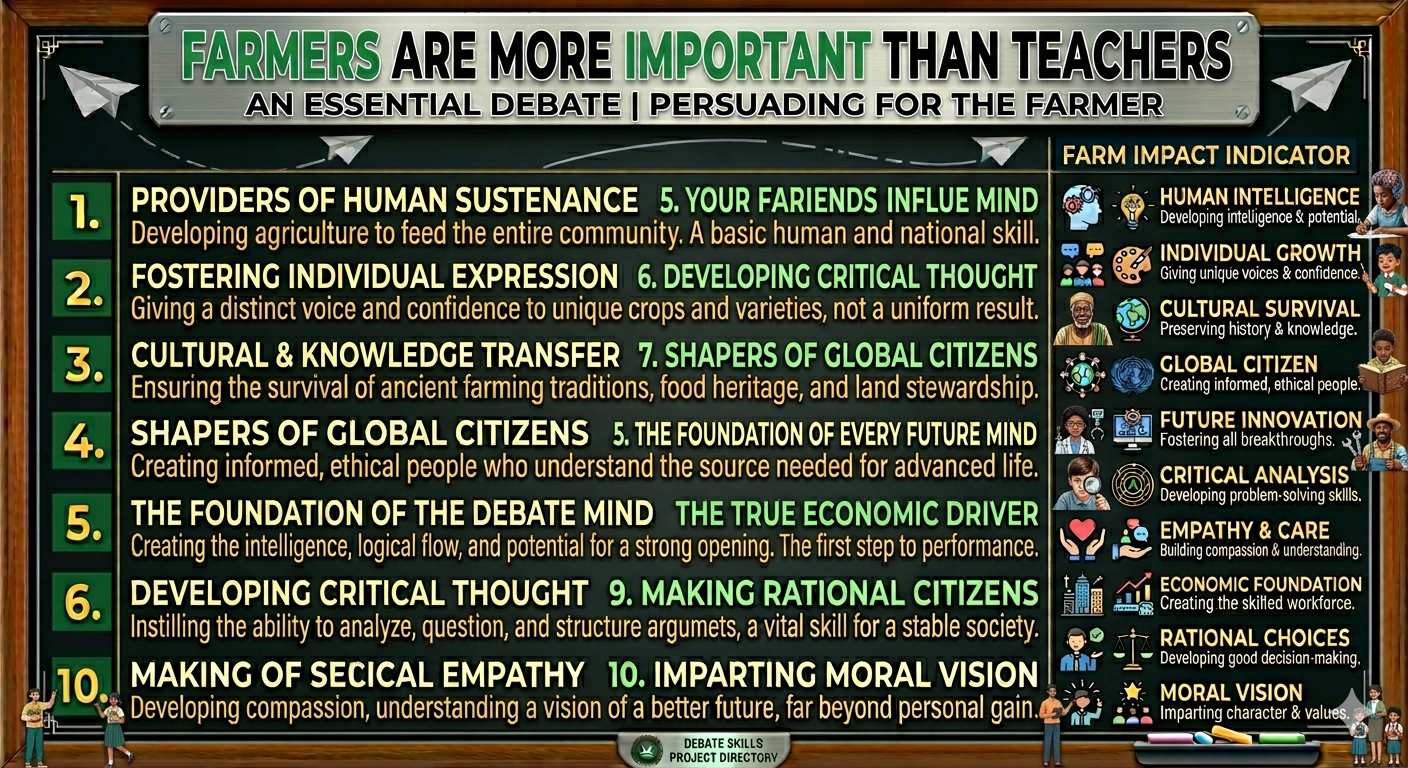
At first glance, the idea of farmers are more important than teachers may seem controversial. After all, teachers shape minds, build futures, and drive innovation. But when you look at the fundamentals of survival, a compelling argument emerges—farmers provide the very foundation of human existence: food.
This article explores why farmers can be considered more important in certain contexts, while also recognizing the undeniable value teachers bring to society.
Why Farmers Are the Foundation of Human Survival
Let’s start with the most basic truth:
Without food, nothing else matters.
Farmers are responsible for producing the food that sustains life. Every meal you eat—whether it’s rice, vegetables, meat, or fruit—exists because of agricultural work.
Key Points:
- Food is a basic human need
- No profession can function without proper nutrition
- Farming supports global populations daily
Imagine a world without farmers for even a few weeks. Food shortages would begin almost immediately, leading to widespread hunger and chaos.
In this sense, farmers are directly tied to survival.
See more: How to Use the Feynman Technique to Understand Difficult Topics (Stop Cramming, Start Passing)
Teachers Shape Minds—But Farmers Sustain Life
Teachers play a critical role in:
- Educating future generations
- Building skills and knowledge
- Driving societal progress
However, education—while essential—is secondary to survival needs.
You can delay schooling temporarily in times of crisis. But you cannot delay eating.
A Simple Comparison:
- No teachers → slower intellectual growth
- No farmers → immediate survival crisis
This doesn’t diminish teachers—it simply highlights the urgency and immediacy of farming.
The Food Chain: Every Industry Depends on Farmers
Think about this carefully:
Every profession depends on food.
- Doctors need energy to treat patients
- Engineers need nutrition to build infrastructure
- Teachers themselves rely on food to teach effectively
This means farming is at the base of the economic pyramid.
Without agriculture:
- Schools would close
- Businesses would shut down
- Healthcare systems would collapse
Farming supports every other industry indirectly.
See also: How to Link Email to JAMB Profile (2025 Guide): The Fast SMS Method
Farmers Work Under Extreme Conditions
Another reason farmers deserve more recognition is the nature of their work.
Unlike many professions, farming involves:
- Harsh weather conditions
- Physical labor
- Financial risks due to crop failure
- Unpredictable market prices
Despite these challenges, farmers continue to produce food consistently.
Meanwhile, teaching—though demanding—often takes place in more controlled environments.
Global Food Security Depends on Farmers
In today’s world, food security is a major global issue.
Farmers play a key role in:
- Preventing hunger
- Supporting national economies
- Stabilizing communities
Countries that invest heavily in agriculture are often more resilient during crises.
Without farmers, food insecurity would rise dramatically.
But Can Society Function Without Teachers?
Here’s where the argument becomes more balanced.
Teachers are responsible for:
- Educating future farmers
- Training agricultural scientists
- Promoting innovation in farming techniques
Without teachers:
- Farming methods may become outdated
- Productivity could decline over time
- Knowledge transfer would weaken
So while farmers are essential for immediate survival, teachers ensure long-term sustainability.
Short-Term vs Long-Term Importance
This debate often comes down to time perspective.
Read now: Education Is a Scam vs Education Is the Key: A Balanced Debate for Today’s World
Short-Term (Immediate Needs)
- Farmers are more critical
- Food is required daily
- Survival depends on agriculture
Long-Term (Future Growth)
- Teachers become more important
- Education drives progress
- Innovation improves farming
Both roles are essential—but in different timelines.
Why Farmers Are Often Undervalued
Despite their importance, farmers are often:
- Underpaid
- Underappreciated
- Overlooked in policy decisions
Meanwhile, other professions receive more recognition and financial rewards.
This imbalance highlights the need to re-evaluate how society values essential work.
The Interdependence of Farmers and Teachers
Instead of framing this as a competition, it’s more accurate to see it as a partnership.
- Farmers feed teachers
- Teachers educate farmers
This cycle ensures both survival and progress.
A strong society needs:
- Food production (farmers)
- Knowledge development (teachers)
A Realistic Conclusion: Who Is More Important?
If forced to choose in a survival scenario:
Read now: Pen is mightier than the sword debate points for secondary school
Farmers are more important in the short term
Because:
- Food is non-negotiable
- Survival comes before education
However, in a broader societal context:
Both farmers and teachers are equally important
Each plays a unique role that cannot be replaced.
Final Thoughts
The statement “farmers are more important than teachers” sparks an important conversation—but it shouldn’t divide.
Instead, it should remind us that:
- Farmers sustain life
- Teachers shape the future
And a thriving society needs both.