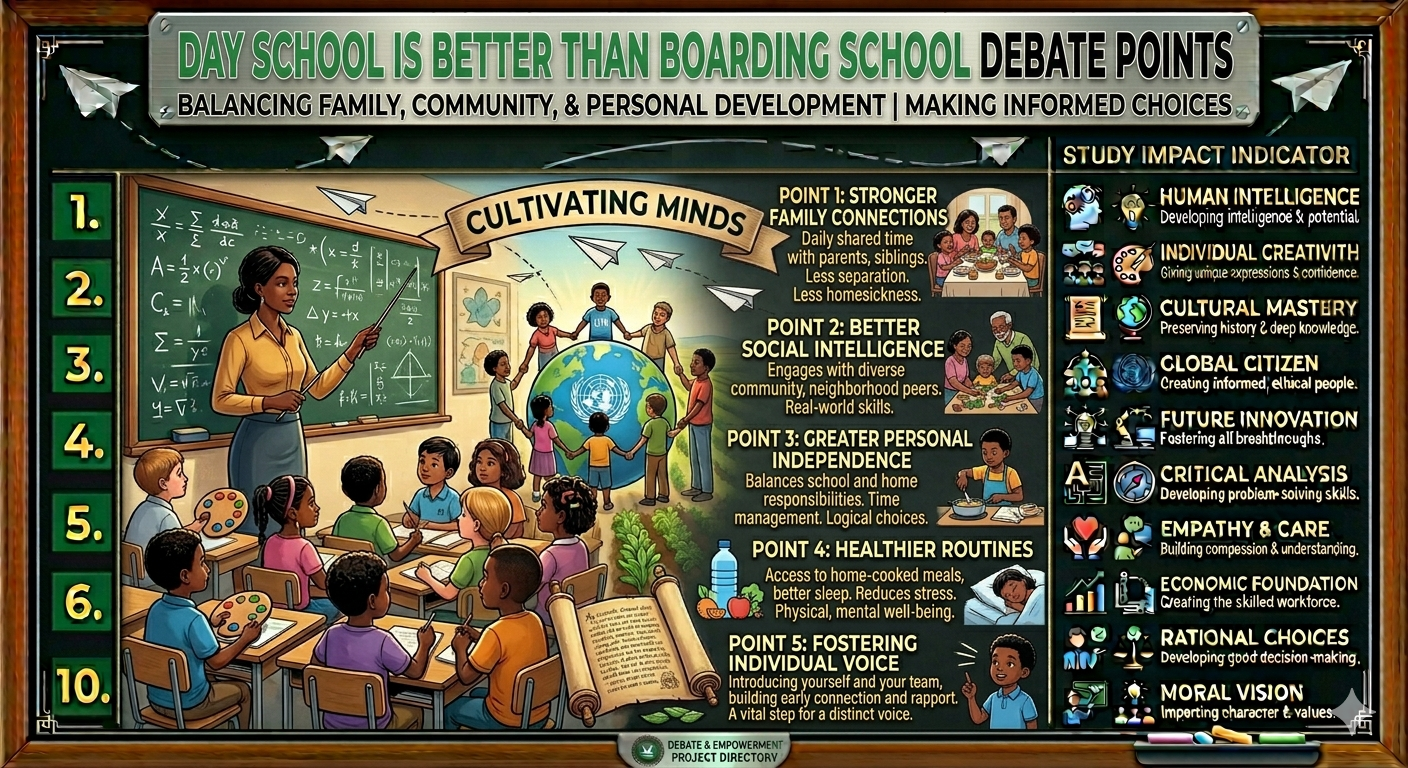
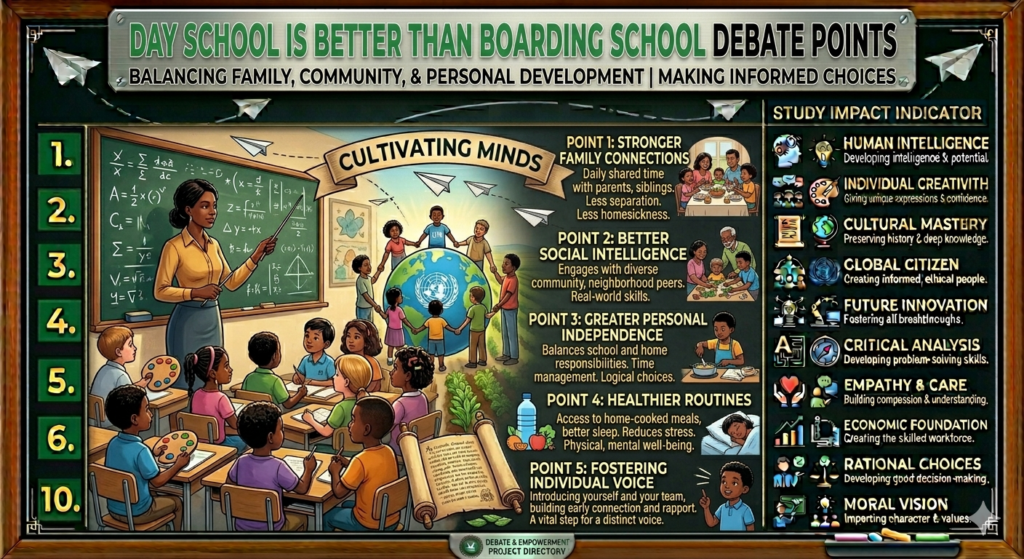
Here’s a full post on day school is better than boarding school debate points…
When the topic “day school is better than boarding school” comes up in debates, it often sparks strong opinions. Both systems have their strengths, no doubt—but if you’re arguing in favor of day schools, you need clear, convincing, and well-structured points.
This guide gives you exactly that: original, plagiarism-free debate arguments, written in a natural, engaging style, and backed by logic you can confidently present in class, competitions, or essays.
Understanding the Debate
Before diving in, let’s be fair.
- Boarding schools offer independence, structure, and immersive learning
- Day schools allow students to live at home and attend school daily
The goal of this debate is not to dismiss boarding schools, but to show why day schools provide a better overall environment for most students.
1. Stronger Family Bond and Emotional Support
One of the biggest advantages of day schools is daily access to family.
Students:
- Return home after school
- Spend time with parents and siblings
- Receive emotional support during stressful periods
This stability plays a major role in a child’s development.
In contrast, boarding school students may experience:
- Homesickness
- Emotional isolation
- Limited parental guidance
2. Better Mental and Emotional Well-Being
Mental health matters—especially for young students.
Day school students often benefit from:
- Familiar home environments
- Parental reassurance
- Balanced routines
These factors reduce stress and anxiety.
While boarding schools promote independence, some students:
- Struggle to adjust
- Feel pressured to cope alone
3. More Affordable for Families
Let’s talk about cost.
Day schools are generally:
- Less expensive
- More accessible to average families
Boarding schools, on the other hand, require:
- Accommodation fees
- Feeding costs
- Additional expenses
This makes day schools a more financially practical option.
4. Closer Parental Supervision
In day schools, parents remain actively involved in their child’s life.
They can:
- Monitor academic progress
- Guide behavior and discipline
- Provide immediate correction when needed
This ensures better overall upbringing.
Boarding school students rely more on:
- School authorities
- Housemasters or caregivers
Which may not fully replace parental influence.
5. Balanced Academic and Personal Life
Day school students enjoy a healthy balance between school and home life.
After school, they can:
- Rest properly
- Study in a relaxed environment
- Engage in hobbies
This balance prevents burnout.
Boarding school schedules are often:
- Strict
- Repetitive
- Less flexible
6. Better Connection to Real Life
Living at home keeps students connected to real-world experiences.
They:
- Interact with their communities
- Participate in family responsibilities
- Learn everyday life skills
This builds practical awareness.
Boarding students may feel:
- Isolated from society
- Restricted to school routines
7. Freedom to Choose Friends and Environment
Day school students:
- Meet friends in school and outside
- Interact with different groups
This exposure improves social adaptability.
In boarding schools:
- Social circles are limited
- Students interact with the same people daily
8. Reduced Risk of Negative Peer Influence
Boarding environments can sometimes expose students to:
Read now: How to Create Flashcards for Quick Revision: The Ultimate Guide for Nigerian Students
- Bullying
- Peer pressure
- Negative habits
With less supervision, issues can go unnoticed.
Day school students:
- Spend less time in peer-controlled environments
- Have parental guidance daily
9. Flexible Daily Routine
Day schools allow students to:
- Customize study time
- Balance extracurricular activities
- Rest when needed
Flexibility leads to better productivity.
Boarding schools follow:
- Fixed schedules
- Limited personal control
10. Better Nutrition and Comfort
At home, students:
- Eat familiar, nutritious meals
- Enjoy personal comfort
This improves both health and focus.
Boarding schools often provide:
- Standardized meals
- Limited dietary flexibility
11. Encourages Responsible Independence (Gradually)
Day schools don’t eliminate independence—they build it gradually.
Students:
- Learn responsibility at home
- Grow under supervision
This creates a balanced transition into adulthood.
Boarding schools may:
- Force independence too early
12. Better Academic Monitoring by Parents
Parents of day school students can:
Check out: Parents Are NOT Solely to Blame for the Misconduct of Their Children
- Help with homework
- Hire tutors if needed
- Track academic performance closely
This often leads to better academic outcomes.
Counterargument (And How to Respond)
Argument:
“Boarding schools build independence and discipline.”
Smart Response:
Yes, they do—but:
- Independence without guidance can lead to mistakes
- Discipline can also be taught at home
- Emotional support is harder to replace
Day schools offer a balanced approach: independence + support.
Conclusion
While boarding schools have their advantages, day schools provide a more balanced, supportive, and realistic environment for students.
They offer:
- Strong family connections
- Better emotional well-being
- Lower costs
- Greater flexibility
- Real-life exposure
In a debate setting, you can confidently conclude:
“Day schools are better than boarding schools because they combine academic learning with emotional support, family guidance, and real-world experience—creating a more well-rounded individual.”