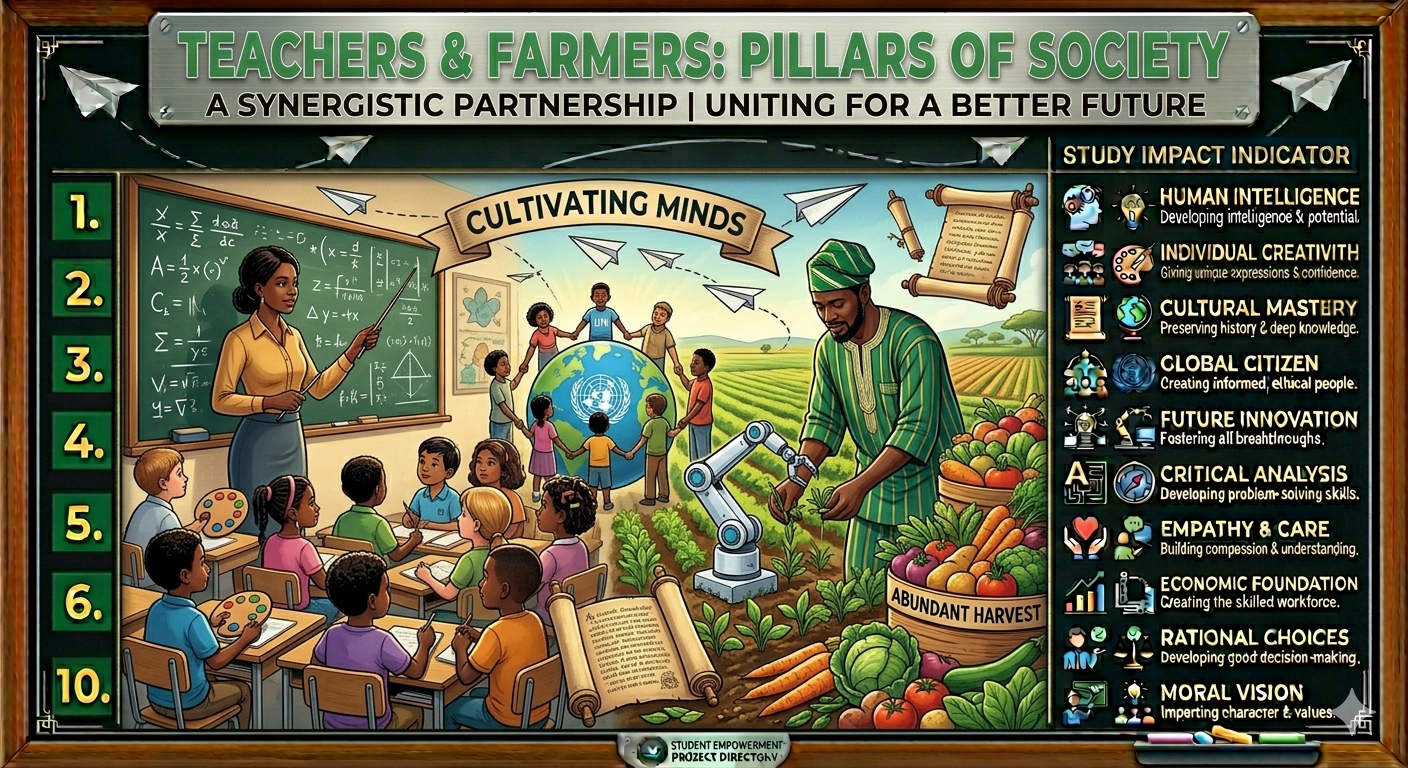
The topic “why teachers are better than farmers” often comes up in school debates, essays, and competitions. It’s a sensitive comparison—because both professions are essential—but in a structured debate, your goal is to argue one side convincingly.
This article gives you clear, powerful, and original points on why teacher is better than farmers debate points, you can use to defend the position that teachers are more impactful than farmers, especially in terms of long-term societal development.
Understanding the Debate
Before diving in, it’s important to stay balanced.
- Farmers provide food, which is essential for survival
- Teachers provide education, which shapes the future
The debate is not about disrespect—it’s about perspective and impact.
1. Teachers Shape Every Profession (Including Farmers)
Teachers are the foundation of all careers.
- They educate doctors, engineers, leaders—and even modern farmers
- Without teachers, no profession can develop properly
A farmer may produce food, but a teacher produces the people who build society.
Check out: How to Use Spaced Repetition So You Never Forget What You Read (The Secret to Acing WAEC & JAMB)
2. Education Drives National Development
Nations grow through knowledge.
Fields like Education and Economics show that:
- Educated populations lead to stronger economies
- Literacy increases innovation and productivity
Teachers directly contribute to national progress.
3. Teachers Create Awareness and Innovation
Teachers expose students to:
- New ideas
- Technology
- Problem-solving skills
Innovation in agriculture itself—like modern farming techniques—comes from education provided by teachers.
4. Teachers Influence Character and Values
Beyond academics, teachers shape:
- Discipline
- Morals
- Leadership skills
They don’t just teach subjects—they build responsible citizens.
5. Teachers Multiply Impact Over Generations
One teacher teaches hundreds—who go on to impact thousands.
This creates a ripple effect:
- One educated student → many improved lives
- Long-term societal transformation
6. Knowledge Lasts Longer Than Physical Output
Food is consumed and finished.
Education, however:
- Stays for life
- Can be passed on endlessly
Knowledge is a permanent asset, making teachers’ contributions long-lasting.
7. Teachers Enable Technological Advancement
Modern advancements depend on education.
From:
- Artificial intelligence
- Medicine
- Engineering
All these fields exist because teachers trained the experts behind them.
Check out: JAMB 2026 Novel Summary: The Lekki Headmaster by Kabir Alabi Garba (Complete Guide)
8. Teachers Help Reduce Poverty
Education is one of the strongest tools against poverty.
- Educated individuals get better job opportunities
- Communities become more self-sufficient
Teachers empower people to improve their living conditions.
9. Teachers Improve All Sectors—Including Agriculture
Ironically, farmers also benefit from teachers.
Through education, farmers learn:
- Better crop management
- Use of technology
- Sustainable practices
Teachers enhance the efficiency of farming itself.
10. Teachers Build the Future Workforce
Every industry depends on trained individuals.
See more: Farmer vs Doctor: 10 Compelling Reasons Why the Doctor Is More Important
Teachers ensure:
- Skilled workers
- Competent leaders
- Informed citizens
Without teachers, society would lack direction and structure.
Counterargument (And How to Respond)
Opponents may argue:
“Farmers are more important because they provide food.”
Strong Response:
- Yes, food is essential
- But without education:
- Farming cannot improve
- Society cannot progress
- Innovation would stop
Teachers provide the knowledge that sustains and improves food production.
Conclusion
While both teachers and farmers are vital, teachers hold a broader and longer-lasting impact on society.
They:
- Shape minds
- Drive innovation
- Build the future
In a debate setting, you can confidently argue that:
“Teachers are better than farmers because they create the knowledge and people that sustain every other profession—including farming.”