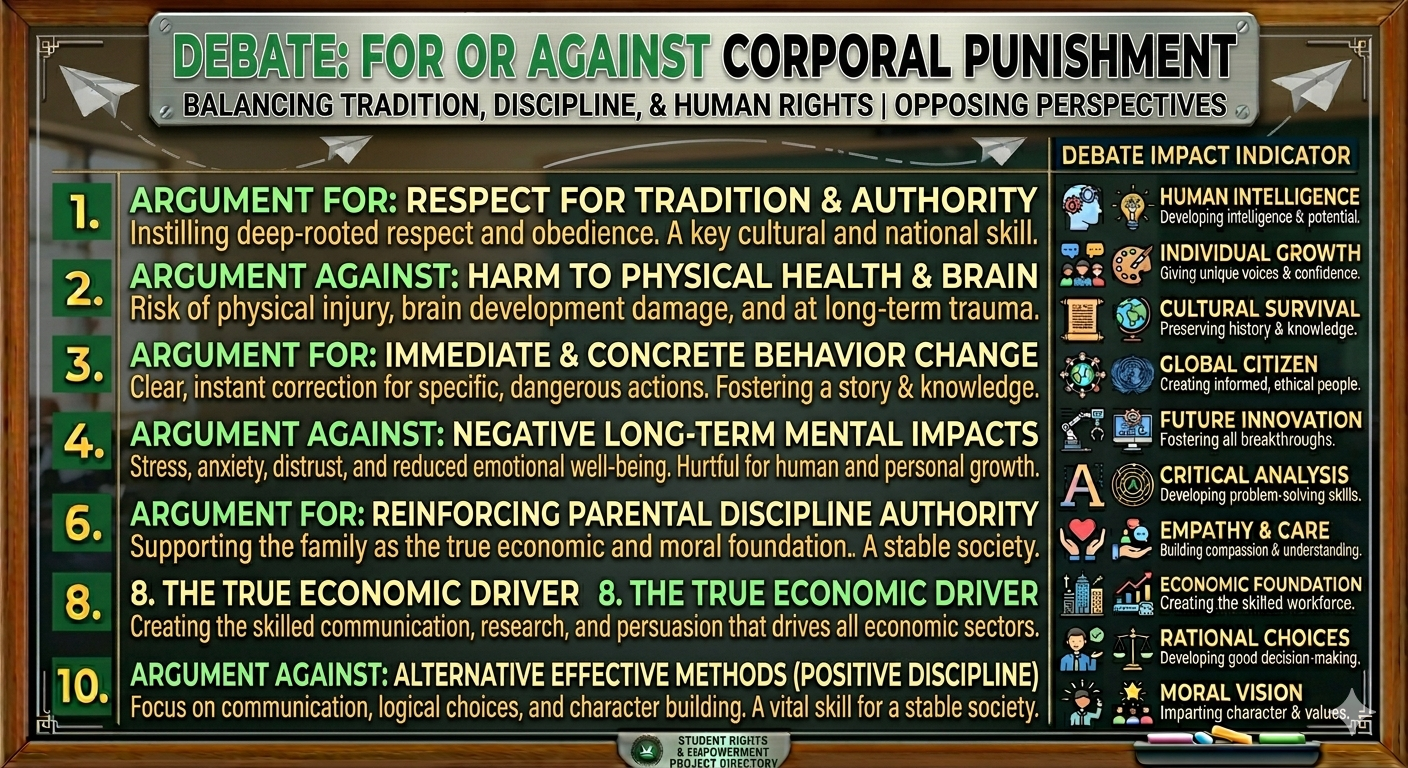
The corporal punishment debate has remained one of the most controversial topics in education, parenting, and child psychology.
Some believe it builds discipline. Others argue it causes long-term harm.
So, what’s the truth?
In this comprehensive guide, we’ll break down:
- What corporal punishment really means
- Strong arguments for and against it
- Real-world implications in schools and homes
- What research in Child Psychology and Educational Psychology actually says
Let’s dive in.
What Is Corporal Punishment?
Corporal punishment refers to the use of physical force intended to cause some degree of pain or discomfort as a way of correcting behavior.
Common examples:
- Spanking
- Caning
- Slapping
- Physical discipline in schools
While some societies still accept it, many countries have banned it—especially in schools.
Why the Corporal Punishment Debate Matters
This isn’t just about discipline.
It touches on:
- Children’s rights
- Mental health
- Academic performance
- Parenting styles
Organizations like United Nations have taken strong positions against it, especially under the UN Convention on the Rights of the Child.
Arguments For Corporal Punishment
Supporters believe it can be effective when used carefully.
Check out: JAMB 2026 Novel Summary: The Lekki Headmaster by Kabir Alabi Garba (Complete Guide)
1. Immediate Discipline
Physical punishment can stop bad behavior quickly.
Some argue it sends a clear and instant message that certain actions are unacceptable.
2. Cultural and Traditional Acceptance
In many societies, corporal punishment is seen as normal.
Generations were raised this way and turned out “fine,” according to supporters.
3. Reinforces Authority
Some believe it helps children respect authority figures like:
- Parents
- Teachers
It creates a clear hierarchy.
4. Seen as a Last Resort
Supporters often say it should only be used when:
- Other methods fail
- Behavior is extreme
Arguments Against Corporal Punishment
Opponents argue the risks far outweigh any benefits.
1. Psychological Harm
Research in Child Psychology shows links between corporal punishment and:
- Anxiety
- Depression
- Low self-esteem
Fear-based discipline can damage emotional development.
2. Encourages Aggression
Children often learn by imitation.
If adults use physical force, children may believe violence is acceptable.
See more: How to Create Flashcards for Quick Revision: The Ultimate Guide for Nigerian Students
3. Damages Trust and Relationships
Instead of building respect, corporal punishment can create:
- Fear
- Resentment
- Emotional distance
4. Not Effective Long-Term
Studies in Educational Psychology suggest:
- It may stop behavior temporarily
- But doesn’t teach why the behavior is wrong
5. Risk of Abuse
There’s a thin line between discipline and harm.
What starts as punishment can escalate into abuse.
Global Perspective
Many countries have completely banned corporal punishment in schools and homes.
Organizations like the United Nations advocate for non-violent discipline methods worldwide.
The global trend is shifting toward positive parenting and behavioral guidance.
What Experts Recommend Instead
Modern approaches focus on teaching, not punishing.
Effective alternatives:
- Positive reinforcement
- Time-outs
- Clear communication
- Setting boundaries
- Logical consequences
These methods build understanding, not fear.
Read now: The Lekki Headmaster: Themes and Symbolism (Complete Literature Guide)
Balanced Conclusion
So, who’s right in the corporal punishment debate?
The truth lies in understanding both sides.
- Supporters value discipline and tradition
- Opponents emphasize mental health and long-term outcomes
However, current research strongly leans toward non-physical methods as more effective and healthier for children.
Final Thoughts
The real question isn’t just:
“Does corporal punishment work?”
It’s:
“What kind of adults do we want children to become?”
Discipline should not only correct behavior—it should also:
- Teach responsibility
- Build emotional intelligence
- Strengthen relationships